




| IN A NUTSHELL |
|
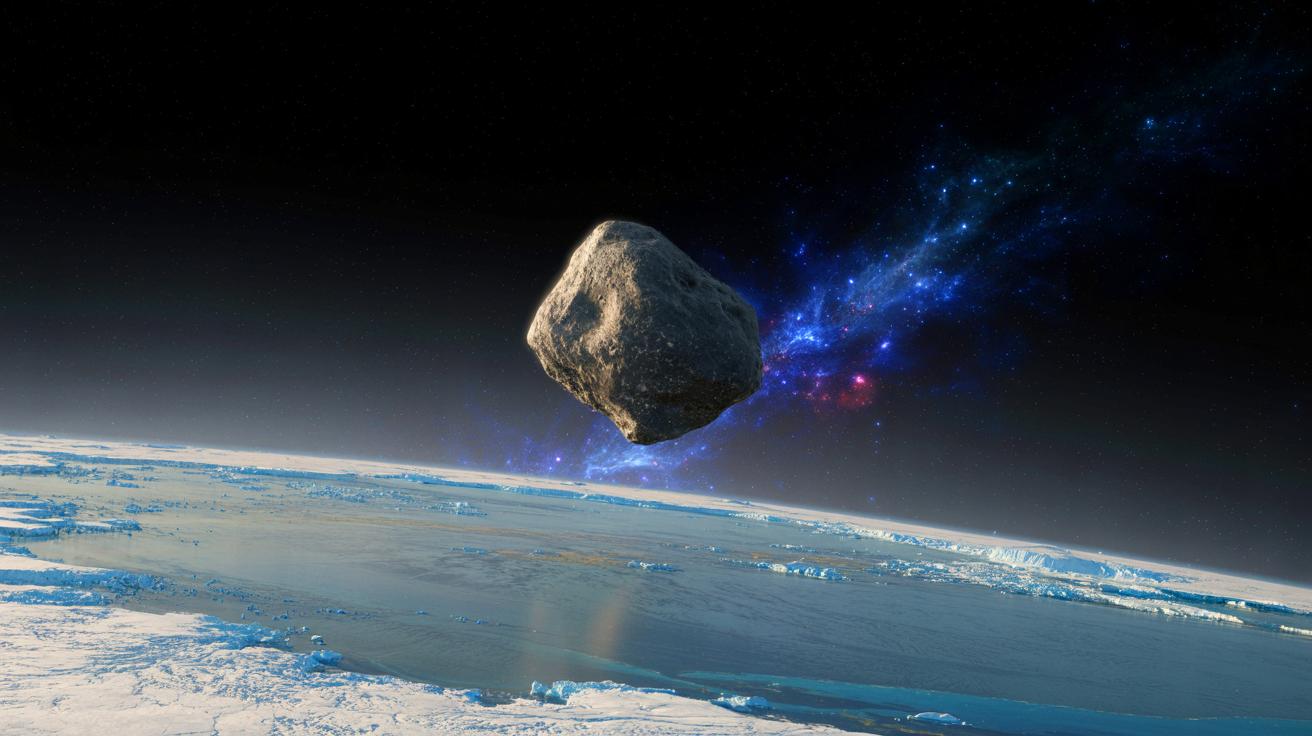
On October 1, a small asteroid named 2025 TF made a close pass by Earth, skimming over Antarctica at a distance comparable to the orbit of the International Space Station (ISS). The asteroid, measuring between 3 to 10 feet in diameter, was detected only hours after its closest approach, providing an unexpected opportunity for astronomers to gather valuable data. Although it posed no threat to our planet, the incident highlights the importance of monitoring near-Earth objects, as even small asteroids can have significant implications for planetary defense.
Asteroid 2025 TF’s Close Encounter
Asteroid 2025 TF’s close approach to Earth was a remarkable event, occurring at precisely 00:47:26 UTC, with a margin of error of just 18 seconds. At its nearest, the asteroid came within 266 miles of Earth’s surface, which is within the same range as the orbital path of the ISS. This proximity highlights the asteroid’s unusual trajectory and the precision required to detect such objects.
The asteroid’s size, ranging from 3 to 10 feet in diameter, classified it as a non-hazardous object. However, if it had entered Earth’s atmosphere, it could have produced a bright fireball and scattered small meteorites. The event underscores the importance of continued vigilance in tracking near-Earth objects, as even small changes in trajectory could lead to more significant consequences.
Precision Tracking by Astronomers
Following the discovery of asteroid 2025 TF, astronomers from the European Space Agency’s (ESA) Planetary Defense Office quickly mobilized to track its path. They utilized the Las Cumbres Observatory telescope at Siding Spring, Australia, to observe the asteroid in detail. This rapid response was crucial in pinpointing the asteroid’s closest approach distance and timing with remarkable accuracy.
Tracking such small objects in space requires exceptional precision and coordination among astronomers. The successful observation of asteroid 2025 TF demonstrates the effectiveness of current planetary defense systems. It also emphasizes the need for continued investment in technologies and strategies that enable the tracking of even smaller celestial objects.
The Significance of Near-Earth Object Monitoring
Monitoring near-Earth objects like asteroid 2025 TF is a critical aspect of planetary defense efforts. These objects, while often small and seemingly insignificant, can provide valuable data that enhance our understanding of potential threats. By studying their trajectories, sizes, and compositions, scientists can develop strategies to mitigate risks associated with future asteroid impacts.
Moreover, close encounters like this serve as a reminder of the dynamic nature of our solar system. They highlight the constant movement of celestial bodies and the potential for unexpected events. As technology continues to advance, the ability to detect and track near-Earth objects will improve, offering increased protection for our planet.
Future Implications and Preparations
While asteroid 2025 TF posed no immediate threat, its close approach serves as a wake-up call for the global community. It underscores the necessity of international collaboration and preparedness in the realm of planetary defense. By sharing data and resources, nations can collectively improve their ability to detect and respond to potential asteroid threats.
Looking ahead, the development of new technologies and research initiatives will be crucial in enhancing our understanding of asteroids and other near-Earth objects. As we continue to explore the vastness of space, the lessons learned from events like the close pass of 2025 TF will inform strategies for safeguarding our planet. What steps should humanity take next to ensure a comprehensive and effective planetary defense system?




Wow, that was a close call! Should we be worried about more asteroids like this in the future? 🤔
Wow, that was a close call! Is there a plan in place to detect these asteroids earlier next time? 😟
I guess it’s time to invest in some asteroid-proof umbrellas! ☂️😂
Why are these things always discovered too late? We need better tracking systems.
Thank you for bringing this to our attention. It’s a reminder of how small we really are in the universe.
Great article, really highlights the need for global cooperation in space defense! 🌍
So, what exactly would happen if an asteroid of that size hit Earth?
Great article, but I’m curious why it wasn’t detected sooner. Any thoughts? 🤔
Did any of the space agencies spot it before it got too close? Seems like a big oversight.
This is why we need more funding for space research!
So we got lucky this time, right? What if the next one is bigger? 😬
Wait, how did we miss something that big flying by? Are our detection systems that outdated? 🤷♂️