



IN A NUTSHELL
As climate warnings intensify and policy windows narrow, education emerges as the most pragmatic lever to shift societies toward sustainability. Schools and universities do more than transmit facts: effective education builds the cognitive, social and behavioral capacities that underlie long-term stewardship. Evidence shows curricula that pair experiential learning — from community gardens to renewable-energy projects — with interdisciplinary study produce measurable upticks in pro-environmental behavior. Yet progress stalls where teacher training, funding and institutional will are lacking; resistance to curricular change and fragmented resources blunt impact. To move beyond pilot projects, systems-level policies and cross-sector partnerships are essential, aligning standards, professional development and local implementation. Digital tools and online platforms extend reach, making climate change literacy and practical skills accessible at scale, while community engagement roots learning in local priorities. Framing educational reforms through the lens of ESD and climate preparedness reframes classrooms as sites of civic empowerment rather than passive transmission — a shift that promises both immediate behavior change and the long-term cultural realignment needed for a resilient future.
The foundational case for education as a driver of sustainable change
Education for sustainable development is not an optional add-on; it is a strategic lever that reshapes how societies perceive and respond to environmental, social, and economic crises. Contemporary frameworks — including the UNESCO-led ESD for 2030 and SDG target 4.7 — frame learning as a means to cultivate the knowledge, skills, values, and agency necessary for collective action. Policymakers must accept that strengthening curricula is an investment that yields systemic returns: better civic engagement, improved resource management and a citizenry equipped to hold institutions accountable.
Education confers the cognitive tools to understand complexity, the socio-emotional capacity to collaborate, and the behavioral inclination to act. That tripartite model underscores why classrooms, teacher preparation programs, and informal learning spaces must move beyond rote facts to cultivate systems thinking, empathy, and pro-environmental habits. Evidence consistently links higher educational attainment with increased participation in sustainable behaviors and advocacy, which is precisely why national strategies that ignore education will underperform on climate and biodiversity targets.
Programs that connect policy with practice — such as the Greening Education Partnership and national ESD initiatives — demonstrate that coordinated action across ministries, schools, and communities scales impact. Practical resources and frameworks are widely available; stakeholders can access guidance and case studies to inform national and local implementation. For educators and administrators, engaging with civil society platforms and repositories of proven approaches is an immediate step. A pragmatic orientation is essential: embedding sustainability means redesigning what is taught, how it is taught, and the institutional environments that support learning, not merely tacking on an environmental module.
Readers seeking actionable lists and classroom ideas can consult practical guides like the ones cataloged at SchoolMyKids, while policy advocates can explore global commitments through resources summarized by organizations that track education and sustainability progress. Arguing for education as a core sustainability strategy is not ideological — it is evidence-driven and instrumental for sustained societal transformation.
Proven pedagogies: experiential learning, interdisciplinarity, and community engagement
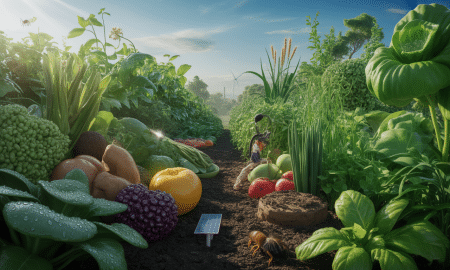
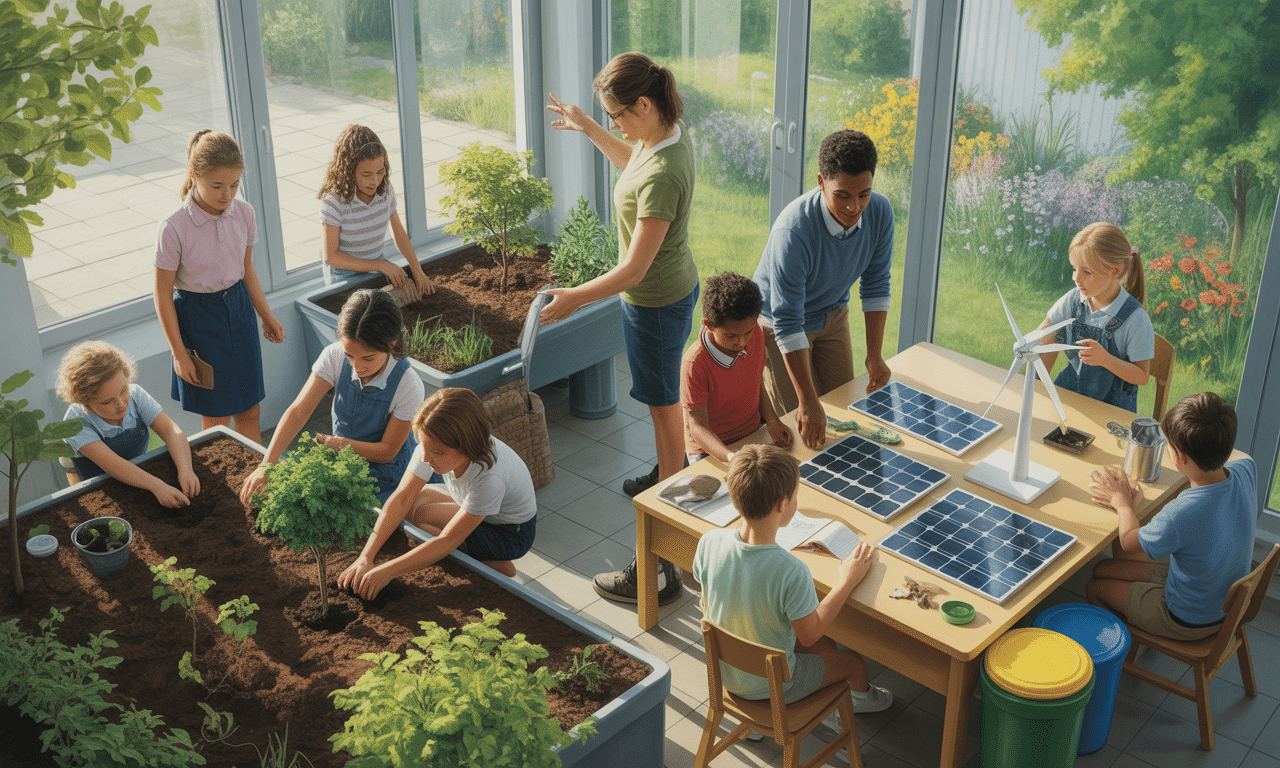
Transformative learning for sustainability hinges on pedagogy. Traditional lecture-based instruction struggles to engender long-term behavior change; instead, experiential learning and project-based methods produce measurable gains in understanding and action. Hands-on projects such as community gardens, waste audits, renewable energy installations, or citizen science projects convert abstract concepts into local, actionable knowledge and foster ownership among learners.
Interdisciplinary approaches are not an academic luxury; they mirror real-world complexity and prepare students to solve cross-cutting problems. Integrating sustainability across science, economics, arts, and civic studies helps learners understand trade-offs and co-benefits. Schools that adopt whole-institution strategies align campus operations, curricula and community partnerships so that learning becomes embedded in daily practice rather than confined to isolated lessons. Programs with clear, applied objectives increase student motivation and retention of sustainability concepts.
Community engagement multiplies impact by connecting learners to local knowledge, civic actors and real-world constraints. Partnerships with local government, NGOs and businesses enable projects to extend beyond the classroom and produce tangible benefits for neighborhoods; these collaborations also provide mentors, materials and legitimacy. For creative inspiration on how schools can motivate environmental action with imaginative activities, see practical examples at AFA Education.
Curriculum designers can draw on repositories that outline progressive sequences and competencies, such as the sustainability curriculum frameworks hosted by Two Green Leaves. Adopting these pedagogies requires deliberate design: assessment must value systems thinking and community impact as much as factual recall. When schools commit to experiential, interdisciplinary and community-anchored learning, they create durable shifts in student attitudes and behaviors that extend into adulthood.
Addressing institutional barriers: resources, training and policy alignment
Efforts to mainstream sustainability in education frequently encounter structural obstacles that cannot be ignored. Insufficient funding, fragmented curricula, and weak teacher preparation are common barriers. Without targeted investment in materials, school facilities and professional development, even the most well-intentioned programs falter. Policymakers and school leaders must treat funding as strategic rather than discretionary: allocating resources to teacher training, learning materials and community partnerships yields measurable educational and environmental returns.
Resistance to change is often cultural, rooted in established assessment regimes, competing academic priorities and an aversion to interdisciplinary work. Overcoming that resistance requires aligning policy incentives — from national curriculum standards to local performance metrics — so that sustainability outcomes are rewarded rather than sidelined. The UNESCO agenda and national ESD initiatives offer policy templates that countries can adapt; engaging with platforms that track country commitments provides a roadmap for reformers who need comparative evidence and peer learning opportunities.
Partnerships are decisive: schools lack the resources and expertise to act alone. Alliances with local governments, civil society and the private sector provide material support, technical mentoring and opportunities for scaling. Public campaigns and community programs help legitimize curricular change by demonstrating public demand. Advocates should also leverage global campaigns and local movements to mobilize political will — examples and narratives can be found in analyses about education’s role in sustainability at World Civil Society and policy briefs like those curated by HPAN.
Ultimately, integrating sustainability into education requires coherent policy alignment, predictable funding and robust capacity building for educators. When institutions reframe learning goals, invest in teachers and broker strategic partnerships, they unlock the means to scale meaningful, long-term change.
Leveraging technology and innovation to deepen learning and broaden reach
Technology expands the reach and effectiveness of sustainability education but must be deployed with pedagogical intent. Interactive simulations, virtual labs and gamified apps make complex socio-ecological systems tangible and allow learners to experiment with policy and design choices in low-risk environments. Online courses democratize access to specialized content and enable lifelong learning pathways for community members, educators and local leaders. Technology is a force multiplier when it complements — rather than replaces — experiential, place-based learning.
Artificial intelligence and digital research tools can enrich historical and cultural perspectives that inform sustainability narratives; for an example of AI advancing interdisciplinary research, see the exploratory work described at Sustainability Times. Such advances suggest novel ways to connect traditional knowledge with modern sustainability challenges, thereby enhancing learner engagement and relevance.
Digital platforms also support teacher networks and resource sharing, making professional development scalable and context-sensitive. For schools concerned with implementation costs, blended models that combine low-tech, high-impact activities (e.g., school gardens, local audits) with targeted digital tools yield strong learning outcomes while minimizing infrastructural burdens. Online repositories and open educational resources provide curricula, lesson plans and assessment tools that educators can adapt locally; this lowers the barrier for institutions without deep in-house expertise.
However, digital adoption must be equity-minded: connectivity gaps and device shortages risk widening educational divides. Strategic investments should prioritize hybrid solutions, offline-compatible resources and capacity building so that technology amplifies inclusion rather than exacerbates exclusion. When thoughtfully integrated, technology accelerates the diffusion of effective practices and enables communities to participate in sustainability education at scale.
Measuring impact and scaling effective models through partnerships and monitoring
Meaningful progress requires rigorous measurement and mechanisms for scaling. Monitoring learning outcomes and behavioral change enables stakeholders to identify which interventions produce durable shifts in attitudes and practices. International indicators such as SDG 4.7 provide high-level targets, but local metrics — including student environmental literacy, participation in community projects and institutional changes to school operations — are essential for adaptive management. Robust monitoring turns good intentions into accountable action.
Scaling successful models depends on codifying best practices and investing in networks that facilitate replication. Programs like Eco-Schools and the Greening Education Partnership demonstrate that a whole-institution approach, combined with measurable quality standards, accelerates adoption when paired with supportive policy frameworks. Civil society and media narratives play roles in amplifying success stories that attract political and financial support; for sector-level reflections and examples, see coverage at Sustainability Times and curated practical tips at SchoolMyKids.
The table below summarizes practical levers, typical actors and suggested indicators for monitoring progress.
| Levers | Actors | Indicators |
|---|---|---|
| Curriculum integration | Ministry of Education, curriculum designers, schools | Coverage of ESD competencies; % of schools with ESD modules |
| Teacher training | Universities, teacher centers, NGOs | Number of trained teachers; teacher confidence scores |
| Community partnerships | Local government, NGOs, businesses, families | Number of active projects; community beneficiaries |
| Monitoring & evaluation | Research institutions, ministries, donors | Behavioral change metrics; environmental outcomes |
Scaling requires collaboration, evidence and a clear set of indicators that tie learning to environmental and social outcomes. Strategic partnerships and continuous monitoring transform isolated pilots into systemic change — a necessary condition for embedding sustainability across education systems and ensuring that learning translates into measurable benefits for communities and the planet. For additional perspectives on policy and equality as drivers of sustainability, stakeholders can consult analyses such as the UNDP-focused commentary at Sustainability Times.
Education must be treated as the primary lever for societal change: it is where values, knowledge and competencies converge to shape long-term behavior. To promote sustainability effectively, learning environments should deliberately embed Education for Sustainable Development (ESD) into curricula so that students acquire not only facts about climate and ecology but also the critical thinking and socio-emotional skills needed for collective action. Without this systemic integration, isolated projects remain symbolic rather than transformative.
Practical strategies demand an emphasis on experiential learning and community engagement. Hands-on projects—school gardens, local conservation partnerships, renewable energy installations—turn abstract concepts into measurable outcomes and increase retention. Schools that link classroom inquiry to neighborhood problems build civic agency while demonstrating that sustainable choices are both feasible and beneficial. These approaches counter resistance by making relevance undeniable.
Policy alignment and institutional support are equally non-negotiable. Sustainable education falters when teachers lack training, resources or clear frameworks. Governments and educational leadership must prioritize funding, incorporate ESD into teacher preparation, and adopt standards that reward cross-disciplinary collaboration. Strategic partnerships with NGOs, businesses and municipalities multiply capacity and provide realistic learning contexts that schools alone cannot sustain.
Digital tools amplify reach and depth: interactive simulations, online modules, and data visualization help learners explore complex systems and assess trade-offs. Yet technology should complement, not replace, place-based experiences. A balanced deployment of edtech ensures access, supports differentiated instruction, and documents impact for continuous improvement.
Ultimately, promoting sustainable practices through education requires coordinated action across curricula, pedagogy, policy and community. Investing in teacher capacity, embedding sustainability across subjects, scaling hands-on initiatives, and forging cross-sector partnerships will produce resilient citizens equipped to confront interlinked environmental, social and economic challenges. This is not optional: it is the only credible pathway to long-term behavioral change and institutional transformation that aligns learning with the planet’s limits.
Ways to promote sustainability through education — Frequently Asked Questions
Q: What is the primary role of education in advancing sustainable practices?
A: Education functions as the foundational mechanism for cultivating a sustainability-minded public: it builds the cognitive tools, practical skills and ethical frameworks that enable people to recognize environmental risks and take effective action. By embedding sustainability into learning, schools and universities do more than inform — they shape behaviors and choices that scale up to societal change.
Q: How does education translate into measurable changes in behavior?
A: When learning goes beyond facts to include experiential learning and community projects, students are far more likely to adopt everyday sustainable habits. Empirical studies consistently show that hands-on engagement and applied projects increase the likelihood of recycling, energy conservation and civic participation, demonstrating that knowledge combined with practice produces durable behavior change.
Q: Which educational strategies most effectively promote sustainability?
A: The most persuasive approach is a mix of interdisciplinary curricula, experiential and project-based learning, and deep community engagement. These strategies force learning to confront real-world complexity, develop systems thinking and offer direct opportunities to implement solutions — an approach that is pedagogically stronger than isolated lessons about the environment.
Q: How should sustainability be addressed across different educational levels?
A: Sustainable education must be staged: early childhood and primary programs establish stewardship values; secondary education introduces complex systems like climate change and resource management; higher education provides specialization, research capacity and leadership training. Cohesive progression ensures learners acquire both the disposition and the technical competence to act.
Q: Why is integrating sustainability into education essential for broader development goals?
A: Sustainable development depends on a populace that can make informed, equitable decisions about environment and economy. Education for Sustainable Development (ESD) equips citizens with critical thinking, socio-emotional skills and the agency needed to balance ecological, social and economic priorities — a prerequisite for any durable development strategy.
Q: What long-term benefits arise from embedding sustainability in curricula?
A: Over time, embedding sustainability cultivates a workforce and citizenry inclined toward resilient practices, innovation in green sectors, and stronger community stewardship. The cumulative effect is lower environmental impact, enhanced social cohesion and a pipeline of problem-solvers prepared for complex, interlinked challenges.
Q: In what ways does education empower individuals to make sustainable choices?
A: Education provides the frameworks to interpret evidence, evaluate trade-offs and adopt practical habits. By teaching systems thinking, ethical reasoning and hands-on skills, learning turns awareness into agency: people not only understand environmental consequences but know how to change their behavior and influence policy.
Q: What are the main obstacles to integrating sustainability into education systems?
A: Integration is often blocked by insufficient resources, weak teacher training, fragmented curricula and institutional resistance to change. When sustainability is treated as an optional add-on rather than a structural priority, initiatives remain patchy and fail to produce the systemic shifts required.
Q: How can educators and institutions overcome resistance to sustainability education?
A: Resistance yields when initiatives lack relevance or support. Overcoming it requires demonstrating practical benefits through pilot projects, investing in professional development for teachers, aligning sustainability with assessment and accountability systems, and forging partnerships that provide tangible resources and credibility.
Q: What role do policy and governance play in promoting sustainability education?
A: Policy sets the rules of the game: curriculum mandates, funding streams, teacher standards and accountability mechanisms determine how consistently sustainability is taught. Without policy backing, efforts remain localized. Robust governance ensures scaling, equity and integration across education systems.
Q: How can technology strengthen sustainability learning?
A: Digital tools expand access and deepen understanding: interactive simulations, online courses and gamified apps let learners experiment with complex systems, visualize impacts and practice decision-making. Technology also widens reach, enabling lifelong and community-based learning while reducing the carbon footprint of traditional delivery.
Q: What practical steps can teachers take now to promote sustainable practices?
A: Teachers should embed sustainability across subjects, prioritize project-based and place-based learning (e.g., school gardens, energy audits), collaborate with local organizations for real-world projects, and pursue targeted training. These concrete actions make sustainability visible and actionable for students.
Q: How do partnerships and community involvement amplify sustainability education?
A: Partnerships multiply capacity: local governments, NGOs, businesses and universities bring expertise, funding and project opportunities. Community involvement grounds learning in local challenges and creates feedback loops where student projects deliver measurable benefits — making education accountable and impactful.
Q: What is the significance of Education for Sustainable Development (ESD) and international frameworks?
A: ESD provides a coherent philosophy and measurable goals that help countries align curricula, teacher training and learning environments with sustainability objectives. International frameworks motivate national action, offer technical guidance and create benchmarks for monitoring progress, thereby turning isolated innovations into systemic reform.
Q: How can schools and countries accelerate the “greening” of education?
A: Acceleration requires a whole-institution approach: greening curricula, investing in teacher capacity, upgrading learning environments and mobilizing youth and communities. When systems combine policy, resources and measurable standards, they transform schools into living laboratories for sustainability rather than merely sites of instruction.