

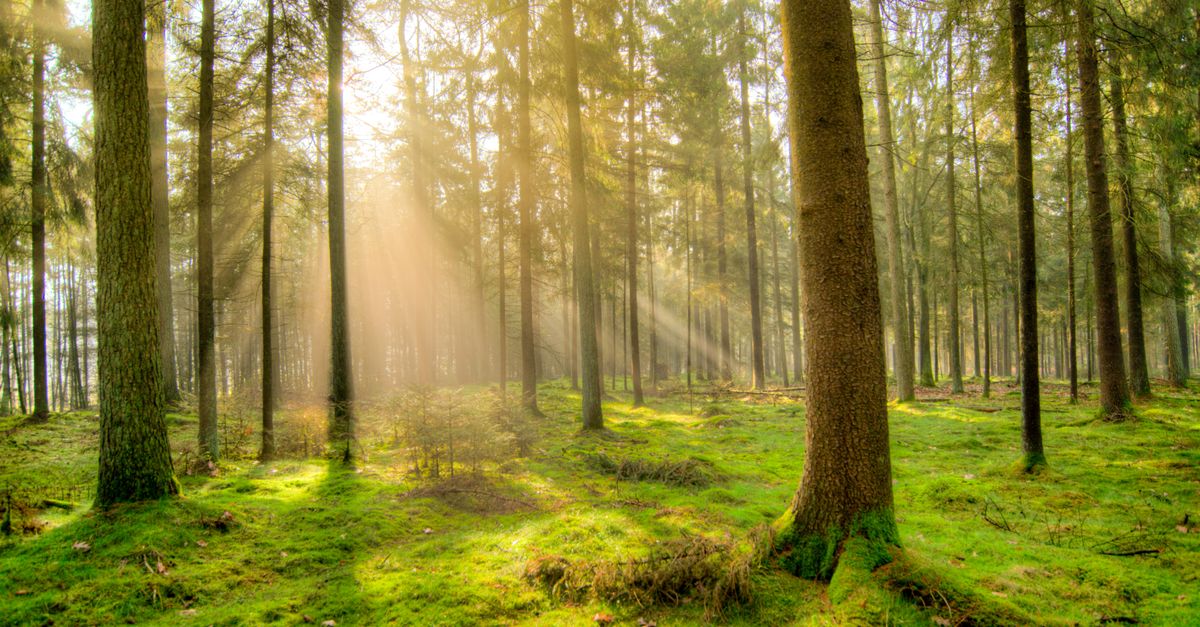
Trees play a vital role in regulating the climate
One of the most important environmental functions of trees is their ability to absorb carbon dioxide from the atmosphere. Through photosynthesis, trees capture CO₂ and use it to grow, storing carbon in their trunks, branches, roots, and surrounding soils.
This natural process makes forests important carbon reservoirs and helps reduce the amount of greenhouse gases in the atmosphere. According to the Food and Agriculture Organization of the United Nations (FAO), forests cover approximately 31% of the world’s land area and play a major role in the global carbon cycle.
However, when forests are destroyed or degraded, much of the carbon they contain can be released back into the atmosphere. Deforestation therefore contributes to climate change while reducing the planet’s capacity to absorb future emissions.
Preserving mature forests is particularly important because they contain large amounts of stored carbon and support complex ecosystems that take decades or centuries to develop.
Improving air quality and reducing pollution
Trees also contribute to improving air quality, especially in densely populated urban areas. Their leaves and branches can capture certain airborne particles, including dust and pollutants generated by traffic, industrial activities, and other sources.
Some gaseous pollutants can also be absorbed through the leaves. Although trees cannot eliminate urban air pollution entirely, they can help reduce exposure under suitable conditions.
Their presence can also indirectly improve air quality by lowering local temperatures. In some situations, cooler urban environments may reduce electricity demand for air conditioning, which can help limit emissions associated with energy production.
The effectiveness of trees in improving air quality depends on several factors, including species, location, weather conditions, and the type of pollutants present. Urban planning therefore plays an important role in maximizing these benefits.
Providing essential habitats for biodiversity
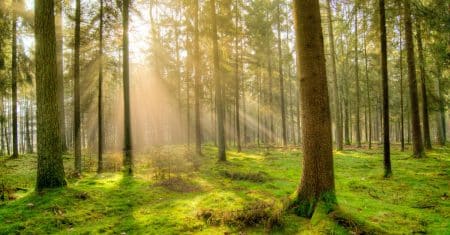
Forests are among the most biologically diverse ecosystems on Earth. They provide habitats, food, and shelter for countless species of mammals, birds, insects, fungi, and microorganisms.
According to the FAO, forests are home to approximately 80% of amphibian species, 75% of bird species, and 68% of mammal species worldwide.
Individual trees also support complex ecological communities. Their branches provide nesting sites for birds, their flowers supply nectar for pollinators, and their roots create habitats for soil organisms.
Trees are particularly important for insects, which contribute to pollination and nutrient recycling and form a vital part of many food chains.
When forests disappear, animals and plants lose their natural habitats. Habitat fragmentation can also isolate wildlife populations, making reproduction and migration more difficult.
Protecting forests is therefore essential to preserving biodiversity and maintaining healthy ecosystems.
Protecting soils and regulating the water cycle
Trees help maintain soil stability and protect land against erosion. Their roots hold soil particles together, reducing the risk of soil being washed away by heavy rainfall or carried off by the wind.
This function is particularly important on hillsides, riverbanks, and agricultural land, where erosion can damage ecosystems and reduce soil fertility.
Forests also play a major role in the water cycle. Trees absorb water through their roots and release moisture into the atmosphere through a process called transpiration.
This contributes to humidity, cloud formation, and rainfall patterns, particularly in large tropical forest regions.
Forest soils, which are often rich in organic matter, can absorb and retain substantial amounts of water. This helps regulate runoff, support groundwater recharge under suitable conditions, and reduce certain flooding risks.
However, these benefits depend on local environmental conditions. Trees also consume water, meaning that planting them in dry regions without considering water availability can sometimes create additional pressure on natural resources.
Making cities cooler and more comfortable
As cities experience increasingly frequent heatwaves, urban trees are becoming essential elements of climate adaptation strategies.
Buildings, roads, and paved surfaces absorb and retain heat, creating what is known as the urban heat island effect. This phenomenon can make urban temperatures significantly higher than those in surrounding rural areas.
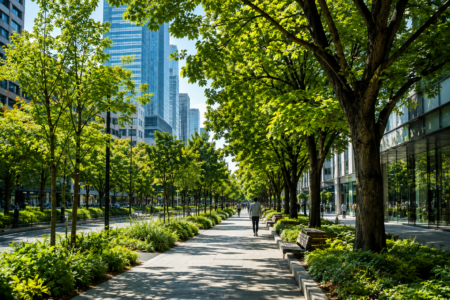
Trees help reduce this effect in two main ways. Their canopies provide shade, limiting the amount of solar radiation absorbed by streets and buildings. They also cool the surrounding air through evapotranspiration.
Planting trees along streets, in public parks, and around buildings can therefore improve outdoor comfort and reduce exposure to extreme heat.
Trees can also lower the need for air conditioning when strategically planted near buildings, helping households and businesses save energy.
Beyond these environmental advantages, green spaces contribute to the attractiveness of neighborhoods and provide places for recreation, relaxation, and social interaction.
Deforestation remains a major global challenge
Despite their importance, forests continue to face significant threats. Agricultural expansion, logging, mining, infrastructure development, and urbanization are among the main drivers of deforestation.
Tropical regions are particularly affected, including parts of the Amazon Basin, Central Africa, and Southeast Asia. These forests contain exceptionally rich biodiversity and store substantial quantities of carbon.
Climate change is creating additional pressures. Rising temperatures, prolonged droughts, more intense wildfires, and the spread of certain pests can weaken forests and increase tree mortality.
The loss of forests has consequences that extend far beyond the areas directly affected. It can disrupt rainfall patterns, accelerate biodiversity decline, increase greenhouse gas emissions, and threaten communities that depend on forests for their livelihoods.
Addressing these challenges requires stronger forest protection policies, sustainable land management, and efforts to reduce the environmental impact of agricultural and industrial activities.
Protecting existing forests and restoring damaged ecosystems
Tree planting is often presented as a straightforward solution to environmental problems. While reforestation can provide significant benefits, it is not a substitute for protecting existing forests.
Mature forests contain complex ecosystems that cannot be recreated simply by planting young trees. Their ecological value depends on the diversity of species, soil conditions, wildlife populations, and relationships developed over long periods.
Successful restoration projects must therefore consider local environmental conditions and prioritize native species suited to the ecosystem.
Planting trees in unsuitable environments, such as certain natural grasslands or peatlands, can damage biodiversity or interfere with existing carbon storage.
A comprehensive approach combines forest conservation, restoration of degraded landscapes, sustainable forestry, and better management of urban green spaces.
Businesses, governments, and individuals can all contribute through responsible purchasing decisions, support for conservation initiatives, and participation in carefully designed restoration projects.
Trees are much more than a source of timber or a decorative feature of landscapes. They are essential components of the Earth’s environmental systems, contributing to climate regulation, biodiversity conservation, air quality, and water management. As climate and ecological pressures continue to increase, protecting forests and managing trees sustainably will remain crucial to preserving a healthier planet for future generations.