



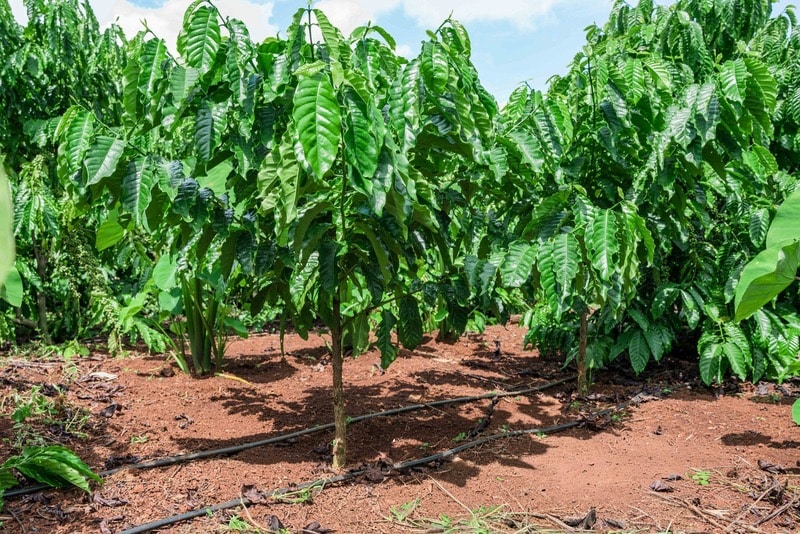
Coffee grown using drip irrigation can reduce its overall carbon footprint by nearly 60% while using substantially less water, energy and chemical inputs, according to a new Life Cycle Assessment study released by Netafim, the precision irrigation business of global sustainable solutions company Orbia.
The three-year study, conducted in Vietnam’s Dak Lak province, one of the world’s largest Robusta coffee-producing regions, found that drip irrigation reduced water consumption by roughly 56% compared with conventional overhead sprinkler irrigation, while also lowering chemical use per ton of coffee produced by 46%. Researchers also found that drip-irrigated plantations delivered more than 50% higher yield per hectare.
Most notably, the assessment concluded that drip irrigation lowered the Global Warming Potential and overall carbon footprint of Robusta coffee cultivation by nearly 60%, largely due to lower energy consumption and more efficient fertilizer use.
The findings come as the global coffee sector faces growing pressure from climate change, drought and rising production costs. Robusta coffee prices have surged in recent years following poor harvests in major producing countries including Brazil and Vietnam, while increasingly erratic weather patterns are disrupting traditional growing regions.
Coffee is one of the world’s most traded agricultural commodities, grown across more than 10 million hectares and supporting millions of farmers globally, many of them smallholders. But the crop is also becoming more vulnerable to rising temperatures, shifting rainfall patterns and water scarcity.
The study evaluated the environmental performance of drip irrigation across the full cultivation cycle between 2022 and 2024, including irrigation efficiency, fertilizer application, energy use and crop-protection inputs. Researchers compared drip systems against the overhead sprinkler irrigation method commonly used in Robusta coffee cultivation.
The findings add to growing evidence that irrigation systems are becoming central to how major crops are adapted for hotter, drier and less predictable growing conditions.
In coffee production, irrigation has historically been unevenly adopted, with many traditional growing regions relying primarily on rainfall. But climate volatility and expanding cultivation into drier areas are increasing demand for more controlled irrigation systems capable of stabilizing yields while reducing resource use.
Large coffee companies and roasters are also facing growing pressure from regulators, investors and consumers to reduce environmental impacts across their supply chains. As a result, growers are increasingly looking for ways to cut water use and emissions without sacrificing productivity.
Netafim said the results were driven not only by drip irrigation itself, but also by its broader “Coffee Protocol,” a system of irrigation and fertigation practices developed through decades of agronomic research and fieldwork across Latin America, Asia and Africa. The protocol is designed to tailor irrigation and nutrient delivery to different coffee varieties, terrains and climate conditions.
“Coffee growers today face mounting pressure to increase productivity while managing water scarcity, climate volatility, and rising input costs,” said Ram Lisaey, head of Global Agronomy at Netafim. “This Life Cycle Assessment reinforces what we see on the ground every day: precision irrigation is a practical, scalable pathway for coffee growers and companies to achieve supply chain resilience.”
The Vietnam assessment is part of a wider effort by Netafim to measure the environmental impact of precision irrigation across multiple crops and geographies. Previous Life Cycle Assessment studies by the company examined corn and potato cultivation and similarly found significant reductions in emissions and resource use.