


Close Menu
  • Last News
    • Cities
    • Climate
    • Energy
    • Impact
    • Markets
    • Opinions
    • Policy
    • Reports
    • Research
  • About Us
  • Advertise
  • Contact Us

Subscribe to Our Newsletter

News, investigations, and analysis — our top stories every morning to start your day right.

Trending
The Importance of Trees in Cities
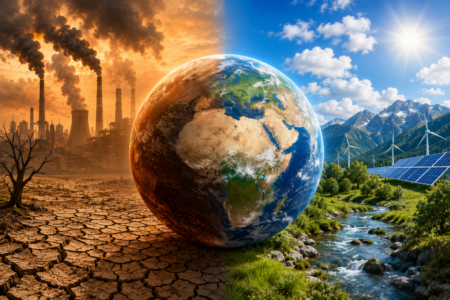
The Impact of CO₂ on the Climate
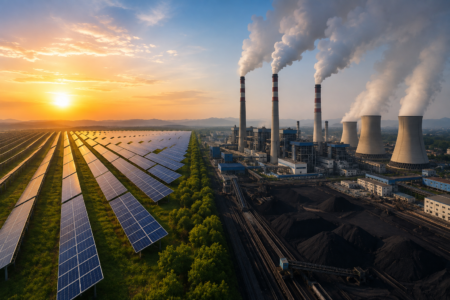
China’s Solar Capacity Surpasses Coal for the First Time
Facebook X (Twitter) LinkedIn YouTube TikTok
Sustainability Times
Facebook X (Twitter) LinkedIn YouTube TikTok
Subscribe
  • Featured
  • Cities

    The Importance of Trees in Cities

    09/17/2026

    The Hidden Carbon Cost of Construction Projects (And Why Better Planning Matters More Than You Think)

    05/13/2026
    explore the future of sustainability in urban development, focusing on innovative strategies and technologies shaping eco-friendly and resilient cities.

    The future of sustainability in urban development

    02/24/2026
    Illustration of a vertical farm in Beijing showcasing sustainable urban agriculture practices.

    “China Just Built Farm Skyscraper”: Beijing Greenhouse Grows Food In 37,673 Square Feet While Solar Panels Power Vertical Agriculture Revolution

    09/30/2025
    Illustration of Trojena Ski Resort's futuristic design in the Saudi Arabian desert.

    “We’re Building Winter Olympics in Pure Desert”: Saudi Arabia’s Trojena Ski Resort Hosts 2029 Asian Games Without Natural Snow

    09/09/2025
  • Climate

    The Importance of Trees in Cities

    09/17/2026

    The Impact of CO₂ on the Climate

    09/10/2026

    Luanda Declaration charts inclusive African blue economy rooted in conservation and prosperity

    08/04/2026

    The Hidden Carbon Cost of Construction Projects (And Why Better Planning Matters More Than You Think)

    05/13/2026
    explore the vital link between sustainability and climate change, understanding how sustainable practices can help mitigate environmental impact and promote a healthier planet.

    The connection between sustainability and climate change

    04/07/2026
  • Energy

    China’s Solar Capacity Surpasses Coal for the First Time

    09/03/2026

    How bio-LNG is transforming the maritime sector

    06/29/2026
    explore how technology is accelerating sustainability innovations, driving eco-friendly solutions and creating a greener future for our planet.

    How technology is driving sustainability innovations

    03/24/2026

    How to Turn ESG Commitments into Real Results in Oil & Gas: Mikhail Zubkov on Implementing Practical Solutions

    02/24/2026
    explore the vital role of renewable energy in promoting sustainability and reducing environmental impact for a greener future.

    The role of renewable energy in achieving sustainability

    01/27/2026
  • Impact
    discover how plant-based diets promote sustainability by reducing environmental impact, conserving resources, and supporting eco-friendly food choices.

    How plant-based diets contribute to sustainability

    08/11/2026

    Viktor Genkulov on the cost of digitalizing the maritime industry and when it will start to pay off

    08/05/2026

    Luanda Declaration charts inclusive African blue economy rooted in conservation and prosperity

    08/04/2026
    explore how sustainable forestry practices positively affect ecosystems by promoting biodiversity, improving soil health, and supporting long-term environmental balance.

    The impact of sustainable forestry on ecosystems

    08/04/2026
    learn practical tips and strategies to create a sustainable lifestyle without spending extra money, focusing on eco-friendly habits that save both the environment and your budget.

    How to create a sustainable lifestyle without extra cost

    07/28/2026
  • Markets

    Data Centers: Vietnam Aims to Become a New Digital Hub in Asia

    08/28/2026
    explore how sustainability practices are transforming global supply chains, driving efficiency, reducing environmental impact, and promoting ethical sourcing worldwide.

    Sustainability and its influence on global supply chains

    07/21/2026
    explore the growth of sustainable investments and green finance, highlighting their impact on the global economy and the shift towards environmentally responsible financial practices.

    The rise of sustainable investments and green finance

    07/07/2026
    Switzerland’s regulated online gambling ecosystem is built on strict licensing rules, ensuring that only ESBK-approved casinos tied to land-based establishments can legally operate.

    Are Online Casinos Legal in Switzerland? Understanding the Current Regulatory Framework

    11/21/2025
    Illustration of the abrupt halt of a major lithium mine in China impacting global markets.

    “One Mine Shut Down and Prices Exploded”: CATL Halts Major Chinese Lithium Operation Sending Global Markets Into Chaos

    09/11/2025
  • Opinions

    Viktor Genkulov on the cost of digitalizing the maritime industry and when it will start to pay off

    08/05/2026
    discover the essentials of sustainability and corporate social responsibility, exploring their impact on businesses and society for a better future.

    Sustainability and corporate social responsibility explained

    04/21/2026

    The Hidden Risks of Nepotism and Conflicts of Interest in Corporate Governance

    03/19/2026

    Sustainability, Family Offices, and Private Equity: A Powerful Alignment for Long-Term Impact

    08/05/2025

    Preserving Heritage While Innovating: How AI is Reshaping Design for a Sustainable Future

    07/23/2025
  • Policy

    Luanda Declaration charts inclusive African blue economy rooted in conservation and prosperity

    08/04/2026
    explore the crucial role of governments in advancing sustainability policies to protect the environment, promote social equity, and ensure economic growth for future generations.

    Role of governments in promoting sustainability policies

    06/16/2026
    explore effective strategies to promote sustainability through education, empowering communities to adopt eco-friendly practices and foster environmental awareness.

    Ways to promote sustainability through education

    03/10/2026
    Illustration of the NUMO Ground Robot Deployed by Ukraine for Military Operations.

    “It’s Doing the Dangerous Work for Us”: This Ukrainian Combat Robot Redefines the Battlefield (and It’s Already Saving Soldiers’ Lives)

    10/15/2025
    Illustration of NATO aircraft participating in the Steadfast Noon nuclear deterrence exercise.

    “You Can Feel the Tension in the Air”: This NATO Nuclear Exercise Sparks Unease Across Europe (and Leaders Call It ‘Routine’)

    10/15/2025
  • Reports
    explore the latest trends and innovative solutions driving sustainability in the food industry, from eco-friendly practices to cutting-edge technologies reshaping the future of food production.

    Sustainability in the food industry: trends and solutions

    06/02/2026

    New Study Finds Drip Irrigation Can Cut Coffee’s Carbon Footprint by Nearly 60%

    05/13/2026
    explore the top sustainable development goals to prioritize in 2026 and learn how to make a meaningful impact towards a greener, more equitable future.

    Top sustainable development goals to focus on in 2026

    04/28/2026

    MFC Asset Management Steps Up Its ESG Agenda

    09/24/2025
    Illustration of naval aviators in training during the Top Gun program.

    “We Push Them Until They Break”: Top Gun Training Forces Pilots Through 7.5 Gs While National Geographic Films

    09/21/2025
  • Research
    Illustration of ancient marine super predators dominating the complex food chains of the Cretaceous period.

    Ancient Super Predators Ruled Oceans: New Discoveries Challenge Our Understanding of Marine Life’s Evolutionary Past

    12/20/2025

    How Ilnar Iakhin’s Practical Field Innovations Are Reducing the Environmental Footprint of Gas Production

    12/19/2025
    Illustration of the body's distinct molecular systems for detecting cold on the skin and internally.

    Your Body’s Cold Sensations: Revealing the Dual Ways Temperature Affects Us and What It Means for Comfort

    12/19/2025
    Illustration of the digital reconstruction of a 1.5-million-year-old Homo erectus face from the DAN5 fossil.

    Scientists Reveal 1.5-Million-Year-Old Human Face, Unveiling New Clues to Our Ancient Ancestry

    12/18/2025
    Illustration of ancient pottery featuring plant motifs reflecting early mathematical thinking.

    Ancient Art Reveals How Early Humans Used Math Concepts 8,000 Years Ago Without Numbers

    12/18/2025
Sustainability Times
Home - Climate - How Ilnar Iakhin’s Practical Field Innovations Are Reducing the Environmental Footprint of Gas Production

How Ilnar Iakhin’s Practical Field Innovations Are Reducing the Environmental Footprint of Gas Production

Gabriel CruzGabriel Cruz12/19/20250
Share Twitter Facebook LinkedIn Telegram WhatsApp Email Copy Link
Follow Us
Google News
Share
Twitter Facebook LinkedIn WhatsApp Email Copy Link

In the global conversation about decarbonization, the focus often rests on policy frameworks, carbon markets, and renewables. Yet a large share of emissions in natural-gas production still arises from operational habits that have remained unchanged for decades: flaring during well testing, methane leakage from field infrastructure, corrosion-driven failures, and inefficient energy use. These routine processes rarely attract public attention, but they determine the real environmental footprint of extraction.

This perspective aligns with the work of Ilnar Iakhin, Head of the Production and Technical Department at one of Russia’s largest gas-producing enterprises. In this role, he oversees engineering governance, operational reliability, and the introduction of new technological solutions across high-pressure field assets. His work and solutions have been recognized within the industry, when he became a laureate of the  national N.K. Baibakov Award for achievements in sustainable energy, and a winner of the Cases&Faces International Award for Engineering Innovation.

He emphasizes that environmental performance improves when emissions are tackled at their source, within the operational processes that create them. Guided by this approach, Ilnar Iakhin has helped modernize well-testing practices, reduce methane losses, strengthen corrosion control, and improve energy efficiency, demonstrating how measurable environmental progress can emerge through engineering discipline rather than declarations.

Eliminating Flaring During Well Testing

One of the clearest examples of this engineering-led approach is the transformation of well-testing practices. Traditionally, research operations required burning or venting significant volumes of gas, a legacy method responsible for steady CO₂ and methane emissions. According to the 2025 World Bank “Global Gas Flaring Tracker Report”, in 2024 about 151 billion cubic meters (bcm) of associated gas was flared. It is the highest global level since 2007. Changing this practice meant tackling a long-established operational norm.

“During testing, you’re not only releasing CO₂ and methane but also discarding a resource you already invested in extracting,” Ilnar notes. “A system that captures and returns this gas means the environment wins and the company wins. Eliminating flaring at this stage shows how much progress can come from rethinking even the most routine parts of production.”

Ilnar supported the introduction of a closed-loop well-testing system that fundamentally alters this workflow. Using a mobile full-flow test separator equipped with automated valves and electronic flowmeters, the testing stream is no longer burned off. Instead, it is separated, measured, recombined, and returned to the gathering system.

The results in 2024 alone were substantial for the ecology; however, the company also won. According to internal documentation, his approach helped cut emissions by 1,575.347 tons of CO, 92.156 tons of NO, 94.525 tons of NO₂, and 39.38 tons of CH₄. This size of reduction highlights how targeted engineering interventions directly translate into measurable environmental impact. Crucially, this innovation does more than solve a single engineering task. It sets the stage for a broader shift toward closed-loop, low-loss operations.

This shift naturally leads to another major environmental challenge in gas production: methane losses that occur not during planned tests, but continuously across complex field systems.

Cutting the Most Climate-Intensive Gas

If eliminating flaring addresses a visible emission source, reducing fugitive methane tackles an invisible but equally critical one. Because methane has a far higher global-warming potential than CO₂, even small operational losses become environmentally significant when repeated across thousands of valves, seals, and equipment cycles. This cumulative effect is reflected in the International Energy Agency’s Global Methane Tracker 2025, which estimates that the fossil-fuel sector released around 200 bcm of methane in 2024. The same report notes that nearly 70% of these emissions could be avoided with technologies already available today, highlighting how much of the problem stems not from a lack of solutions, but from the persistence of outdated practices.

It is precisely within this space (replacing routine inefficiencies with engineered controls) that Ilnar Iakhin’s work is situated. He led targeted improvements in operational regimes, monitoring accuracy, and process control. These adjustments were not implemented as isolated fixes but as a coordinated strategy to tighten the system and reduce unnecessary gas movement. As a result, production sites achieved more than $10 million annual reduction in gas losses, directly lowering methane emissions.

The success of this effort underscores a key idea: once operations become more controlled and predictable, it becomes possible to address deeper structural issues — such as corrosion, one of the most persistent causes of leaks and environmental emergencies.

Preventing Leaks Before They Occur

Methane reduction cannot be achieved without addressing CO₂-induced corrosion, a slow-moving process that gradually weakens pipelines but can lead to sudden leaks, soil contamination, and emergency flaring. Although corrosion develops over time, its environmental consequences are immediate, especially given methane’s outsized climate impact.

“In practice, even small leakage rates can erase the environmental advantage of natural gas,” Ilnar Iakhin notes. “If just a couple of percent escapes along the supply chain, the climate impact begins to approach that of coal. What complicates the picture even more is that many assessments still underestimate actual emissions, especially when it comes to major leak events or flaring episodes that aren’t fully captured through routine reporting. That’s why preventing corrosion-related failures is so critical.”

In this context, corrosion control becomes not just a reliability measure, but one of the most effective ways to prevent precisely the kinds of high-impact leaks that distort methane inventories and accelerate climate warming. Recognizing this, Ilnar advanced a comprehensive corrosion-mitigation strategy that integrates real-time automated inhibitor injection, corrosion-resistant materials, upgraded equipment, and continuous monitoring into a unified system. The automated injection technology is especially important: by adapting inhibitor dosing to real-time operating conditions, it reduces human-error risks and maintains protective layers more consistently and efficiently.

According to field data, Ilnar’s approach extended pipeline service life by 20–30%. It significantly lowered maintenance needs and reduced the likelihood of leaks while generating over $700,000 in annual cost savings. With infrastructure made more resilient, the next logical step becomes improving the energy efficiency of the entire production cycle, ensuring that stable equipment also operates with a smaller carbon footprint.

Lowering the Carbon Intensity of Field Operations

Once the production system is more reliable and leakage risks are minimized, energy efficiency becomes the next major frontier for emission reduction. “When process equipment is not optimized, when heat is lost unnecessarily, or when facilities operate on outdated regimes, the entire energy balance of a field becomes distorted,” says Ilnar. “Even with strong controls elsewhere, these inefficiencies drive up fuel consumption and, as a result, greenhouse-gas emissions. Improving energy performance is just as important as reducing direct leaks if we want to meaningfully lower the overall environmental footprint.”

Ilnar led the development of energy-efficiency programs aimed at optimizing equipment performance, reducing thermal losses, and modernizing high-load equipment. These improvements strengthened the overall stability of field operations while cutting unnecessary fuel use, contributing directly to lower CO₂ emissions. Importantly, they also aligned production practices with international energy-management standards, demonstrating that operational efficiency and environmental responsibility can reinforce each other rather than compete.

Together, these measures point to a larger shift toward a holistic low-impact model of gas production. Although each innovation solves a different engineering problem, collectively they reflect a broader goal to reduce emissions, eliminate the conditions that produce them. Ilnar’s integrated approach builds the foundation for a production model that is not only more sustainable but also more resilient, cost-effective, and technologically adaptive. It also prepares the industry for future advances in digital monitoring, predictive analytics, and intelligent control systems, all of which can amplify the environmental benefits already achieved.

“In the next few years, we’re going to see digital monitoring, analytics, and autonomous controls reshape how field systems operate,” says Ilnar. “As these technologies mature, production environments will become far more predictive and far less wasteful. What today exists as separate technical solutions will gradually form integrated, intelligent ecosystems where environmental performance is monitored and optimized continuously, in real time.”

This broader direction suggests the next stage of sustainability in the gas industry will not be defined by headline innovations alone, but by thousands of small, precise engineering decisions that reshape how infrastructure behaves every hour of operation. By pushing field systems toward tighter control, higher efficiency, and lower impact, these approaches lay the groundwork for a production model capable of meeting both energy needs and climate imperatives, not as competing priorities, but as parallel commitments that define the sector’s future.

Subscribe to Our Newsletter

News, investigations, and analysis — our top stories every morning to start your day right.

gas production Ilnar Iakhin
Follow on Google News Follow on X (Twitter)
Share. Facebook Twitter LinkedIn Telegram WhatsApp Email Copy Link
Previous ArticleYour Body’s Cold Sensations: Revealing the Dual Ways Temperature Affects Us and What It Means for Comfort
Next Article Western U.S. Wildfire Prevention Efforts Backfire, Raising Concerns About Future Fire Management and Community Safety
Gabriel Cruz
  • X (Twitter)

Gabriel Cruz has been a journalist at Sustainability-Times.com for five years. Trained in journalism in London, he is also a passionate activist for environmental justice and sustainable development. Contact: gabriel.cruz@sustainability-times.com

Keep Reading

The Importance of Trees in Cities

The Impact of CO₂ on the Climate

China’s Solar Capacity Surpasses Coal for the First Time

Add A Comment
Leave A Reply Cancel Reply

Subscribe to Our Newsletter

News, investigations, and analysis — our top stories every morning to start your day right.

Trending
The Importance of Trees in Cities
The Impact of CO₂ on the Climate
China’s Solar Capacity Surpasses Coal for the First Time
News by category
  • Featured
  • Cities
  • Climate
  • Energy
  • Impact
  • Markets
  • Opinions
  • Policy
  • Reports
  • Research
Information
  • About Us
  • Meet the Team
  • Advertise
  • Contact Us
  • Legal Mentions
  • Privacy Policy

Subscribe to Our Newsletter

News, investigations, and analysis — our top stories every morning to start your day right.

Facebook X (Twitter) LinkedIn YouTube TikTok
© Sustainability-Times.com. All rights reserved.

Type above and press Enter to search. Press Esc to cancel.