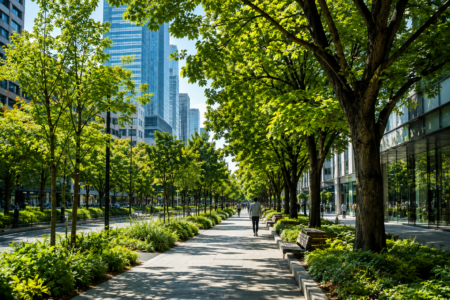


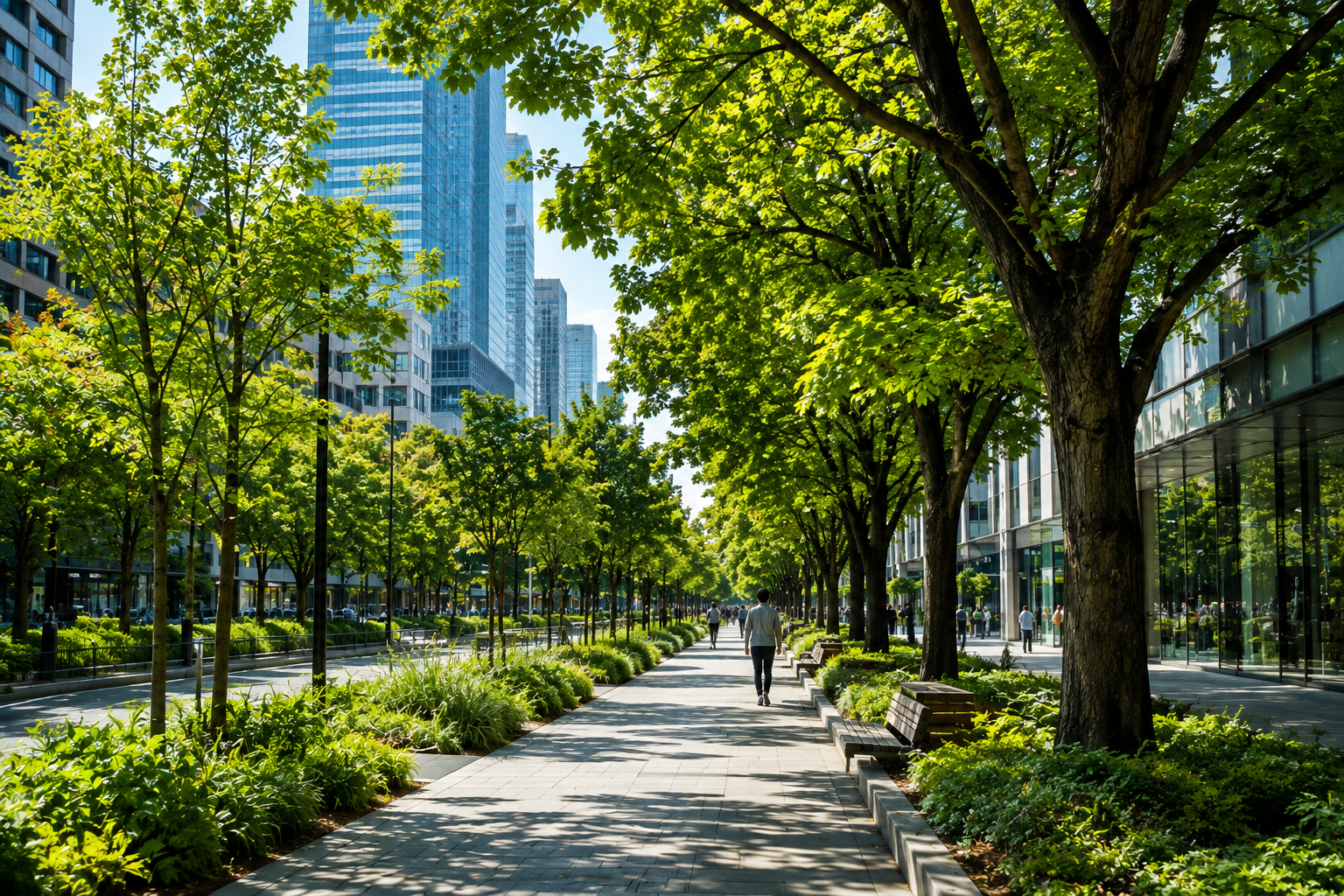
Parks, tree-lined streets, public squares and private gardens all contribute to the urban ecosystem. Beyond their aesthetic value, trees provide numerous environmental benefits while improving the quality of life of city residents.
A Natural Defense Against Urban Heat
One of the most important benefits of urban trees is their ability to reduce the impact of heat. Concrete, asphalt and buildings absorb solar energy during the day and gradually release it, contributing to what is known as the urban heat island effect.
Trees help reduce this phenomenon in several ways. Their leaves provide shade, protecting streets, sidewalks and buildings from direct sunlight. They also cool the surrounding air through evapotranspiration, a natural process through which water absorbed by the roots is partly released into the atmosphere through the leaves.
Well-planted streets can therefore provide much more comfortable conditions during periods of extreme heat. This function is becoming increasingly valuable as cities adapt to more frequent and intense heatwaves.
Contributing to Better Air Quality
Trees also play a role in regulating the urban environment. Through photosynthesis, they absorb carbon dioxide and store part of the carbon in their trunks, branches and roots.
Their leaves can also capture some airborne particles. However, the extent of this effect varies according to the tree species, weather conditions and the layout of streets and buildings.
Planting trees cannot replace policies designed to reduce pollution from transportation, heating systems or industrial activities. Instead, urban vegetation should be considered as one part of a broader environmental strategy.
Providing Habitats for Biodiversity
Even in densely populated cities, trees provide habitats for numerous species. Birds, insects, small mammals, fungi and microorganisms can use them for food, shelter and reproduction.
Older trees are particularly valuable. Their size, bark and natural cavities can provide habitats that newly planted trees cannot immediately replace.
Connecting different green spaces is also important. Tree-lined streets, parks, gardens and riverbanks can create ecological corridors that allow species to move more easily through urban environments.
Helping Cities Manage Rainwater
Urban development often involves covering natural ground with impermeable surfaces such as roads, sidewalks and buildings. During heavy rainfall, water cannot easily penetrate these surfaces and may quickly overwhelm drainage systems.
Trees can help slow down this process. Their leaves and branches intercept part of the rainfall, while the soil surrounding their roots can encourage water to infiltrate naturally into the ground.
Combined with permeable surfaces, rain gardens and other forms of green infrastructure, trees can therefore contribute to more sustainable stormwater management.
Improving Quality of Life
Trees can also transform the way people experience their neighborhoods. A green, shaded street is often more pleasant for walking, relaxing or spending time outdoors. Trees create shaded areas while improving the appearance and atmosphere of public spaces.
Access to green spaces is also associated with benefits for well-being. Parks and tree-lined areas provide places to relax, encourage outdoor activities and help residents maintain regular contact with nature.
Urban greening can therefore support broader policies aimed at creating more pedestrian-friendly neighborhoods and encouraging cycling, walking and social interaction.
Planting New Trees and Protecting Existing Ones
Increasing the number of trees in cities is not simply a question of planting as many as possible. Trees require sufficient space, water and suitable soil conditions to grow successfully over several decades. The choice of species must also take into account both current conditions and the future effects of climate change.
Protecting existing trees is equally important. A mature tree already provides extensive shade, significant foliage and established habitats that a young tree may take decades to develop.
Successful urban forestry therefore requires a long-term approach combining planting, protection and maintenance.
Bringing Nature Back Into the City
As cities respond to climate change, trees are becoming much more than attractive elements of the urban landscape. Their ability to provide shade, support biodiversity, manage water and improve quality of life makes them valuable tools for adapting cities to environmental challenges.
Future urban development will require a better balance between buildings, infrastructure and natural spaces. Protecting mature trees while creating the right conditions for new ones to grow can play an important part in bringing nature back into everyday urban life.