




| IN A NUTSHELL |
|
The sensation of cold is something everyone experiences, yet few might consider its underlying complexity. Recent research led by Félix Viana at the Institute for Neurosciences has revealed that the body perceives cold in more than one way. Contrary to previous beliefs, it turns out that different parts of the body rely on distinct molecular systems to detect temperature changes. This discovery opens up new discussions about how the body maintains temperature balance and could shed light on disorders linked to abnormal cold sensitivity.
Why Cold Feels Different on Skin and Inside the Body
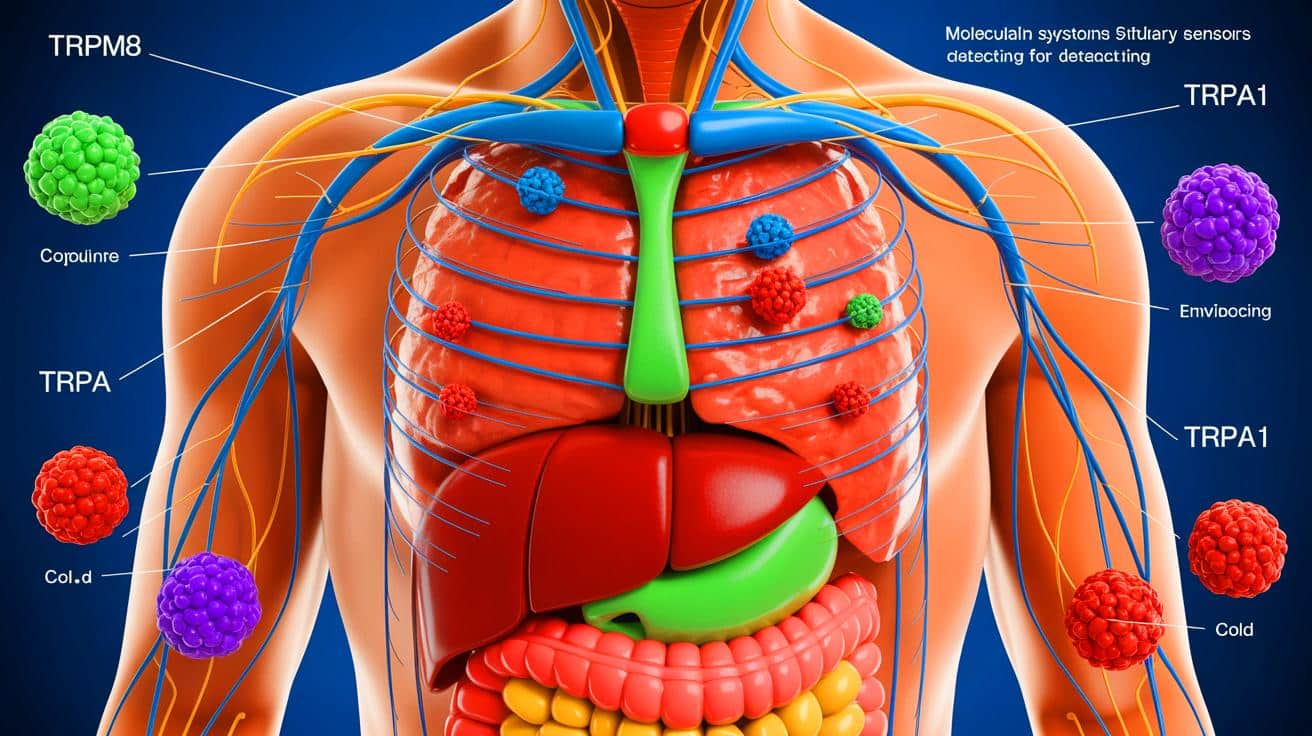
The sensation of cold is not uniform across the body, and this research provides a scientific explanation for why cold on the skin feels different from cold experienced internally. The study found that skin and internal organs utilize different biological pathways to detect temperature shifts. The skin relies primarily on an ion channel known as TRPM8, specialized for sensing cool environmental conditions. This explains why the sensation of a cold breeze on the skin is distinctly different from the feeling of inhaling icy air or drinking a cold beverage. Félix Viana elaborated, “The skin is equipped with specific sensors that allow us to detect environmental cold and adapt defensive behaviors.”
In contrast, internal organs such as the lungs and stomach depend largely on a different sensor, TRPA1, for temperature detection. This reflects a deeper physiological role in internal regulation and responses to environmental stimuli. The division of these sensory pathways highlights the body’s sophisticated approach to managing different types of temperature information, ensuring that each sensory experience is processed in a way that best suits its physiological context.
Studying Cold-Sensing Nerves
To explore these differences, researchers focused on animal models that allowed them to study sensory neurons directly responsible for detecting cold. Two major nerve pathways were examined: the trigeminal nerve, which handles sensory information from the skin and head, and the vagus nerve, which facilitates communication between the brain and internal organs like the lungs and digestive system. By using advanced techniques such as calcium imaging and electrophysiological recordings, scientists could observe nerve activity in real-time.
They also employed drugs to selectively block certain molecular sensors, helping them identify which ion channels were active in each type of neuron. These experiments provided critical insights into how different parts of the body are equipped to sense cold. The findings underscore the importance of understanding these distinct pathways, as they could have implications for medical conditions where cold sensitivity is altered or disrupted.
Genetic Evidence Confirms Distinct Roles
To further validate their findings, the researchers utilized genetically modified mice that lacked either the TRPM8 or TRPA1 sensors. Through gene expression analyses, they confirmed that each sensor plays a unique role in cold perception based on the tissue involved. This genetic evidence highlights that temperature detection is finely tuned to the physiological needs of each body part. The skin uses different molecular mechanisms from those employed by internal organs, illustrating how specialized the body’s sensory systems are.
Katharina Gers-Barlag, first author of the study, stated, “Our findings reveal a more complex and nuanced view of how sensory systems in different tissues encode thermal information.”
This research not only provides a deeper understanding of sensory pathways but also opens new avenues for studying how these signals are integrated. The insights could prove particularly valuable for investigating neuropathies and other conditions where cold sensitivity is impaired.
Funding and International Collaboration
The study was supported by various funding sources, highlighting the collaborative effort behind the research. Support came from the Spanish National Plan for Scientific and Technical Research and Innovation, the Spanish State Research Agency-Ministry of Science, Innovation and Universities, and the Valencian Regional Government. The research is also part of an international project funded by the Human Frontier Science Program, coordinated by Félix Viana. This project aims to understand the molecular foundations of cold perception, especially in species adapted to extreme thermal environments.
The collaboration underscores the global interest in unraveling the complexities of temperature detection. Such international efforts are crucial for advancing our understanding of sensory systems and could lead to breakthroughs in treating conditions linked to abnormal temperature sensitivity.
As we continue to explore the intricacies of how our bodies perceive temperature, these findings raise essential questions about the future of sensory research. How might this knowledge influence the development of treatments for disorders involving temperature sensitivity? And what other secrets might our sensory systems hold? The answers could redefine our understanding of human physiology.