


IN A NUTSHELL
In a marketplace increasingly defined by climate urgency, the case for sustainable packaging has moved from corporate virtue signal to operational imperative. Journalists, policymakers and consumers press companies to cut the environmental impact of single‑use materials, pushing innovation toward biodegradable fibers, high‑quality recycled content, refillable and reusable systems, and certified compostable options. These choices demand rigorous life‑cycle analysis and transparent supply chains — just as online forms still ask users to prove they are human, manufacturers now face their own verification: showing that claims about sustainability are authentic, not merely performative. Evidence shows that reducing material intensity, prioritizing repairable or returnable packaging and shifting to bio‑based feedstocks can materially cut emissions and waste when paired with collection and recycling infrastructure. Critics warn of greenwashing and unintended consequences; proponents argue a coherent strategy rooted in the circular economy and supported by strong standards, consumer education and targeted policy incentives increases the likelihood of scalable reductions. Yet trade‑offs remain: balancing costs, collection systems and consumer behavior will determine whether these options translate into meaningful reductions in pollution and resource use.
The case for sustainable packaging
Sustainable packaging is not optional for companies that expect to remain competitive; it is a strategic necessity. When businesses continue to rely on single-use plastics and complex laminated materials, they shift long-term costs onto the environment, communities, and their own reputations. That shift is measurable in rising waste streams, regulatory pressure, and lost customer trust. Stakeholders now demand proof rather than platitudes, and companies must adopt transparent verification mechanisms to substantiate claims instead of relying on superficial checks.
The argument is straightforward: packaging that reduces material use, improves recyclability, or substitutes renewable inputs lowers lifecycle impacts and operating risks. The EPA outlines a framework for designing packaging systems that meet circularity goals while maintaining safety and performance (EPA: sustainable packaging). Businesses that ignore this trend expose themselves to supply chain shocks and potential policy penalties. Investing in durable, recyclable, or compostable solutions mitigates exposure to future restrictions and consumer backlash.
Furthermore, the economic calculus favors action. Savings from lightweighting, simplified materials, and reuse systems can offset initial redesign costs. Consumers increasingly prefer brands that demonstrate responsibility, and that preference translates into market share and price resilience. To make these choices credible, firms must move beyond token gestures; they require lifecycle assessments, verified claims, and third-party certifications. This is not merely a communications issue: it is a governance one. Companies that implement measurable, verifiable packaging strategies will extract value, reduce risk, and gain reputational capital. For practical guides and case studies on how everyday sustainable practices scale into business results, see resources that document the impact of incremental operational choices (Sustainability Times: sustainable practices).
Materials that reduce environmental impact
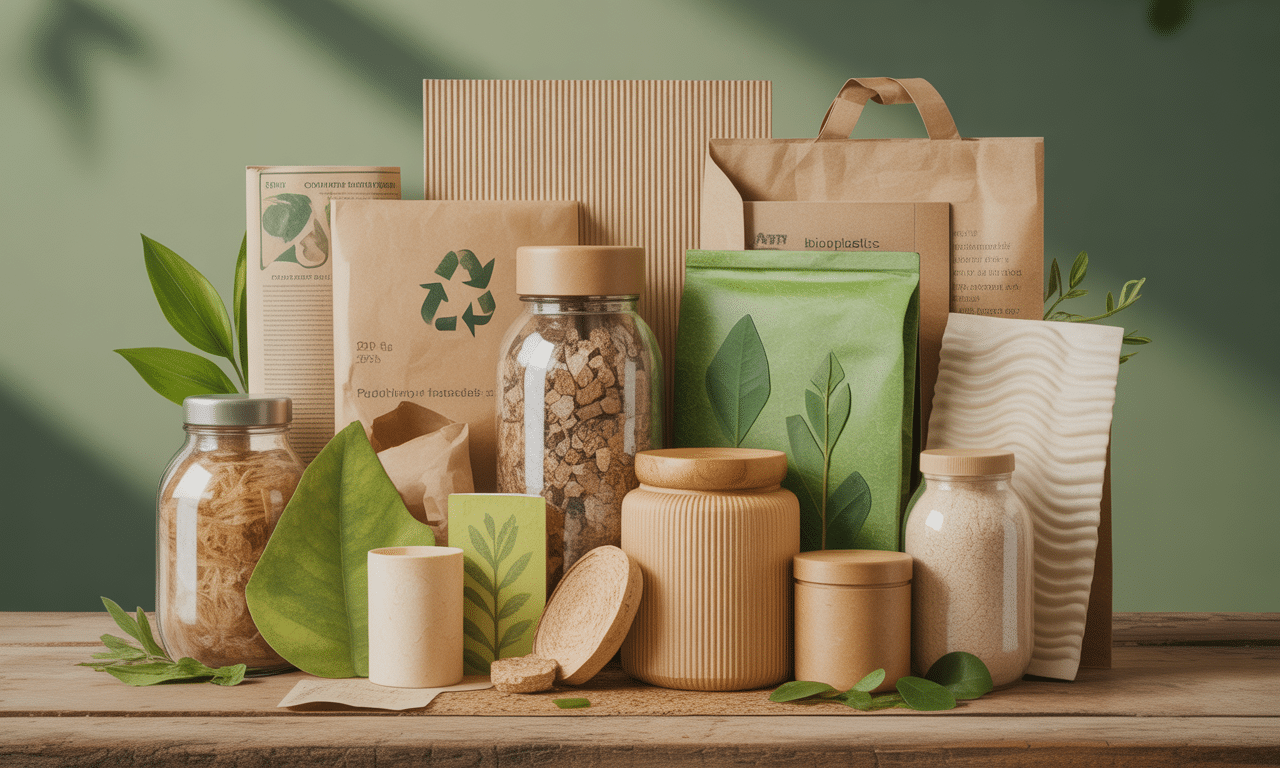
Choosing the right material is the most tangible lever to reduce packaging impact. The spectrum ranges from improving existing materials to replacing them entirely with bio-based alternatives. Traditional plastics still dominate because they are cheap and functional, but recycled-content plastics, paper fibers, and emerging biomaterials offer distinct trade-offs. Decision-makers must weigh real-world performance, end-of-life pathways, and the carbon and pollution implications of production.
Innovations such as mushroom mycelium, seaweed-derived films, and advanced paper coatings promise to reduce reliance on fossil feedstocks. Mycelium-based packaging is biodegradable and suitable for protective forms; research and reporting show it could replace certain single-use foams (Sustainability Times: mushrooms). Seaweed and algae films offer compostability and rapid renewability, while improved paper formulations (with attention to sourcing and recyclability) can be both functional and circular (Made for Planet: materials).
To compare options clearly, the following table summarizes common materials, typical benefits, and key limitations. Choosing materials without assessing end-of-life systems invites greenwashing and operational failure.
| Material | Main benefits | Key drawbacks | Best use cases |
|---|---|---|---|
| Virgin plastic | Low cost, versatile, durable | Fossil carbon, low recycling in many markets | Long-life, moisture barrier where alternatives fail |
| Recycled plastic (rPET, rHDPE) | Lower footprint than virgin, retains barrier properties | Contamination risk, quality variability | Bottles, rigid containers |
| Paper & cardboard | Renewable, widely recyclable | Lower moisture barrier unless coated | Boxes, secondary packaging |
| PLA/bioplastics | Bio-based, compostable in industrial facilities | Limited industrial composting access, contamination of recycling | Foodware where composting infrastructure exists |
| Mycelium/seaweed | Biodegradable, low fossil input | Scaling and cost challenges | Protective inserts, single-use cups/films in niche markets |
For more on the promise and practical limits of emerging options, read analyses of biodegradable trends and pandemic-era plastic trends (Sustainability Times: plastic waste pandemic), and surveys of compostable cup innovations (Sustainability Times: cups).
Design strategies that lower footprint
Material choice must be coupled with smart design. Packaging engineers and product managers should prioritize strategies that reduce material intensity and simplify end-of-life recovery. Lightweighting removes unnecessary mass without sacrificing protection, while system-level approaches like refillable containers and standardized mono-materials greatly improve the feasibility of recycling and reuse. Design decisions that prioritize reparability and reusability translate directly into lower waste and lower lifecycle emissions.
Refill and reuse models shift impacts from continuous manufacturing to logistics and product longevity. Where feasible, refillable dispensers and returnable containers create repeated value from a single item and reduce packaging throughput. Mono-material construction avoids mixed-material laminates that hinder recycling, and clear labeling of instructions and disposal pathways reduces contamination in recovery streams. Tools and guidance from packaging specialists and eco-design platforms illustrate practical steps: Brillpack and Packhit offer design ideas that balance sustainability and brand needs (Brillpack: ideas, Packhit: eco-friendly ideas).
Choices must be defensible under scrutiny. For example, replacing plastic with coated paper may look good but can create recycling complications; similarly, compostable labels that contaminate paper streams negate benefits. Design must therefore be validated by lifecycle assessments and real-world waste infrastructure analysis. Practical innovation includes modular pack elements, standardized closures that allow mechanical separation, and clear consumer-facing instructions. Industry case studies demonstrate that modest design changes—reducing layers, simplifying adhesive systems, or shifting to recyclable inks—can yield outsized environmental gains. For guidance on everyday practice and corporate rollout of design strategies, consult resources that connect shop-floor practices to strategic results (Sustainability Times: sustainable practices).
Measuring impact across the lifecycle
Accurate measurement is the backbone of credible packaging strategy. Without robust lifecycle analysis (LCA), decisions rest on intuition or green rhetoric. LCA quantifies emissions, resource use, and end-of-life impacts, enabling trade-off analysis between lightweighting, material substitution, and reuse. Organizations must adopt rigorous, comparable metrics to prevent unintended consequences and to justify investments.
Lifecycle thinking also reveals where systemic constraints exist: recycling markets vary by region, industrial composting is limited in many urban areas, and collection infrastructure can dictate feasibility more than material properties. For example, a compostable cup that cannot enter local composting systems becomes waste; conversely, a recyclable mono-material thrives where collection is robust. Reports that track broader market trends and infrastructure readiness help contextualize LCA findings (Sustainability Times: future of businesses).
Practical governance means combining LCA with third-party verification and transparent labeling so consumers and waste managers understand the intended pathways. Verification replaces guesswork with accountable claims. The analogy of digital captchas—simple checks that prove authenticity—applies here: corporations need systematic verifications that their packaging functions as promoted, not just marketing statements. Tools and standards from regulators and NGOs set expectations; companies should align product specifications and supplier contracts with those standards (EPA: sustainable packaging). Accurate measurement also supports circular business models and can be a deciding factor when choosing between promising but nascent materials such as mycelium or seaweed-based films (Sustainability Times: mushrooms, Made for Planet).
Consumer behavior and policy levers
Consumer demand and public policy are complementary forces that accelerate packaging change. Consumers reward brands that make responsible choices, but they also need clear signals and infrastructure to act. Nudges such as standardized labels, deposit-return schemes, and refill incentives create visible paths for consumers to reduce waste. Policy instruments level the playing field so companies that invest in sustainable packaging do not face competitive disadvantage.
Regulation is already shifting: bans, minimum recycled-content mandates, and extended producer responsibility schemes increase the cost of poor choices and reward circular design. These rules encourage firms to internalize end-of-life costs and to innovate across packaging portfolios. Simultaneously, retailers and large buyers can use procurement criteria to drive supplier changes, effectively amplifying impact through purchasing power. For businesses seeking practical tactics, marketplace reporting highlights how sustainability integrates with strategy and growth (Sustainability Times: future).
Consumers must also be educated about trade-offs. For instance, switching to a supposedly compostable product without accessible composting leads to contamination and disposal problems; therefore public education campaigns and improved collection systems are vital. Effective solutions combine product design, infrastructure investment, and policy alignment. Real-world initiatives—from deposit systems for beverage containers to corporate reuse pilots—demonstrate measurable reductions in waste and emissions. For inspiration on how everyday sustainable choices compound at scale, examine resources covering practical lifestyle and market shifts (Green.org: solutions, Sustainability Times: everyday, Sustainability Times: pandemic plastic).
Final considerations for sustainable packaging
Sustainable packaging is not optional; it is a strategic imperative. Choosing sustainable packaging options—from recycled materials to genuinely biodegradable or compostable formats—directly reduces waste streams and lowers the carbon footprint associated with the full product life cycle. Businesses that persist with single-use plastics or opaque material claims expose themselves to regulatory risk and reputational damage, while those that invest in alternatives position themselves to capture growing market share.
An evidence-based approach matters: companies must adopt rigorous life-cycle assessment practices to compare alternatives rather than rely on surface-level benefits. For example, shifting to lighter-weight recyclable packaging can cut transport emissions, but only if end-of-life collection systems and recycling markets are in place. A strong argument exists for integrating packaging design with supply-chain changes and customer return systems to realize real environmental gains.
Policy and market incentives reinforce the case. Mechanisms such as extended producer responsibility and material taxes make the economics of sustainable options clearer. Short-term cost concerns are often presented as barriers, yet the long-term savings from reduced materials, potential regulatory avoidance, and enhanced brand loyalty outweigh initial investments. Firms that internalize environmental costs gain a competitive edge.
Transparency is essential to prevent greenwashing. Decisions must be demonstrable and verifiable—akin to a human verification step that separates genuine claims from automated or superficial assertions—so stakeholders can trust sustainability commitments. Clear labeling, third-party certification, and traceable supply chains convert environmental promises into accountable practice.
Ultimately, the argument for sustainable packaging is pragmatic and urgent: align material choices with systems thinking, prioritize measurable environmental outcomes, and demand accountability across the value chain to ensure packaging becomes part of the solution rather than a continuing problem.
Q: What does sustainable packaging actually mean? A: Sustainable packaging means designing and selecting materials and systems that minimize environmental harm across the entire product life cycle — from sourcing and manufacturing to distribution and end-of-life — rather than simply opting for the cheapest or most familiar option. Q: Which packaging options most effectively reduce environmental impact? A: No single solution fits all cases, but prioritizing reusable systems, refillable models, mono-material designs for easy recycling, and materials with verified low-impact footprints such as responsibly sourced paperboard or certified bio-based fibers will generally reduce impact more than switching to a superficially green alternative. Q: How do biodegradable and compostable differ — are they better than recyclable materials? A: They are not interchangeable: biodegradable means a material breaks down over time under some conditions, while compostable requires specific industrial or home composting conditions. Neither is universally superior to recyclable materials; the best choice depends on existing waste infrastructure and whether those materials will reach the appropriate disposal stream. Q: Aren’t recyclable plastics the obvious answer? A: Recycler-friendly plastics are valuable, but recycling effectiveness depends on collection systems, contamination rates, and market demand for recycled resin. Designing for recyclability — using single polymers, clear labeling, and avoiding mixed-material laminates — is essential for those benefits to materialize. Q: How should companies decide which sustainable option to use? A: Decisions must be based on a life cycle assessment (LCA) and realistic assumptions about end-of-life streams and consumer behavior. Prioritize strategies that reduce material use, enable reuse, and align with local recycling or composting infrastructure rather than choices driven by perception alone. Q: Is sustainable packaging always more expensive? A: Upfront costs can be higher, but when you account for reduced material use, lower transportation emissions, improved brand value, and emerging regulatory extended producer responsibility (EPR) rules, many investments pay off. Framing cost as a short-term expense ignores long-term operational and reputational advantages. Q: How can companies avoid greenwashing and ensure claims are credible? A: Rely on independent certification, transparent supply chain data, and robust life cycle metrics. Use third-party audits and human-led verification processes rather than automatic or unverified claims — treat sustainability claims with the same scrutiny you would use to confirm identity or authenticity. Q: What role does the circular economy concept play in packaging choices? A: The circular economy shifts focus from single-use disposal to keeping materials in use through reuse, repair, remanufacturing, and recycling. Packaging strategies that enable return systems, refill models, or closed-loop recycling align directly with circular principles and deliver measurable environmental benefits. Q: How should small businesses begin transitioning to sustainable packaging? A: Start with practical steps: reduce unnecessary packaging, switch to mono-material designs, source recycled-content materials, and pilot refillable or lightweighting initiatives. Measure results and scale what works; incremental changes are better than waiting for a perfect solution. Q: What metrics should be tracked to prove environmental improvements? A: Track carbon footprint, material intensity per product, recycling or return rates, and end-of-life diversion rates. Use transparent, comparable metrics from LCAs and be prepared to defend methodology — numbers without defensible methods are meaningless in sustainability debates.Sustainable Packaging FAQ