


| IN A NUTSHELL |
|
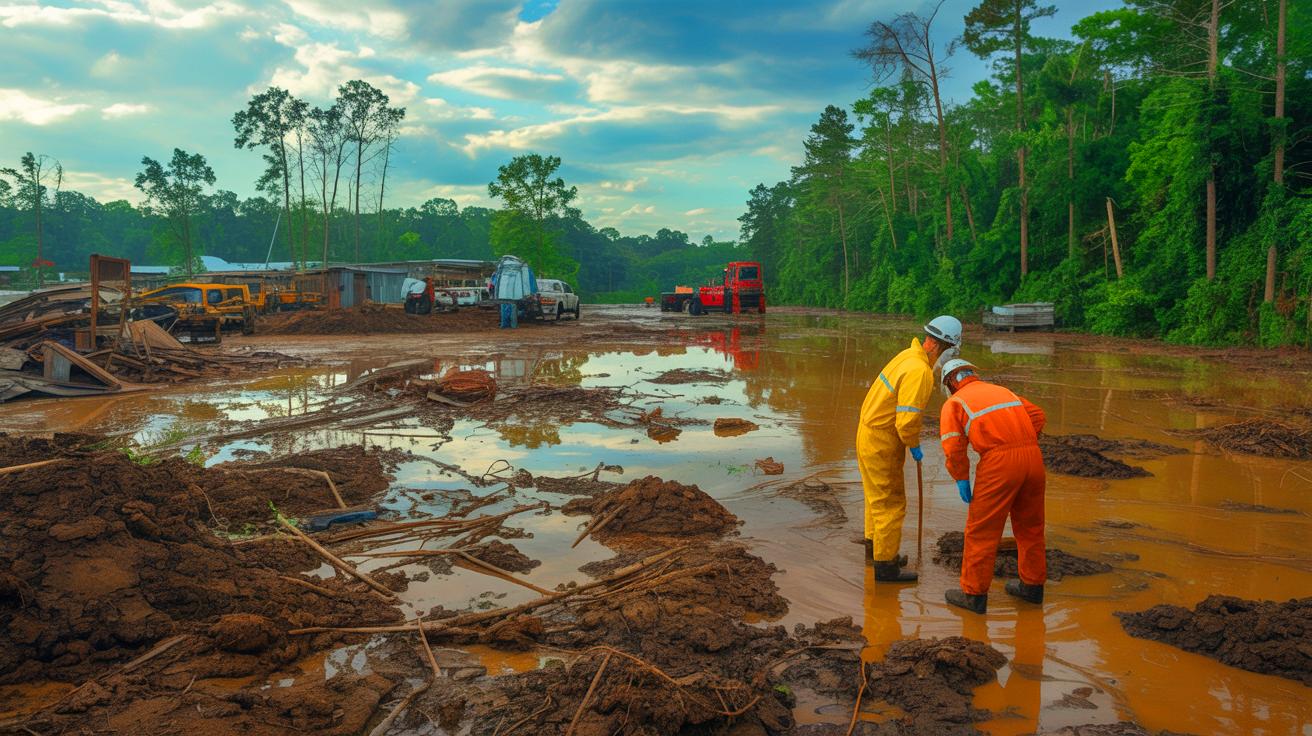
In September 2024, a peculiar health incident emerged in the United States, grabbing the attention of medical experts and researchers alike. Two men, both working on a construction site in rural Georgia, contracted a rare and dangerous bacterial infection shortly after Hurricane Helene swept through the region. This bacterium, known as Burkholderia pseudomallei, is typically not found in the United States, raising questions about how it arrived and infected these individuals. A new study has been launched to investigate the origins of this pathogen, with one hypothesis suggesting that the hurricane may have played a role in transporting the germ.
Unraveling a Potentially Deadly Disease
As Hurricane Helene unleashed its fury across Florida and Georgia in late September 2024, it left in its wake a mysterious outbreak. Two men working on a construction site in Georgia fell ill with infections caused by the bacterium Burkholderia pseudomallei. This bacterium is responsible for melioidosis, a severe disease characterized by respiratory difficulties, fever, severe cough, and migraines. If left untreated, the infection can spread to vital organs, resulting in a mortality rate as high as 90%. Fortunately, with appropriate treatment, the mortality rate drops to around 40%.
The sudden appearance of this bacterium in the United States is not unprecedented. In 2021, Burkholderia pseudomallei was linked to contaminated essential oil sprays sold at Walmart, but its presence remains rare. The two recent infections in Georgia have prompted a deeper investigation into the bacterium’s origins and how it reached U.S. soil.
Cold Plunges Are a Scam for Women and Science Just Dropped the Mic on This Freezing Hot Fitness Fad
A Tropical Bacterium in Unfamiliar Terrain
Burkholderia pseudomallei is typically found in the tropical and subtropical regions of Southeast Asia and northern Australia, where it resides in soil and water. Its presence in the United States is highly unusual, prompting researchers to question how the two men in Georgia contracted the infection. The Georgia Department of Public Health, in collaboration with the Centers for Disease Control and Prevention (CDC), launched a study to uncover the source of the contamination.
Initially, researchers speculated that Hurricane Helene might have transported the bacterium from its native regions. Natural disasters, such as hurricanes, can exacerbate the spread of certain pathogens, as seen in early 2025 when flooding in Queensland, Australia, led to a melioidosis outbreak. However, such an event would typically require the bacterium to be already present in the affected area, which was not the case in the U.S.
Eating Breakfast After This Hour Cuts 5 Years From Your Life Expectancy Scientists Warn
Reevaluating the Hurricane Hypothesis
Despite the initial suspicion, evidence suggests that Hurricane Helene may not have been responsible for the bacterium's arrival in Georgia. Annually, the U.S. records about a dozen cases of melioidosis, most linked to international travel. However, the two men recently infected had not left the United States. Genetic sequencing revealed a match between their infections and two historical cases in Georgia, dating back to the 1980s.
In 1983, an ex-serviceman working on a military base contracted melioidosis, followed by another case in 1989 involving a Vietnam War veteran. Genetic analysis indicates that the recent infections share the same source as these earlier cases. This suggests that the bacterium may have been introduced and persisted in the southern U.S. after military personnel and equipment returned from Vietnam, where the bacterium was prevalent.
Discover the Top Nutrient-Rich Foods that Can Assist in Your Weight Loss Journey
Seeking Answers in Environmental Samples
While the true origin of the recent melioidosis cases remains uncertain, researchers continue to explore multiple avenues. The possibility that the bacterium has been present in the southern United States for decades is being considered, and efforts are underway to identify environmental samples that may harbor the pathogen. In 2022, a sample was collected in southern Mississippi, but more evidence is needed to draw definitive conclusions.
The study's leaders emphasize that further research and environmental testing are crucial to understanding how Burkholderia pseudomallei reached Georgia and whether it has established a foothold in the U.S. Researchers hope that by identifying contaminated environmental samples, they can better understand the bacterium's presence and prevent future outbreaks.
The unexpected appearance of Burkholderia pseudomallei in Georgia highlights the complex interplay between environmental factors and infectious diseases. As researchers delve deeper into the origins of this bacterium, questions remain about the broader implications for public health and safety. How can we better prepare for unexpected outbreaks of rare pathogens in the future, and what steps can we take to mitigate their impact?


Wow, I can’t believe a hurricane could bring such a dangerous bacterium to the US! 🌪️🦠
Wow, I never knew hurricanes could spread bacteria like that! 🌪️
Can someone explain how a bacterium from the 1980s is still causing issues today?
Could this mean that other bacteria might also be hiding in the US soil, waiting to be discovered?
Is melioidosis contagious between people, or is it just from the environment?
Great article! Thanks for the deep dive into this complex topic. 👏
Great article! I’m curious, how do researchers plan to track the bacterium’s presence in the environment?
Fascinating read! It’s amazing how past events still affect us today.
So, are hurricanes responsible or not? I’m a bit confused by the findings.
Wait, so the hurricane didn’t actually bring the bacteria? I’m confused. 🤔
How can we prevent such bacteria from spreading during future hurricanes?
This is terrifying! Are there any symptoms we should watch out for? 😨
Is there a risk of more outbreaks like this in the future, especially with climate change affecting weather patterns?
I wonder if climate change is making these events more common. 🤔
Thanks for the detailed analysis. It’s scary but important to know!