




| IN A NUTSHELL |
|
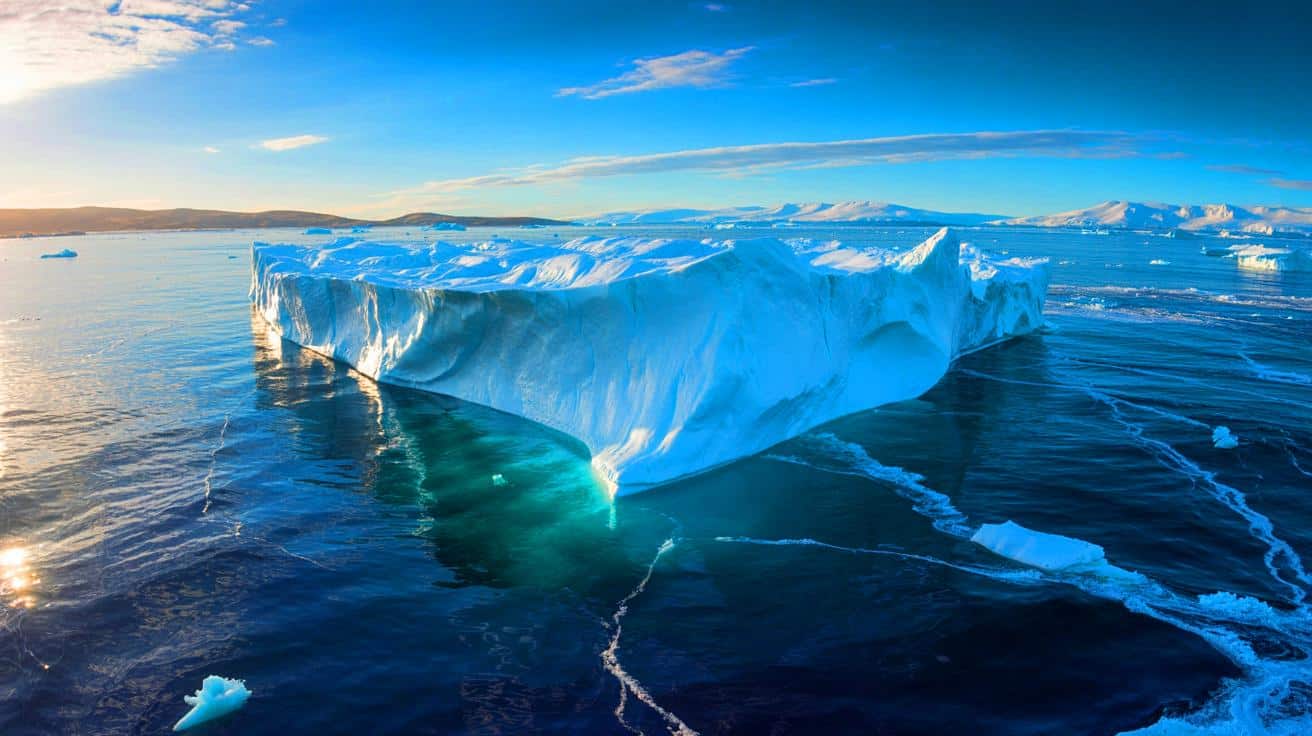
The journey of iceberg A23a, which began in 1986, is nearing its end after four decades of existence. This colossal ice structure, having drifted for two years, now finds itself in the Southern Ocean, where rising temperatures threaten its survival. As its melting accelerates, the iceberg is expected to become unrecognizable in the coming weeks. The story of A23a is a striking reminder of the impacts of climate change, as it traverses waters that are now too warm to sustain its icy mass.
An Epic Northward Drift
In 1986, iceberg A23a broke away from the Antarctic ice shelf known as Filchner-Ronne, marking the start of its long journey. Initially, this massive block of ice covered an area of about 1,500 square miles, comparable to the city of New York. Weighing around a trillion tons, it remained anchored to the sea floor until late 2023 when it began its drift. Pushed by strong ocean currents and fierce winds, A23a moved past the northern tip of the Antarctic Peninsula shortly after its journey commenced.
The iceberg’s journey was documented by the polar research vessel RRS Sir David Attenborough. As the ship navigated the iceberg’s perimeter at a speed of approximately 11.5 miles per hour, researchers collected water samples, concerned about potential mineral dust release. A23a continued its course into the Southern Ocean, eventually nearing South Georgia, a British island in the South Atlantic. The iceberg’s path has been closely monitored due to its potential environmental impact.
The Iceberg Breaks Apart
By March 2025, A23a had grounded itself about 45 miles from the shore. Scientists had warned that the iceberg could cause an environmental disaster, as South Georgia is a breeding ground for wildlife such as penguins and seals. However, the melting ice released nutrients into the ocean, significantly boosting local food sources for these animals. This unexpected benefit contrasted with concerns from fishermen, who feared the iceberg could break into smaller pieces, complicating navigation in the area.
In May 2025, A23a resumed its movement, circling around South Georgia before accelerating northward. Reports from September 2025 indicated that the iceberg had already fragmented into several large pieces, with melting continuing at an accelerated pace. These developments illustrate the dynamic and unpredictable nature of large icebergs as they drift through increasingly warm waters.
A Matter of Weeks
Andrew Meijers, an oceanographer with the British Antarctic Survey, has remarked that the iceberg is nearing its demise due to the now warmer waters of the Southern Ocean. A23a, once a colossal structure, has been reduced to a mere 680 square miles with a width of only 37 miles. Meijers anticipates that A23a will be unrecognizable in just a few weeks. Scientists have expressed surprise at its longevity, as icebergs typically do not travel this far north and are doomed once they leave the protective Antarctic climate.
A23a has held the title of "largest current iceberg" multiple times since the 1980s, occasionally surpassed by larger but shorter-lived icebergs such as A68 (2017) and A76 (2021). Despite these challengers, A23a's survival for four decades is unprecedented. Its journey underscores the profound changes occurring in polar regions and the broader implications for global climate systems.
Implications for the Future
The story of A23a is emblematic of the broader transformations occurring due to climate change. As global temperatures rise, icebergs like A23a are becoming more common, posing challenges to both local ecosystems and human activities. The nutrients released by melting icebergs can temporarily benefit marine life, but the long-term consequences remain uncertain. Additionally, the fragmentation of large icebergs complicates navigation and poses risks to shipping routes.
As scientists continue to monitor A23a’s journey, questions remain about the future of polar ice and its impact on global sea levels. The lessons learned from A23a's decades-long drift will inform future studies of iceberg dynamics and climate change. The fate of A23a prompts reflection on how humanity will adapt to these shifting environmental realities.
As we watch A23a's final days unfold, we are left to ponder the long-term effects of such monumental changes in our planet's polar regions. How will societies around the world respond to the escalating challenges posed by a warming climate and its impact on icebergs and ocean ecosystems?

Wow, 40 years is a long time for an iceberg to drift! What does this say about climate change rates? 🌍
Wow, 40 years is quite a journey for an iceberg! ❄️
Isn’t it amazing how nature can surprise us even in the face of climate change?
Great article! I had no idea icebergs could last that long. Keep up the good work.
🤔 Why do icebergs like A23a drift north in the first place?
So, is this good or bad for penguins? I’m confused! 🐧
This article is really eye-opening. Thanks for sharing!
How come A23a lasted longer than other icebergs like A68 and A76? 🤔
Does this mean more icebergs will break off in the future?
Thank you for the insightful piece. It really highlights the urgency of addressing climate change.
It’s sad but also fascinating to learn about A23a’s journey.
Isn’t it ironic that melting icebergs can help marine life? Nature is full of surprises!
40 years and still going—talk about endurance! 🐧