




| IN A NUTSHELL |
|
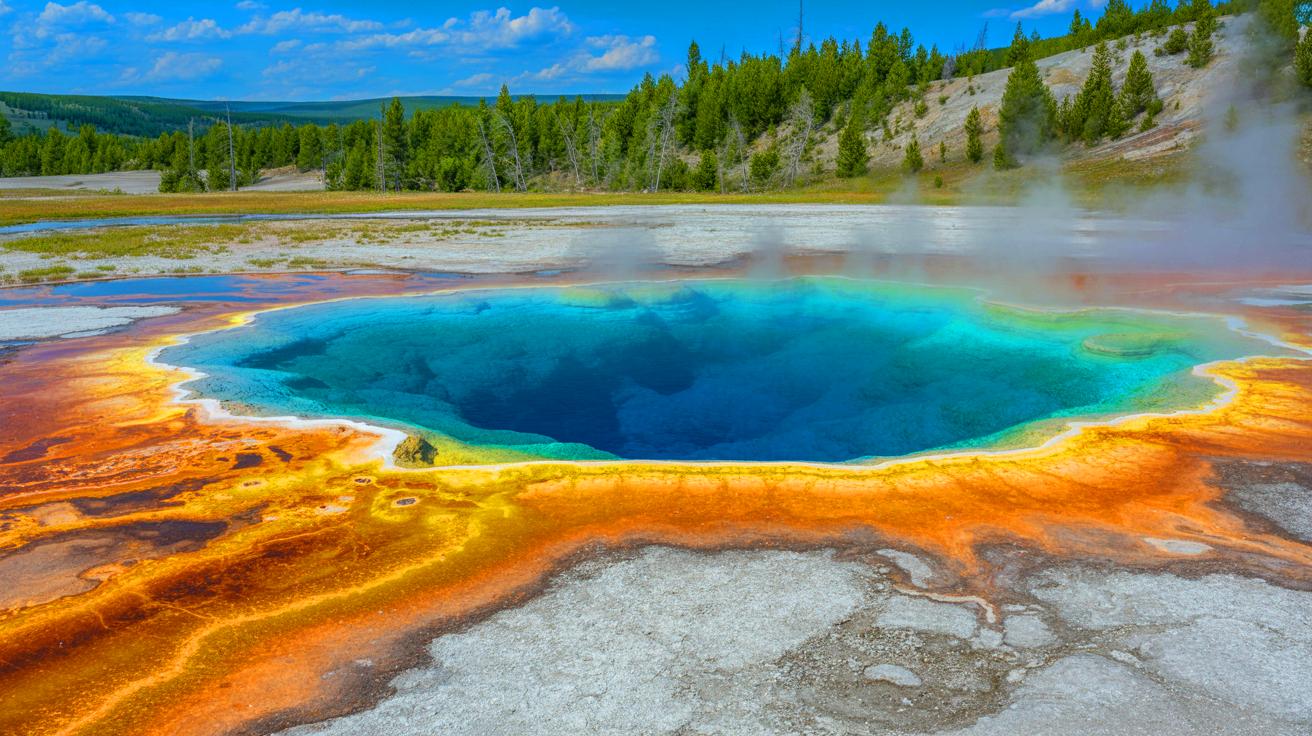
In the heart of the northwestern United States lies Yellowstone National Park, a geological wonder teeming with geothermal activity. Among its bubbling hot springs, researchers have discovered a remarkable bacterium capable of breathing both oxygen and sulfur. This unique microbe, found in one of Yellowstone’s famous hot springs, could potentially illuminate how certain organisms survived the Great Oxidation Event approximately two billion years ago. This discovery not only uncovers a piece of Earth’s ancient history but also challenges our understanding of life’s adaptability in extreme conditions.
The Adaptation of Microbial Life
While humans and many other life forms require oxygen to survive, a considerable number of organisms thrive without it. These anaerobic organisms, primarily microbes, derive energy from elements such as nitrate, sulfate, or sulfur instead of oxygen. For the first two billion years of life on Earth, the surface was inhabited solely by these anaerobic microbes. However, around 2.4 billion years ago, the Great Oxidation Event began to infuse Earth’s atmosphere and oceans with oxygen.
This influx of oxygen posed a significant challenge as bacteria were forced to adapt to the changing environment. This mysterious transition is better understood through a study published in Nature Communications in January 2025. Microbiologists from Montana State University identified an unusual bacterium that may shed light on this transition. Named Hydrogenobacter RSW1, this bacterium was discovered at the bottom of a Yellowstone hot spring, displaying the unprecedented ability to breathe both oxygen and sulfur. This dual respiratory capability was previously considered impossible.
An Evolutionary Advantage in Unstable Environments
Laboratory tests conducted by the study's authors reveal that RSW1 can combine two types of metabolism. In the absence of oxygen, it uses hydrogen and sulfur to produce sulfide but does not grow. When oxygen becomes available, RSW1 switches to aerobic metabolism to grow rapidly while continuing sulfide production. This dual respiratory mode makes RSW1 a unique bacterium. Researchers suggest that RSW1 may protect its anaerobic respiration from oxygen exposure by utilizing supercomplexes—chemical assemblies of internal enzymes that rapidly consume oxygen.
This dual respiration offers an evolutionary advantage in unstable environments characterized by fluctuating oxygen levels, such as Yellowstone's hot springs. Furthermore, this unprecedented capability may provide insights into how some organisms survived the Great Oxidation Event. Many anaerobic organisms faced a newly toxic environment, and only those capable of dual respiration were able to survive and reproduce, highlighting the resilience of life in the face of environmental changes.
The Broader Implications of the Discovery
The discovery of Hydrogenobacter RSW1 raises questions about the adaptability of life forms in extreme environments beyond Earth as well. If life can thrive in Yellowstone's harsh conditions, it opens the possibility of similar organisms existing on other planets or moons with extreme environments. The ability to breathe both oxygen and sulfur could be a universal survival strategy, offering clues to astrobiologists searching for life beyond our planet.
Additionally, this finding could have practical applications in biotechnology. The metabolic flexibility of RSW1 might inspire new ways to engineer microbes for industrial processes, such as biofuel production or environmental remediation. Harnessing the unique capabilities of such microbes could lead to innovative technologies that capitalize on their ability to operate under diverse conditions.
Understanding Earth's Ancient History
The discovery of RSW1 not only advances our understanding of microbial life but also provides a window into Earth's ancient history. By studying this bacterium, scientists can gain insights into the evolutionary pressures faced by early life forms during the Great Oxidation Event. This period marked a significant turning point in Earth's history, leading to the proliferation of aerobic organisms and the eventual rise of complex life.
RSW1's ability to adapt to varying oxygen levels suggests that similar microbes might have played a crucial role in shaping the biosphere during this transformative era.
Understanding these adaptations helps reconstruct the evolutionary pathways that have led to the diversity of life we see today.
The discovery of a bacterium capable of breathing both oxygen and sulfur in Yellowstone National Park's hot springs challenges existing notions of life's adaptability. This finding not only offers insights into the survival strategies of ancient organisms but also raises questions about the potential for life in extreme environments elsewhere. As scientists continue to explore these mysteries, could the answers reshape our understanding of life's possibilities both on Earth and beyond?



Wow, this discovery could change everything we know about life on Earth! 🌍
Wow, science never ceases to amaze me! Could this bacterium really change our understanding of Earth’s history? 🤔
How does this bacterium switch between oxygen and sulfur respiration? Fascinating! 🤔
How do they know the bacterium breathes sulfur? That sounds like something out of a sci-fi movie!
Does this mean life could exist on other planets too? 🚀
Great article! It’s amazing to see science uncovering Earth’s secrets.
Is there any risk this bacterium could become harmful to humans if it spreads? 😬
So, are we saying that the history books might need a rewrite? 😄
Can this bacterium be used for biofuel production?
Thanks for the article! It’s fascinating to see how life adapts in extreme conditions. 🌋
How long did it take to discover and study this bacterium?
Is it safe to assume that life can adapt to any environment now?
If this bacterium can survive in such harsh environments, maybe we can too… someday!
How could this discovery affect our search for extraterrestrial life?
Are there similar bacteria found in other parts of the world?