


| IN A NUTSHELL |
|
The era of European megaprojects has begun with a colossal engineering endeavor that creates a seamless link beneath the Alps. The Brenner Base Tunnel, stretching 40 miles, is set to transform the continent’s rail landscape by becoming the longest railway tunnel ever constructed. This project represents more than just a passage; it marks a turning point in sustainable mobility and European logistics. As Europe strives for decarbonization, this tunnel stands as a testament to the continent’s commitment to reducing carbon emissions and enhancing connectivity.
Connecting North and South: A Long-Term Project
Officially launched in 2007, with excavation starting in 2015, the Brenner Tunnel is a pivotal part of the vast “Scandinavia-Mediterranean” European corridor. It will connect Munich to Verona via Innsbruck and Fortezza, facilitating a vital axis through the Alps. This natural pass, historically utilized for centuries, will now serve a new high-speed underground route. The tunnel will significantly cut distances and travel times between Germany and Italy. Trains could reach speeds up to 155 mph, a remarkable leap from the current average of roughly 30 mph, constrained by mountainous terrain.
Beyond passenger transport, the tunnel is designed to support freight trains weighing up to 3,000 tons. This capability promises to alleviate surrounding road traffic, reducing heavy vehicular congestion and CO₂ emissions. This aspect is crucial as Europe moves towards a sustainable, low-carbon future, aiming to balance economic growth with environmental conservation.
A Technical Marvel at the Heart of the Alps
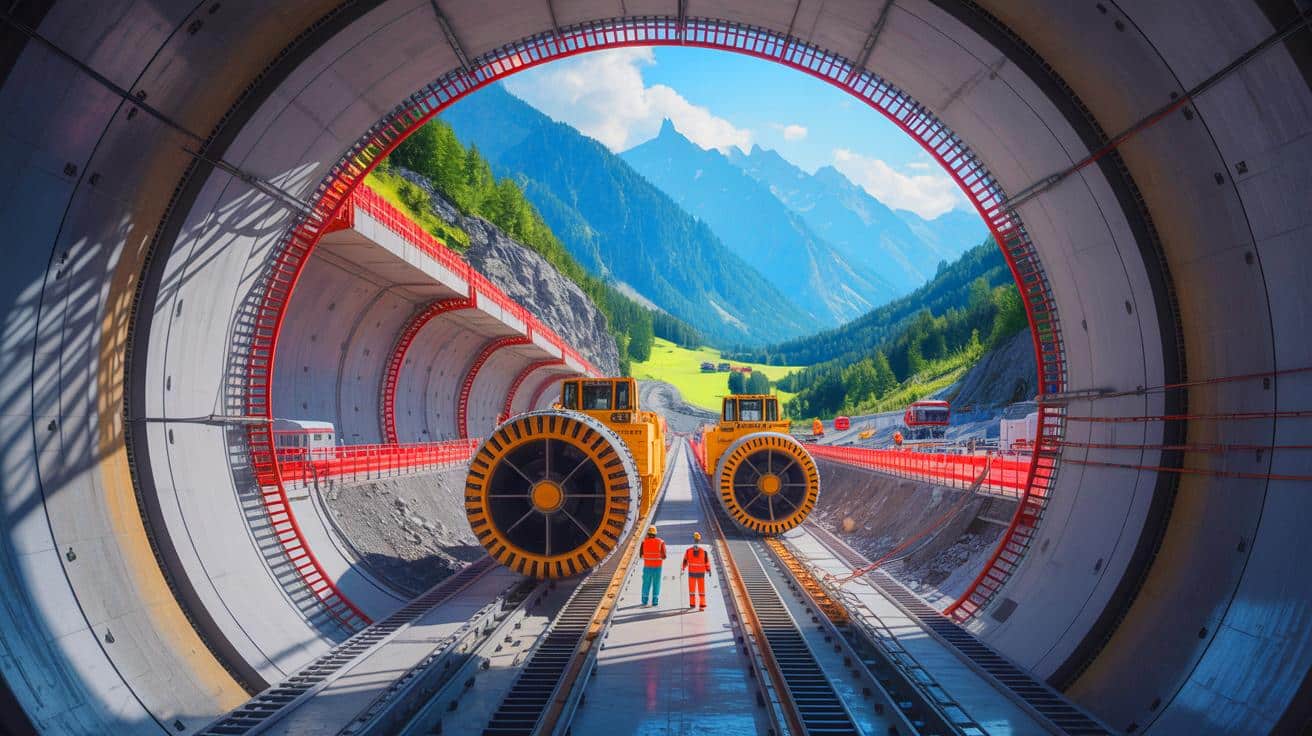
Drilling under the Alps is no easy feat. The tunnel consists of two parallel single-track tubes, connected by safety passages every 1,092 feet. A significant feature is the "flat" alignment, positioned at about 2,605 feet above sea level. This design minimizes the locomotive power needed, as trains currently require multiple engines to conquer steep inclines.
An exploratory tunnel, located a few meters below, focuses on studying local geology and managing groundwater. This highlights the emphasis on environmental constraints and site safety. The technical challenges of constructing such a tunnel are immense, requiring advanced engineering solutions and precise execution to navigate the complex alpine geology.
Delays and Financial Challenges
Initially slated for completion in 2025, the timeline has been extended to 2032, reflecting the immense challenges of this undertaking. Geological complexities, such as faults and underground watercourses, excavation method revisions, and the global pandemic have all delayed progress. The project's budget has swelled from $6 billion to approximately $9 billion, illustrating the scale and unpredictability of such an enterprise.
On September 18, a historic milestone was achieved when Italian and Austrian tunnel boring machines met beneath the mountain, marking the physical connection of this massive tunnel. While this symbolic step is crucial, the project must now advance towards installing railway infrastructure, ventilation systems, signaling, and other technical equipment before opening. These steps are crucial to ensuring the tunnel's efficiency and safety upon completion.
A European Network Undergoing Revolution
The Brenner Tunnel is not an isolated case. Other major alpine projects are underway or completed, like Switzerland's Gotthard Base Tunnel (35.5 miles), a benchmark in technical achievements, and the Mont Cenis Tunnel connecting Lyon to Turin (35.7 miles). These infrastructures aim to smooth transalpine transport and reduce environmental impact.
These projects signify a new European railway revolution, where technology and engineering push boundaries to connect the continent more efficiently. This large-scale engineering challenge also symbolizes a collective vision toward a greener, more connected Europe. The Brenner Tunnel, along with its counterparts, is a pivotal component of this transformative journey, setting a precedent for future infrastructure projects.
The Brenner Base Tunnel represents a monumental achievement in engineering, promising to reshape European transport. As Europe continues to invest in such infrastructure, questions arise about the future of transportation. Will these megaprojects catalyze a broader shift towards sustainable mobility across the globe?

Wow, a 40-mile tunnel! 🚆 How long can trains actually stay underground?
Wow, a tunnel under the Alps! How long will it be exactly? 🌍
Another delay? Sounds like they hit a geological jackpot! 🏔️
2032? That’s a long wait! Hope they finish sooner.
Thanks for the article, really interesting insights into the challenges of such a massive project!
Impressive engineering, but what happens if there’s an earthquake? 🌍
Isn’t the budget increase from $6 billion to $9 billion a bit too much? 🤔
Why not just take the scenic route over the Alps instead? 🚞
Why do these projects always end up costing more than planned? 🤔
2032? I guess I’ll mark my calendar… or maybe not. 😅
Love the idea of reducing CO₂ emissions. How much reduction are we actually talking about?
Will this tunnel really reduce CO₂ emissions significantly?
Can anyone explain why they chose to build it under the Alps?
Did they consider the impact on local wildlife during construction?