


| IN A NUTSHELL |
|
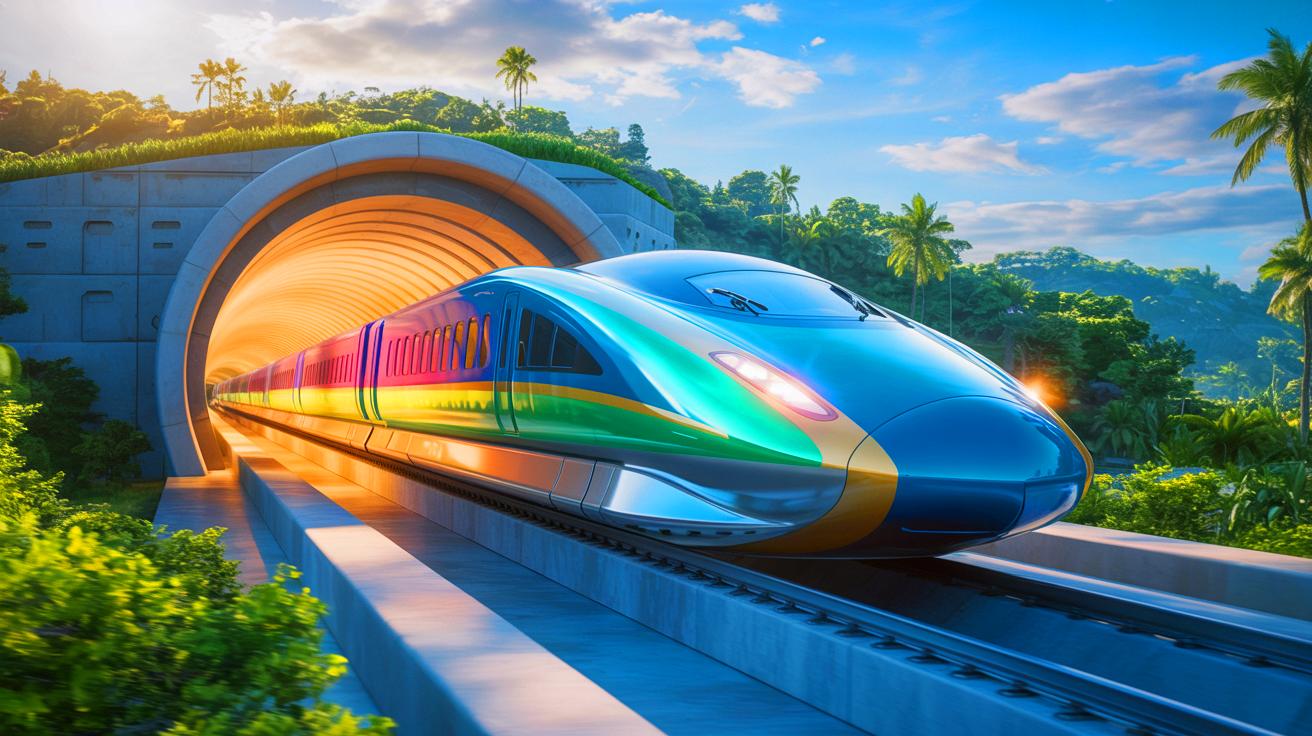
China’s latest innovation in high-speed rail technology presents a promising solution to the long-standing issue of “tunnel boom” associated with magnetic-levitation (maglev) trains. Researchers have developed a 328-foot sound-absorbing buffer that dramatically reduces pressure fluctuations when trains exit tunnels. This advancement could lead to a quieter and safer travel experience for both passengers and communities near maglev corridors. With maglev trains capable of reaching speeds of approximately 370 mph, this breakthrough could pave the way for more extensive adoption of this technology, offering an alternative to short-haul flights and reducing environmental impact.
How the Buffer Works
The phenomenon known as “tunnel boom” occurs when a high-speed train compresses air as it enters a tunnel. The compressed air creates a pressure wave that, upon exiting, generates a loud noise comparable to a clap of thunder. This issue becomes more pronounced as train speeds increase, necessitating innovative solutions for next-generation maglev systems.
Chinese engineers have addressed this challenge by designing a buffer made from lightweight, porous materials. This buffer, installed at the tunnel entrance, allows compressed air to escape before the train reaches the exit, similar to the function of a firearm silencer. Initial tests indicate that this approach can reduce pressure peaks by up to 96%, significantly mitigating the disruptive effects of tunnel boom without incurring substantial additional costs.
Traditional high-speed rail systems, which rely on steel wheels and tracks, face limitations at around 217 mph due to wear and tear. In contrast, maglev technology eliminates friction by levitating above the track, enabling much higher speeds. However, controlling aerodynamic effects like tunnel boom is crucial for the widespread adoption of maglev trains.
China’s Revived Maglev Push
China is once again focusing on maglev technology, with plans to equip its latest train prototype with the newly developed buffer system. This prototype, first introduced in 2021, is designed to operate at speeds of 373 mph, significantly faster than the existing maglev service between Shanghai and its airport, which reaches 286 mph.
After years of prioritizing conventional high-speed rail, China is exploring the potential of maglev trains to transform domestic travel. The proposed Beijing–Shanghai maglev line could offer a travel time of approximately 2.5 hours, comparable to air travel but with significantly lower costs and carbon emissions. Although no specific routes have been officially approved, there is growing interest among provincial governments to host pilot lines for this advanced technology.
The maglev system’s quiet operation and reduced environmental impact could make it an attractive option for travelers and policymakers alike, potentially shifting transportation preferences away from short-haul flights.
A Mixed Global Picture
While China is making strides in maglev development, other countries are pursuing similar initiatives with varying degrees of success. Japan’s Chuo Shinkansen project aims to connect Tokyo and Osaka with a maglev line, reducing travel time to just over an hour. However, construction delays have cast doubt on its planned 2027 launch. South Korea has already implemented two shorter maglev services.
In the United States, efforts to establish a federal-backed maglev project on the East Coast have faltered. Transportation Secretary Sean Duffy recently canceled grants for the project due to planning issues, community opposition, and cost overruns. Despite these setbacks, China’s progress with the pressure-relief buffer highlights the potential of maglev technology to revolutionize long-distance travel.
China’s pressure-relief buffer could remove one of the last major technical hurdles between experimental prototypes and a new era of cross-country travel.
Future Prospects for High-Speed Rail
China’s advancements in maglev technology represent a significant step forward in the quest for faster, more efficient rail travel. The successful implementation of the pressure-relief buffer could address one of the last major technical challenges facing high-speed maglev systems. If large-scale trials confirm the effectiveness of this solution, it could lead to a new era of rail travel that surpasses the capabilities of conventional steel-wheel trains while offering a cleaner alternative to air travel.
As countries around the world explore the potential of maglev technology, the question remains: will these innovations lead to a global shift in transportation preferences, and how will they impact the future of travel?

Wow, 373 MPH and quieter too? Could this mean the end of noisy train rides? 🚄
I wonder how much it costs to implement these maglev systems compared to traditional railways. 🤔
Sounds like a great advancement, but how will it stand up to environmental challenges in different regions?
China is always ahead with trains! Maybe the rest of the world should take notes. 🌍
373 mph is crazy fast! How does it compare to the speed of sound? Just curious!
Great article! Thanks for keeping us informed about these amazing technological advances.
Why is the U.S. so behind on adopting maglev technology? Seems like a no-brainer!
This sounds like something out of a sci-fi movie. Can’t wait to experience it in real life! 🚀
Isn’t it risky to travel at such high speeds? What about safety concerns?
How long before we can see these maglev trains operating internationally?
Thanks for the update! It’s encouraging to see progress in sustainable travel options.
Will this technology be affordable for the average commuter or just a luxury?
373 MPH? That’s faster than my internet connection! 😂
Can’t wait for the noise reduction in my city! Those train booms are annoying! 😅
How much energy does it take to power one of these magnetically levitated trains?
Is there any environmental impact from installing these magnetic systems? 🌿
I’m skeptical about it being 96% quieter. They always say it, but reality is different.
Great innovation, but how will it handle extreme weather conditions? 🌧️❄️
This is exciting, but will it ever be as cheap as flying?
Does anyone know if this tech will be adapted for cargo transport too? 📦
Wow, China is really pushing the envelope. What’s next, flying cars? 🚗✨
Is there a chance that this maglev tech could be adapted for underwater travel? 🌊
I’m curious how this buffer was designed. Any engineers here who can explain? 🛠️
Can you imagine taking a maglev from Beijing to Shanghai in just 2.5 hours? Mind blown! 🤯
Thank you for this insight! I’m hopeful this will lead to greener travel worldwide.
How reliable is this technology? Any major breakdowns reported so far?