



| IN A NUTSHELL |
|
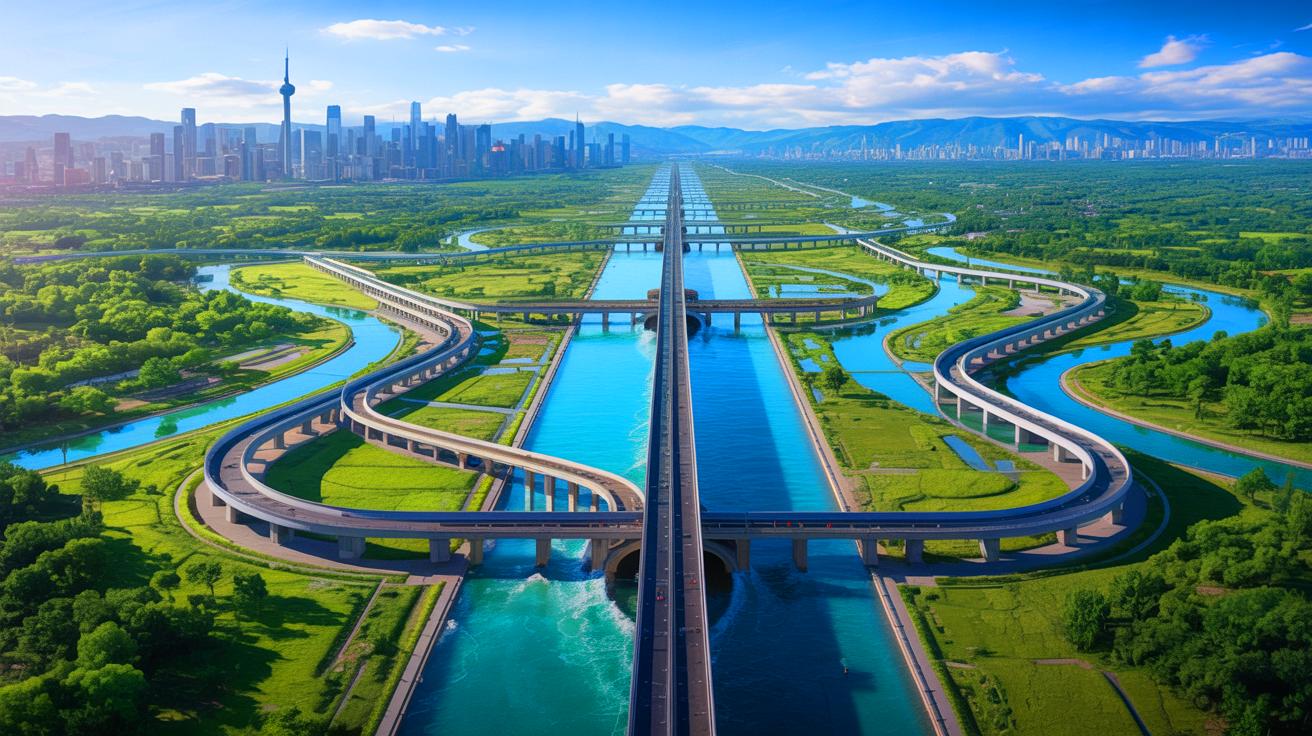
China’s South-North Water Transfer Project is an awe-inspiring testament to human ingenuity and ambition. As potentially the world’s largest infrastructure undertaking, this project seeks to address critical water shortages by redistributing vast amounts of water across 2,700 miles, representing an investment of approximately $70 billion. At the heart of this endeavor lies the Danjiangkou Reservoir, a key component of the Central Route. This audacious initiative reflects China’s historical tradition of reshaping its geography to meet the demands of its population and economy. But what are the driving forces behind this colossal project, and what implications does it hold for the future?
The Magnitude of the South-North Water Transfer Project
The South-North Water Transfer Project is not just a feat of engineering; it is a monumental response to China’s pressing water scarcity challenges. Spanning about 4,345 kilometers (2,700 miles) and involving a budget of $70 billion, this project aims to transport water from the water-abundant south to the arid north, where the majority of the population resides. This involves intricate networks of canals, tunnels, and pipelines designed to move billions of cubic meters of water annually. The project’s scale is unprecedented, matching the ambition of China’s Great Wall, underscoring the importance of this initiative in securing the nation’s water future.
At its core, the project comprises three primary routes: the Eastern, Central, and Western routes. Each route is tailored to address specific regional needs and geographical challenges. The Central Route, for example, draws water from the Danjiangkou Reservoir and is crucial in supplying water to Beijing and Tianjin. The complexity and sheer scale of this project highlight China’s commitment to addressing its water crisis through comprehensive and innovative solutions.
Environmental and Social Impacts
The environmental and social implications of the South-North Water Transfer Project are vast and multifaceted. From an environmental perspective, the project has sparked discussions regarding its impact on local ecosystems and biodiversity. Redirecting water on such a massive scale can alter habitats and affect the flora and fauna that depend on these water sources. Moreover, the construction and maintenance of the infrastructure can lead to displacement and disruption of local communities, raising ethical and social considerations.
However, the project also presents opportunities for sustainable development. By alleviating water shortages in the north, it supports agriculture, industry, and urban development, ultimately contributing to economic growth. The project’s planners have been tasked with balancing these environmental and social challenges with the potential benefits, aiming to create a model of sustainable infrastructure development.
Expert Insights on the Project’s Feasibility
To gain a deeper understanding of the South-North Water Transfer Project, experts like Carla Freeman, Senior Expert for China at the US Institute of Peace, and Professor Stephan Pfister from ETH Zurich, have weighed in on its feasibility. Freeman emphasizes the project’s strategic importance in addressing China’s long-term water security, noting that it is a critical component of the country’s broader water management strategy.
Professor Pfister highlights the project’s innovative approach to water distribution, pointing out that it sets a precedent for other nations facing similar challenges. However, he also cautions about the potential risks associated with such large-scale interventions, including the need for ongoing management and adaptation to changing environmental conditions. The insights from these experts underscore the project’s complexity and the importance of a balanced approach to its implementation.
The Future of Water Resource Management in China
The South-North Water Transfer Project represents a significant milestone in China’s journey toward effective water management. As the project progresses, it offers valuable lessons for future infrastructure initiatives. The initiative also highlights the need for comprehensive strategies that incorporate technological innovation and sustainable practices to ensure long-term water security.
Looking ahead, the project’s success will depend on its ability to adapt to evolving environmental and social conditions. China’s commitment to addressing its water challenges through large-scale projects like this one underscores the need for continued innovation and collaboration in the face of global water scarcity. As the world watches China’s ambitious efforts, one must ask: How will other nations follow suit in addressing their own water management challenges?

Wow, $70 billion! Is it really worth the cost? 💸
This sounds like China’s version of the Roman aqueducts. 🏛️
How will this project affect local ecosystems? 🌿
Are there any alternative solutions being considered for China’s water scarcity?
Why is the project being called “The Wet Great Wall of Control”?
Thanks for the detailed breakdown, very informative!
How does this compare to water projects in other countries?
Amazing engineering feat! But what about the environmental cost? 🤔
How does the local population feel about this massive change?
I wonder how they’ll keep the canals clean and maintained. 🚰
With climate change, is there a risk the southern regions will run out of water?
The scale of this project is mind-boggling! 🤯
Why didn’t they just build desalination plants instead?
Is this a permanent solution, or just a temporary fix?
Somebody call Aquaman, China needs his help! 😄
How will this project impact China’s relations with neighboring countries?
Thanks for the article! I learned a lot about China’s water management issues.
What are the long-term economic benefits expected from this project?
Does this mean the end of water scarcity in northern China?
Seems like a massive gamble. What if it doesn’t work as planned?
Does this initiative have any lessons for other countries struggling with water scarcity?
Are there any cultural or historical precedents for such large-scale water management in China?
Seems like a big bet on engineering over environmental concerns! 🌍
Is this project related to China’s Belt and Road Initiative in any way?
Hope this doesn’t turn into another environmental disaster. 😬
Are local communities being compensated for the disruptions caused?
Is there any international involvement in this project?
Thanks for sharing! This is quite an ambitious project! 🚀
Is there any opposition to this project within China?
How will climate change impact the success of this project in the future?
What are the potential risks if the project fails?
Can this project be considered a success in terms of sustainable development? 🌱
I hope they consulted environmental experts before starting this massive project.
Why hasn’t more international media covered this gigantic project?
What kind of new technology is being used in this project?
Will there be any job creation as a result of this project?