


| IN A NUTSHELL |
|
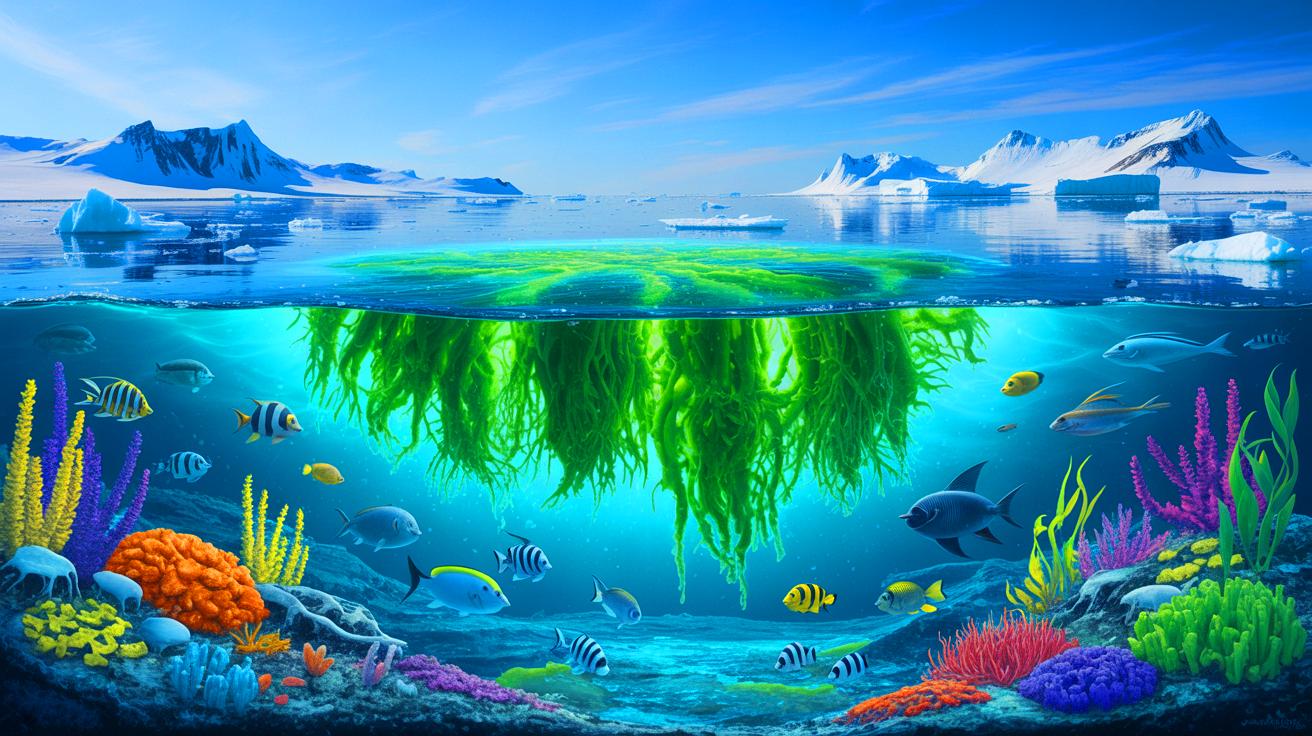
The Arctic Ocean, often viewed as a region under environmental threat due to rapid ice melt, has revealed a hidden potential for sustaining life. As ice recedes, conditions have emerged that promote the growth of algae, an essential component of the Arctic’s marine ecosystem. Recent research led by the University of Copenhagen suggests that the availability of nitrogen, crucial for algae growth, may be more abundant than previously thought. This discovery could significantly impact the future of marine life and the Arctic’s ability to absorb carbon dioxide, offering a glimmer of hope amid concerns over climate change.
A Hidden Source of Nitrogen Beneath the Ice
In an unexpected twist, scientists have confirmed that nitrogen fixation, a process where certain bacteria convert nitrogen gas into ammonium, occurs beneath the Arctic sea ice. This process was previously thought impossible due to the harsh conditions under the ice. However, the study led by Lisa W. von Friesen has demonstrated that these bacteria thrive even in the remote and central areas of the Arctic. This discovery is significant because ammonium serves as a nutrient not only for these bacteria but also for algae and the broader ecosystem.
Von Friesen, a former PhD student at the University of Copenhagen, noted that this new understanding challenges previous assumptions about nitrogen availability in these icy waters. The revelation that nitrogen fixation occurs under ice expands the potential for algae growth, which forms the base of the Arctic marine food web. This finding underscores the importance of reevaluating our understanding of Arctic ecosystems and their potential resilience in the face of climate change.
Less Ice, More Life
As climate change accelerates the retreat of Arctic sea ice, the conditions for nitrogen fixation and algae growth are improving. Unlike other oceans where cyanobacteria dominate nitrogen fixation, the Arctic relies on non-cyanobacteria. These organisms show the highest nitrogen fixation rates along the ice edge, where melting is most pronounced. This boundary zone offers a fertile ground for these bacteria, allowing more nitrogen to enter the ecosystem as ice continues to disappear.
The increase in nitrogen availability suggests that previous estimates of algae production potential in the Arctic might have been too conservative. Algae are a primary food source for small animals like planktonic crustaceans, which support the entire food chain. Therefore, a boost in algae could have cascading effects, benefiting various marine species. This shift could redefine the ecological balance in the Arctic, offering new opportunities for life to thrive despite the challenges posed by a warming climate.
Could This Help the Planet Absorb More CO2?
The implications of increased algae growth extend beyond the Arctic food web. More algae mean more photosynthesis, a process that allows the ocean to capture and store carbon dioxide. This could enhance the Arctic Ocean’s role as a carbon sink, potentially mitigating some effects of global warming. Lasse Riemann, a senior author of the study, highlights that while this could be positive for climate efforts, predicting the net effect remains complex.
Biological systems are intricate, with various factors at play that could influence the outcome. While increased algae growth may lead to higher CO2 absorption, other processes might counteract these benefits. Nevertheless, the study emphasizes the need to include nitrogen fixation in climate models. Understanding how this process interacts with other ecological and climatic factors is crucial for accurate predictions of the Arctic’s future role in global carbon cycles.
How Nitrogen Fixation Works
Nitrogen fixation in the Arctic is facilitated by non-cyanobacteria, which consume dissolved organic matter often released by algae. This process creates a nutrient loop that fosters further algal growth. Algae, in turn, are not only the starting point of the marine food chain but also act as natural carbon absorbers. As they grow, algae sequester carbon dioxide, which can eventually become part of the ocean floor when algae die and sink.
This dynamic plays a crucial role in maintaining the balance of the Arctic ecosystem. By converting atmospheric nitrogen into a usable form, these microorganisms enable the growth of algae, supporting a wide range of marine life and contributing to the ocean’s ability to capture carbon. The discovery of active nitrogen fixation beneath the ice highlights the intricate interdependencies within the Arctic environment and their potential implications for climate regulation.
The research conducted by scientists from institutions across Europe, including the University of Copenhagen, Linnaeus University, and others, underscores the collaborative effort to understand Arctic ecosystems. Their findings, based on expeditions aboard icebreakers, reveal new dimensions of life beneath the ice. As the Arctic continues to change, these insights invite further exploration into how these ecosystems will adapt. How might these changes influence global efforts to combat climate change, and what additional surprises might the Arctic have in store?

Wow! Who knew there was so much going on under the ice? 🧊 Absolutely fascinating!
Wow, this is fascinating! I never thought there’d be so much life under the ice. ❄️🐟
Does this mean the Arctic could become a new hotspot for marine biodiversity?
I’m skeptical about the long-term effects. Could increased algae growth disrupt the current balance? 🤔
Great article! It’s amazing to see how much we still have to learn about our planet. 🌍
I’m skeptical. How reliable are these findings? Have they been peer-reviewed?
Thank you for sharing this insightful research! It’s amazing to see how nature adapts. 😊
Thanks for sharing this. It’s both exciting and concerning given the implications for climate change.
So, are we saying that melting ice is actually good news for some ecosystems? 🤔
Does this mean we should re-evaluate other harsh environments on Earth for hidden ecosystems?
How does this discovery impact the existing climate models?
Wow, this could change everything we know about the Arctic ecosystem.
I wonder if this discovery will lead to more research funding for Arctic exploration.
I love reading about these scientific breakthroughs. Keep them coming!
Are there any potential negative effects of increased algae growth in the Arctic?