


| IN A NUTSHELL |
|
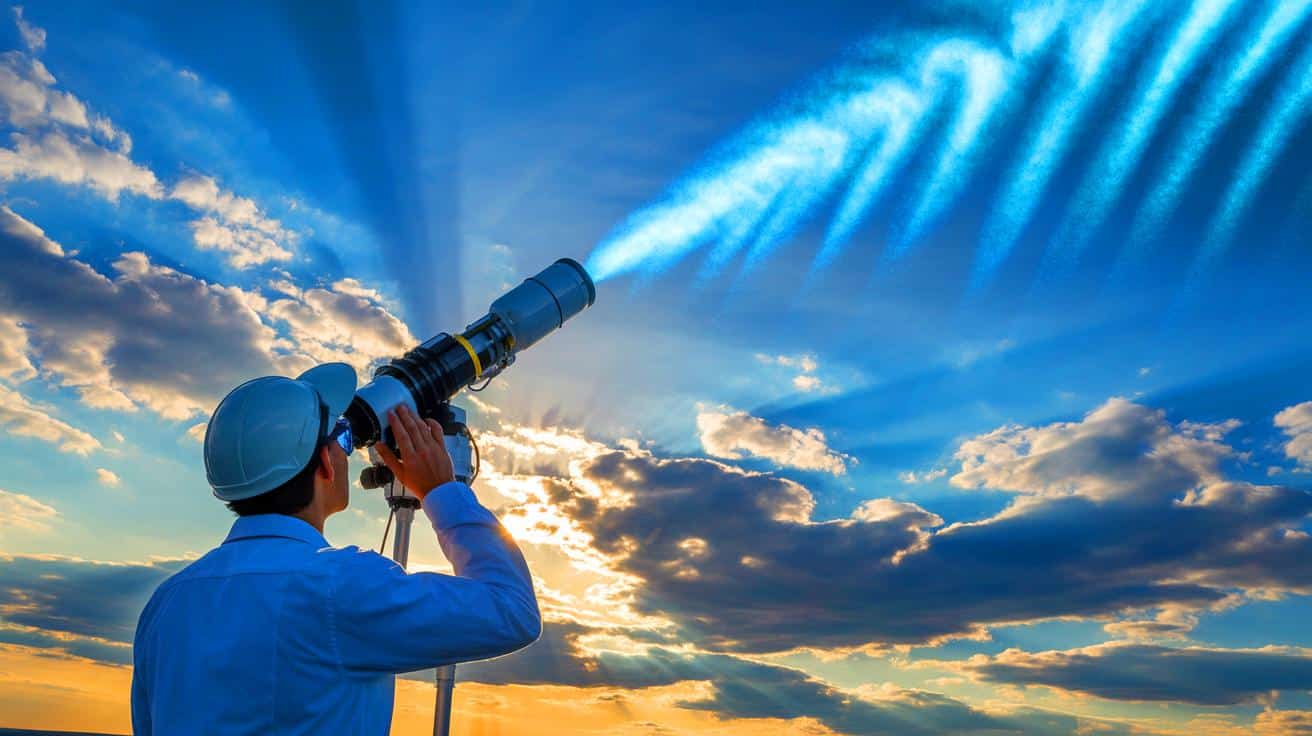
The concept of cooling Earth by dispersing sunlight-reflecting particles into the upper atmosphere, once the realm of science fiction, is now under serious consideration by researchers. This technique, known as stratospheric aerosol injection (SAI), seeks to mimic the natural cooling effects of volcanic eruptions. However, a study from Columbia University highlights the complexities and risks that come with this approach. As researchers delve deeper into SAI’s potential, they uncover a myriad of challenges that must be addressed before implementation is considered.
The Complexities of Solar Geoengineering
Stratospheric aerosol injection (SAI) is a geoengineering technique designed to combat global warming by dispersing particles that reflect sunlight. However, the complexities of this method extend far beyond theoretical models. According to a study published in Scientific Reports by researchers at Columbia University, including atmospheric chemist V. Faye McNeill, the real-world application of SAI is fraught with uncertainties. These include the physical, political, and economic barriers that make SAI far more complicated in reality than in theory.
The study emphasizes the importance of variables such as altitude, latitude, and timing in determining the effectiveness of SAI. For example, particle releases near the poles could disrupt tropical monsoons, while those near the equator might interfere with jet streams and global air circulation. These variabilities suggest that SAI should be a centralized, coordinated effort to minimize adverse effects. However, the geopolitical landscape presents significant challenges to achieving such coordination.
Learning From Volcanic Eruptions
Volcanic eruptions provide a natural precedent for understanding the potential impacts of SAI. When Mount Pinatubo erupted in 1991, it led to a temporary global temperature drop of nearly one degree Celsius. This event is often cited as evidence supporting the feasibility of SAI. Yet, volcanic activity also illustrates the potential risks of this approach. The Pinatubo eruption disrupted the Indian monsoon system, reduced rainfall across South Asia, and contributed to ozone depletion. Similar side effects could result from artificial sulfate releases, including acid rain and soil contamination.
The risks associated with sulfate aerosols have prompted scientists to explore alternative materials for SAI. These include calcium carbonate, alpha alumina, and cubic zirconia, among others. However, each of these alternatives presents its own set of challenges, from scarcity and cost to technical difficulties in dispersion. The Columbia study highlights that while these materials may offer some advantages, they also come with significant trade-offs that complicate their use in SAI.
Challenges With Alternative Materials
The search for safer and more efficient materials for SAI is ongoing. Proposed alternatives such as calcium carbonate and alpha alumina are abundant enough to be feasible at scale, yet they face serious technical challenges. For SAI to be effective, particles must remain extremely small, typically less than one micron in size. However, many of these mineral alternatives tend to aggregate into larger clusters, reducing their effectiveness in scattering sunlight.
Miranda Hack, an aerosol scientist at Columbia University and lead author of the study, points out that while some materials like diamond are optically efficient, their scarcity and cost make them impractical for large-scale deployment. Economic modeling suggests that even materials theoretically available in sufficient quantities, such as cubic zirconia, would see production costs skyrocket with increased demand. This raises questions about the practicality and sustainability of using alternative materials for SAI.
The Uncertain Path Forward
The many unknowns surrounding SAI make it a highly uncertain strategy for addressing climate change. The complexities of deployment logistics, material performance, and geopolitical coordination all contribute to the uncertainty. Gernot Wagner, a climate economist at Columbia Business School, emphasizes that SAI involves significant risk trade-offs. The reality of implementing SAI is unlikely to match the idealized scenarios often portrayed in scientific models.
While SAI may seem like a quick fix for global warming, the path to implementation is fraught with challenges. The team of researchers from Columbia University, including Daniel Steingart, co-director of the Columbia Electrochemical Energy Center, underscores the need for caution. They warn that the journey to cooling the planet could be far more perilous and unpredictable than it appears. As the world grapples with the impacts of climate change, the question remains: Are we prepared to navigate the complexities and risks of solar geoengineering?

Isn’t this like playing God with our planet? 😬
Wow, dimming the sun sounds like something out of a sci-fi movie! 🌞
Thank you for highlighting the risks. It’s crucial to consider all angles!
Could this really affect food supplies? Seems like a risky gamble.
Why not focus more on reducing emissions instead of these drastic measures?
This sounds like the plot of a sci-fi movie gone wrong.
Great article, thanks for shedding light on this complex issue!
Are there any successful small-scale tests of SAI so far?
Is there any way to test this on a small scale before going global?
What happens if we accidentally over-dim the sun? 🌞
I’m skeptical about the geopolitical coordination part. Humans can’t even agree on basic stuff.
What if we dim the sun too much and cause a mini ice age? 😬
Fascinating! But definitely not a decision to be made lightly. 🙏