




| IN A NUTSHELL |
|
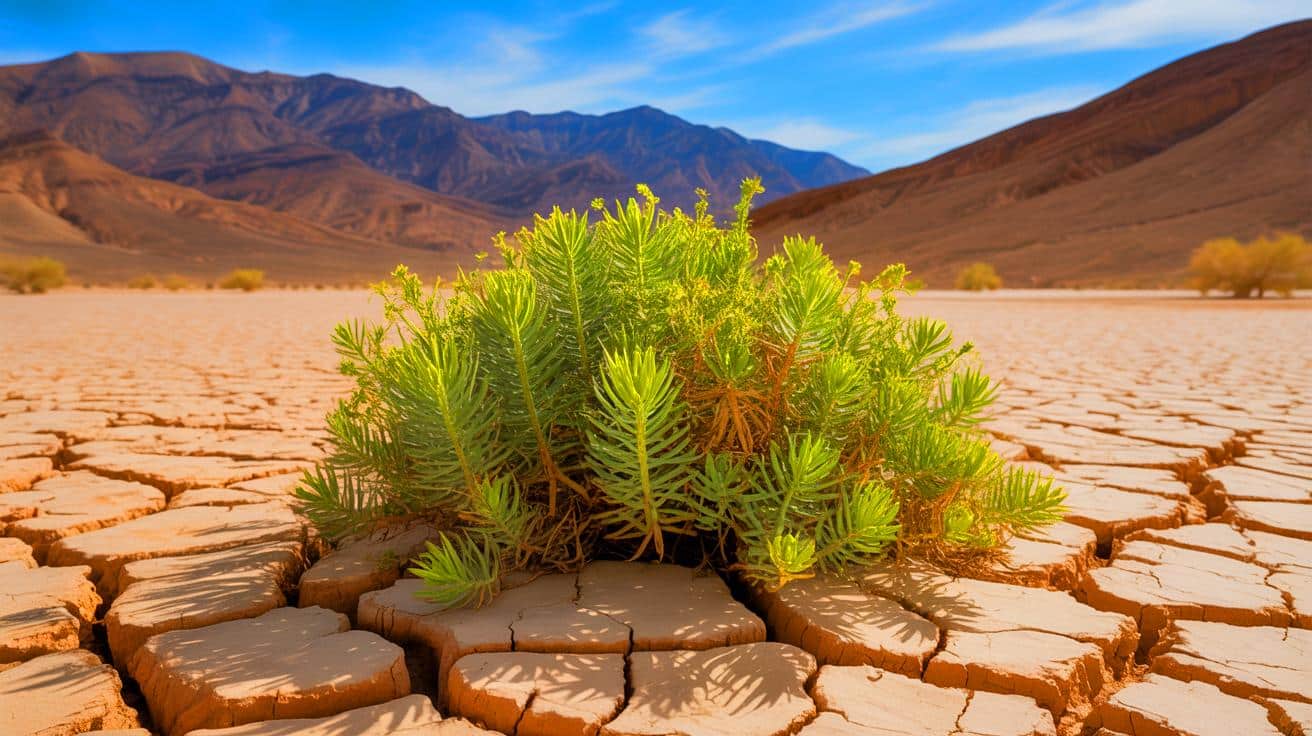
In California’s Death Valley, a region notorious for its extreme temperatures, a plant known as Tidestromia oblongifolia is defying the odds. While most organisms struggle to survive in conditions where the heat can soar above 120 degrees Fahrenheit, this resilient plant not only survives but thrives. Researchers at Michigan State University have been studying this unique plant to understand how it manages this remarkable feat. Their findings could provide crucial insights into developing heat-resistant crops, a necessity as the planet faces rising temperatures due to climate change. The study, published in Current Biology, offers hope for agricultural adaptation in a warming world.
A Plant That Grows Stronger in the Heat
When Karine Prado first encountered Tidestromia oblongifolia, she was intrigued by its ability to remain robust and healthy in Death Valley’s extreme conditions. “When we first brought these seeds back to the lab, we were fighting just to get them to grow,” Prado recalls. The initial struggle was a testament to the plant’s unique adaptation to its harsh environment. Once Prado and her team managed to replicate Death Valley’s severe climate in their laboratory, the plant’s growth was nothing short of extraordinary.
Within a span of just ten days, T. oblongifolia demonstrated an impressive increase in biomass, tripling in size while other heat-tolerant species stagnated. The plant’s ability to acclimate so quickly to high temperatures indicates a sophisticated internal mechanism that allows it to flourish where others fail. This adaptation is a beacon of hope for scientists seeking to understand and harness similar capabilities for agricultural purposes.
The World’s Most Heat-Tolerant Plant
In a groundbreaking discovery, T. oblongifolia was found to adjust its photosynthetic processes to withstand higher temperatures than any major crop currently known. Within a mere two days of exposure to extreme heat, the plant expanded its photosynthetic comfort zone, operating efficiently even as temperatures soared. By the second week, its optimal photosynthetic temperature reached 113 degrees Fahrenheit, setting a new benchmark for heat tolerance in plants.
“This is the most heat-tolerant plant ever documented,” said Seung Yon “Sue” Rhee, a lead researcher on the project. The knowledge gained from studying T. oblongifolia could revolutionize how we approach agricultural production in a changing climate. The ability to replicate these heat-resilience strategies in crops could prove invaluable as the global demand for food continues to rise.
How the Desert Survivor Works
The research team employed a combination of physiological tests, live imaging, and genomic analysis to understand T. oblongifolia’s remarkable survival tactics. The plant’s mitochondria, responsible for generating energy, reposition themselves closer to chloroplasts during high-temperature exposure, enhancing energy efficiency. Additionally, the chloroplasts transform into unique cup-like shapes, a phenomenon not previously observed in higher plants, potentially aiding in efficient carbon dioxide recycling.
Within 24 hours of heat exposure, thousands of the plant’s genes alter their activity to protect vital cellular components from damage. The plant’s production of Rubisco activase, an enzyme that assists in maintaining photosynthesis at elevated temperatures, also increases. These biological adjustments illustrate a highly coordinated response that enables the plant to continue thriving despite environmental stressors.
Lessons for Future Agriculture
As the planet warms, the agricultural sector faces significant challenges. Experts predict a rise in global temperatures by up to 9 degrees Fahrenheit by the century’s end, impacting the yield of essential crops such as wheat, maize, and soybeans. T. oblongifolia offers an example of nature’s ability to adapt to extreme temperatures, providing a potential blueprint for enhancing crop resilience.
“T. oblongifolia shows us that plants have the capacity to adapt to extreme temperatures,” Rhee emphasized. The research opens new avenues for developing crops capable of sustaining high yields in hotter climates. By studying the genetic and physiological traits of desert plants, scientists hope to identify strategies that can be transferred to agricultural species, ensuring food security for the growing global population.
Learning From Nature’s Toughest Survivors
Traditional plant biology research has often focused on well-known species like Arabidopsis, rice, and maize, but Sue Rhee advocates for exploring less conventional subjects. Desert plants, with their long history of adaptation to extreme environments, hold untapped potential for informing agricultural advances. “Desert plants have spent millions of years solving the challenges we’re only beginning to face,” Rhee remarked.
Her lab is working to apply the insights gained from T. oblongifolia to improve the heat tolerance of food crops. By leveraging cutting-edge technologies like genomics and high-resolution live imaging, researchers are poised to unlock new agricultural innovations. The success of these efforts could mark a pivotal shift in how we approach food production in an era of climate change.
Tidestromia oblongifolia’s story is a testament to the resilience and adaptability of nature. As researchers continue to study this remarkable plant, they hope to uncover strategies for bolstering global food security. What other secrets might the world’s most extreme environments reveal about our planet’s capacity to adapt and thrive?




Wow, that’s one tough plant! 🌵
Wow, nature never ceases to amaze me! 🌱 Does this mean we could have “super crops” soon?
Can we really expect to replicate this in crops? Sounds ambitious! 🤔
Very interesting read, but I’m curious—how long did it take for T. oblongifolia to evolve these traits?
Do you think this research will attract more funding for climate adaptation projects?
Imagine if all plants had this kind of resilience. We’d be set for life! 😄
Incredible resilience! Nature never ceases to amaze. 🌍
Thanks for the article! It’s fascinating how a plant can thrive where most life struggles.
How much time until we see heat-resistant crops in markets?
Call me skeptical, but how does this actually translate into viable agricultural solutions? 🤔
Isn’t it fascinating how plants adapt over time? Truly inspiring.
Really hope this research pans out. The world needs more heat-resistant crops!
Great article! Thanks for sharing these insights. 😊
Did the article mention if these findings are applicable to other desert plants?
Is this plant edible, or is it purely for research?