


| IN A NUTSHELL |
|
In an innovative approach to farming, a Japanese company has developed a drone-laser system aimed at protecting chicken coops from potential threats. NTT e-Drone Technology Company Ltd has introduced this system to deter wild birds and mammals that pose a risk of spreading diseases, such as bird flu, to poultry. This development comes in response to a severe bird flu outbreak in Japan’s Chiba prefecture, which resulted in the loss of millions of chickens. The drone employs a laser-grid projector to scare off animals, offering a modern alternative to traditional, often hazardous, methods of farm protection. As the system undergoes evaluation, it promises a safer and more environmentally friendly solution to a longstanding agricultural problem.
Drone-Laser Technology: A New Frontier in Farming
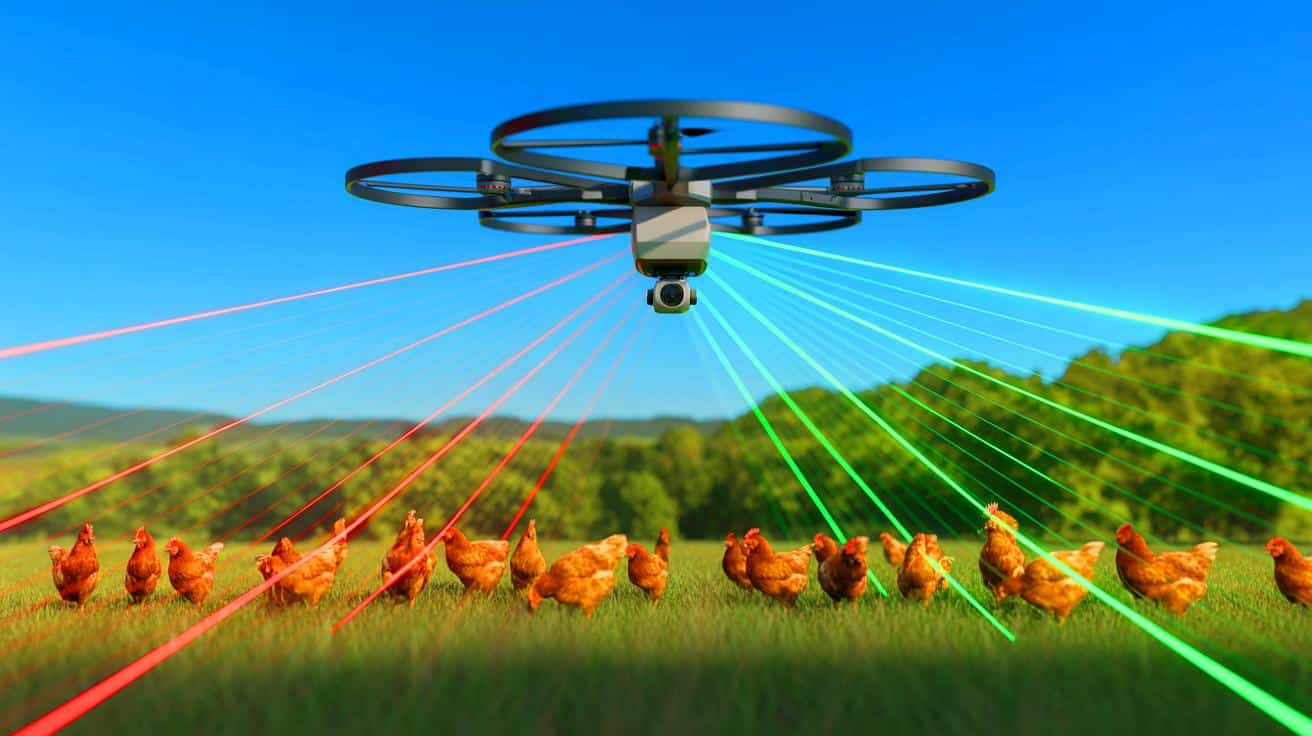
NTT e-Drone Technology Company Ltd has pioneered the use of drones equipped with laser technology to safeguard poultry farms. This novel approach comes as a response to recent challenges faced by the agricultural sector, particularly in Japan’s Chiba prefecture. The drone system features a quadcopter fitted with a laser-grid projector, reminiscent of decorative Christmas lights. This setup allows the drone to automatically navigate towards and deter unwanted animals, using a spectacle of red and green lasers.
The primary objective of this technology is to prevent the transmission of diseases like bird flu by scaring away animals such as wild boars, stags, and various bird species. The system’s development was driven by the urgent need to address the devastating impact of recent bird flu outbreaks. In January alone, the outbreak led to the culling of five million chickens, significantly disrupting the food supply chain. By integrating drone skills into farming, NTT aims to enhance biosecurity and reduce the reliance on chemical deterrents.
Addressing the Bird Flu Crisis
The introduction of the drone-laser system is a direct response to the alarming bird flu outbreak that wreaked havoc on poultry farms in Chiba. This outbreak prompted intervention from the Japanese government, who deployed forces akin to the national guard to control the virus’s spread. The situation was dire, with 3.3 million chickens lost in Chiba alone, highlighting the need for effective disease management strategies.
Traditional methods of deterring disease-spreading animals often involve chemical repellents, guard animals, or physical barriers. However, these methods can be harmful to both the environment and wildlife. The drone-laser system offers a sustainable alternative, minimizing ecological disruption and enhancing farm biosecurity. As the prefectural government of Chiba evaluates the system’s efficacy, there is potential for widespread adoption and subsidies to support local farmers in deploying this technology.
Implications for Environmental Sustainability
The use of drones in agriculture, particularly those equipped with laser deterrent systems, could revolutionize farm management practices. By reducing the need for chemical deterrents, such as diphacinone, which has been found in wildlife like wild boars, this technology promotes a cleaner, healthier environment. The discovery of deep-blue meat in Californian wild boars, attributed to chemical ingestion, underscores the need for safer pest control methods.
By leveraging laser technology, farmers can protect their livestock while preserving local ecosystems. The NTT drone system not only addresses immediate health threats but also contributes to long-term sustainability efforts. This shift towards high-tech solutions reflects a growing trend in agriculture, where innovation drives progress and enhances food security. As more governments and farmers recognize the benefits of such systems, the potential for global adoption increases.
Future Prospects and Challenges
While the NTT drone-laser system shows promise, its widespread implementation faces several challenges. The technology is currently in the proof-of-concept stage, and further testing is needed to ensure its effectiveness and practicality in diverse farming conditions. Additionally, the cost of deployment and maintenance could be a barrier for some farmers, although government subsidies may alleviate financial concerns.
As the prefectural government of Chiba deliberates on adopting the technology, the outcome could set a precedent for other regions grappling with similar issues. Successful implementation in Chiba could pave the way for broader use in Japan and potentially other countries facing agricultural threats. The collaboration between NTT and local authorities exemplifies the kind of partnership necessary to tackle complex problems in modern agriculture.
As innovative technologies like the drone-laser system emerge, they hold the potential to transform traditional farming practices for the better. However, the path to widespread adoption is fraught with challenges that require careful consideration and collaboration among stakeholders. How will the agricultural sector balance technological advancement with environmental and economic sustainability in the coming years?



Wow, lasers on farms! What’s next, photon torpedoes for pest control? 🚀
Wow, lasers on farms! What’s next, robots milking cows? 🤖
Are there any potential environmental impacts from using lasers in this way?
How do the lasers affect other wildlife in the area? I hope it’s safe for all animals.
This is fascinating! I hope it helps reduce the bird flu spread effectively. 💪
How do the drones know where to go? Do they have GPS or something?
Very interesting approach! Do they have any data on its effectiveness yet?
Lasers and chickens, sounds like a sci-fi movie I’d watch! 🎬
Lasers and drones? Sounds like something out of a sci-fi movie! 😄
This is great news! Thank you for sharing this positive innovation.
How expensive is this technology? Can small farms afford it?
Thank you for this article. It’s great to see innovative solutions in agriculture!
Finally, a solution that doesn’t involve chemicals. Nature thanks you! 🌿
I wonder if the lasers could harm any other wildlife in the area.
I wonder how much these systems cost. Are they affordable for smaller farms?
Is this actually safe for the chickens, or could it stress them out?