



| IN A NUTSHELL |
|
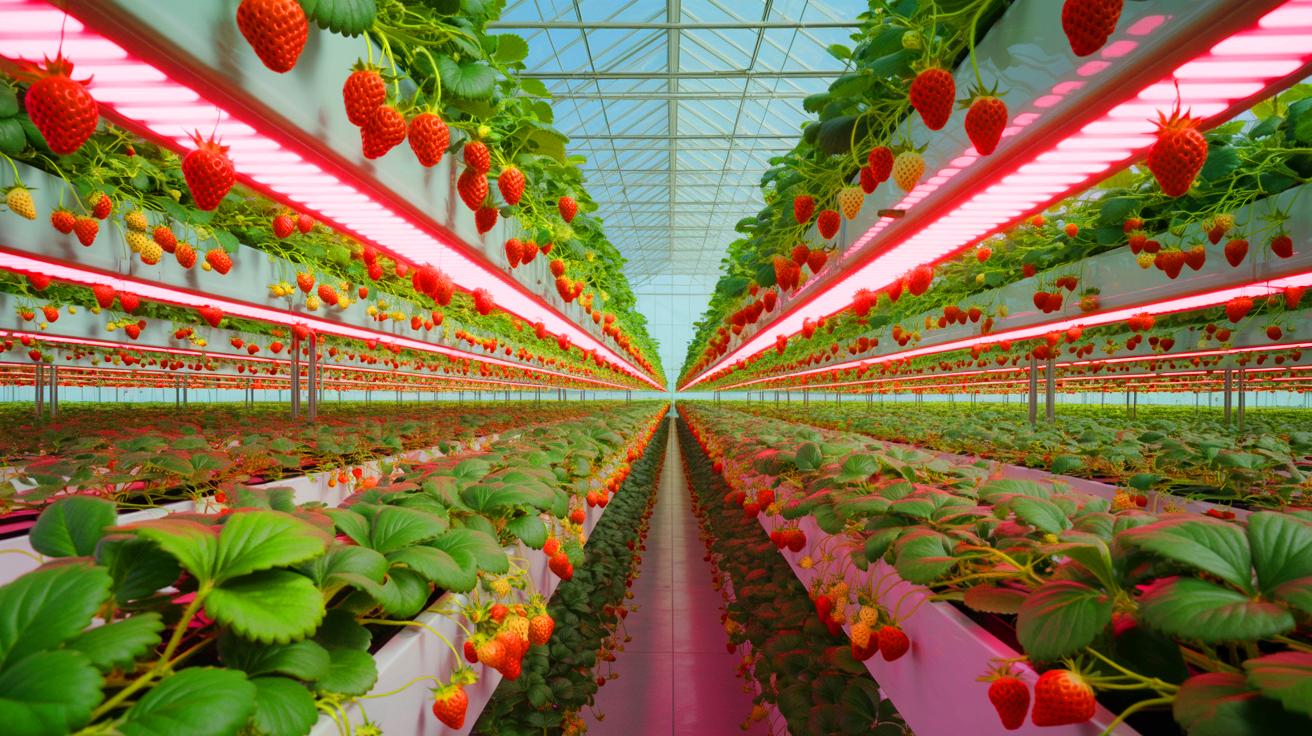
In recent years, Dyson, a company renowned for its innovative household appliances, has ventured into the realm of agriculture. After transforming the vacuum and hand dryer markets, Dyson is now turning its attention to strawberries. This bold move involves a sophisticated indoor farming system designed to enhance strawberry production. Situated in the Lincolnshire region of the United Kingdom, Dyson’s sprawling 26-acre greenhouse aims to revolutionize indoor farming with a vertical cultivation system that reportedly increases yields by 250% compared to traditional methods. The question remains: can Dyson successfully transplant its technological expertise from the appliance industry to agriculture?
Revolutionary Vertical Farming Techniques
Dyson’s foray into agriculture is marked by the introduction of an innovative vertical farming system. Unlike conventional farming methods, Dyson employs a unique approach where strawberry plants are mounted on rotating structures. These structures, standing at 18 feet tall, allow plants to rotate and optimize their exposure to both natural and artificial light. This method not only maximizes space but also boosts the number of plants that can be grown within the same area.
James Dyson, the company’s founder, has described the process of agriculture as akin to manufacturing. By applying industrial principles to farming, Dyson aims to improve efficiency and output. The rotating platforms, each larger than two double-decker buses combined, play a crucial role in the cultivation process. The use of LED lights during winter months ensures that plants receive constant illumination, further contributing to increased yields.
Scientists Warn: Seafood Waste Sparks US-China CO2 Battle Over Billion-Dollar Green Tech Race
Energy Innovations in Agricultural Practices
The ambitious scale of Dyson’s indoor farm introduces significant energy requirements. To address this, Dyson has incorporated the use of anaerobic digesters to generate energy sustainably. By utilizing organic waste from surrounding fields, these digesters produce biogas that powers generators, heating the greenhouse and supplying electricity to approximately 10,000 homes. This innovative energy solution highlights Dyson’s commitment to sustainable practices.
Furthermore, the farm integrates rainwater harvesting systems. Collected rainwater is stored in reservoirs and distributed through suspended gutters to nourish the plants. According to Dyson, this method enhances production by 15% compared to traditional systems. Such advancements position Dyson’s agricultural endeavors at the forefront of sustainable farming technologies.
The Challenges of Commercializing Dyson’s Strawberries
Despite Dyson’s significant investment of approximately $165 million in this agricultural project, commercializing the strawberries presents a formidable challenge. The company’s specialization in household appliances contrasts with the complexities of the agricultural market. Dyson has partnered with the British retailer Marks & Spencer to bring its strawberries to market, leveraging the retailer’s established distribution network.
However, entering the fruit market requires overcoming various hurdles, including consumer acceptance and competitive pricing. Dyson’s brand recognition in the technology sector may not necessarily translate to immediate success in agriculture. The company must navigate these market dynamics while maintaining its commitment to innovation and sustainability.
Strategic Positioning in the Agricultural Sector
Dyson’s entry into the agricultural sector is a strategic move that aligns with global trends towards sustainable food production. By utilizing cutting-edge technology, Dyson aims to set new standards in indoor farming. The company’s focus on reducing energy consumption and maximizing yields reflects a broader industry shift towards environmentally friendly practices.
However, Dyson’s success in this new venture will depend on its ability to balance technological innovation with practical agricultural challenges. The company’s experience in engineering and design provides a strong foundation, but the agricultural landscape presents unique obstacles that require careful navigation. As Dyson continues to refine its approach, the implications for the future of farming are significant.
Dyson’s pioneering efforts in indoor strawberry cultivation highlight the potential for technology to transform traditional industries. As the company seeks to merge innovation with agricultural practices, the question remains: will Dyson’s technological prowess be enough to overcome the challenges of the agricultural market and redefine the future of farming?


Wow, Dyson is really berry innovative! 🍓 How do they plan to keep strawberries affordable for consumers?
Wow, Dyson is really branching out! 🍓 Can’t wait to see if their strawberries are as good as their vacuum cleaners.
How much do these strawberries cost compared to regular ones?
Marks & Spencer partnership sounds like a smart move.
LOL, what’s next? Dyson growing pineapples on Mars? 🚀
How are they ensuring the strawberries taste good?
Can this technology be applied to other types of crops?
Dyson’s commitment to sustainability is inspiring. 👏
How do they prevent pests in such a large indoor farm?
Industrial principles in farming? Sounds like a double-edged sword.
Hope they don’t make the strawberries as expensive as their vacuums! 🤑
Is this a publicity stunt or a real long-term business strategy? 🤔
Is this truly better for the environment, or just marketing hype?
Can’t wait to try these high-tech strawberries! 🍓
How does Dyson plan to handle the logistics and distribution?
Interesting idea, but shouldn’t they stick to what they know best?
Will this technology be available in other countries too?
Dyson strawberries? Sounds like a new luxury brand!
What’s the energy consumption like? Is it really sustainable?
How many jobs is this new venture creating?
What if they applied this tech to combat food shortages globally?
Do they plan to patent their farming system?
Their innovation is impressive, but will it be profitable?
Does this mean we’ll soon have strawberries that suck up dust? 😂
Can they produce strawberries year-round with this method?
Hope their strawberries don’t suck as much as their vacuums! 😆
How does this impact local farmers in the UK?
I’m skeptical but curious about the potential success of this venture.
Do the strawberries taste better because of the light rotation?
From vacuums to veggies! What will Dyson think of next?
Sounds revolutionary, but is it scalable?
Why strawberries and not another crop?
Is this the future of farming or just a passing trend?
How much of their technology is open for collaboration with other farmers?
Can we expect Dyson branded strawberry jam in the future? 🍯
Can someone explain how rotating plants increase yields? I’m curious!
Interesting pivot for Dyson. How do they manage to power such a large facility sustainably?
Isn’t this just another example of tech companies overreaching?
Love the idea of sustainable energy in farming. Go Dyson! 🌿
I’m skeptical about this move. Can Dyson really compete with established agricultural companies?
What happens if the light rotation system fails? Do the plants suffer?
What happens if these rotating structures malfunction? Do the strawberries get dizzy? 🤔
Finally, a tech company using its powers for good! 🙌
Are they planning to grow other fruits and vegetables too?
Thank you for this article! It’s fascinating to see how technology is being applied to agriculture.
This sounds like something out of a sci-fi movie. Not sure if I’m convinced.