




IN A NUTSHELL
Amid booming global mobility, sustainable tourism is emerging less as an ideal and more as an urgent imperative. The sector’s growth brings prosperity but also a mounting environmental impact—from aviation-driven carbon emissions to water stress and habitat loss—forcing operators and travellers to confront hard trade-offs. Equally fraught is the risk to cultural integrity, where traditions are commodified and local voices sidelined, and the skewed distribution of economic benefits that leaves communities impoverished despite tourist dollars. Yet these pressures create openings for innovation: airlines and hotels can adopt offsets and energy-efficient practices, travellers can choose local businesses, off-season itineraries and low-carbon transport, and protected areas can translate visitation into tangible conservation funding. Addressing over-tourism and encouraging prudent resource use—from water-saving fixtures to trail discipline—are practical measures with outsized effects. Crucially, meaningful community engagement and targeted education turn visitors into allies rather than liabilities. The debate now centers on whether policy, market incentives and individual behavior will align fast enough to preserve the destinations people travel to see.
Environmental costs of international travel
Air travel drives a disproportionate share of a tourist’s carbon footprint. Commercial aviation emits large volumes of CO2 and non-CO2 warming effects per passenger-kilometer compared with most other transport modes. When millions of travelers cross borders each year, those emissions compound into a systemic problem for climate policy and local environments. Reducing the greenhouse gas impacts of travel is not optional if tourism claims to be sustainable.
Policy responses and consumer choices both matter. Airlines now offer voluntary carbon offsetting schemes, and some operators publish lifecycle data on routes; yet offsets often vary in quality and don’t substitute for deeper efficiency or low-carbon technology. Travelers can press for transparency and prefer carriers with credible commitments, or take fewer long-haul flights by choosing slower, overland routes. On the ground, accommodation choices have outsized effects: staying in properties that use renewable energy, water-saving fixtures, and waste reduction programs reduces stress on fragile destinations.
Practical innovations also reshape how we imagine low-impact stays. Modular tiny houses and compact, flexible accommodation models demonstrate how design can deliver comfort with a much smaller material and energy footprint; see an example of how modular tiny houses can change the calculus for small-scale hospitality. Choosing where you sleep, how you move, and which services you purchase are political acts that aggregate into measurable environmental outcomes.
Finally, travel infrastructure and destination management must internalize environmental costs. Economic incentives, regulations that limit visitor numbers, and investments in sustainable transport reduce the per-visitor footprint. The evidence base for these interventions is growing; a review of sustainable tourism scholarship outlines both progress and persistent gaps in translating research into practice: scientific assessment.
Coastal destinations face compounded threats: erosion, rising sea levels, and visitor pressure that accelerate the loss of natural heritage. Recent reporting shows scientists warn half of the world’s beaches could vanish, forcing communities and tourism-dependent economies to adapt or relocate; this trend makes sustainable planning urgent for coastal operators and visitors alike. Tourists who ignore these dynamics transfer costs to future generations. See analysis at sustainability-times.
Protecting cultural integrity
Cultural erosion happens when tourism treats living traditions as consumable products rather than ongoing practices. The commodification of rituals, the staging of “authentic” performances for cameras, and the commercialization of sacred sites strip communities of agency. Respect for local norms must guide behavior, itinerary design, and supplier selection. Travelers who research taboos, dress codes, and the provenance of crafts help reduce harm.
Providers and policymakers share responsibility. Cities experimenting with modern transport solutions sometimes undermine intangible heritage; the controversy over Venice’s introduction of electric water taxis highlights how well-intentioned changes can be perceived as cultural loss and may alienate residents. Read coverage at sustainability-times for perspectives on technology and heritage tensions. Local voices should be front and center when infrastructure, signage, or visitor routes are redesigned.
Practical safeguards include supporting community-led tours, licensing local guides, and avoiding tours that exploit vulnerable people or wildlife. Buying directly from artisans and understanding the story behind a product helps money reach local households rather than external middlemen. Economic choices are a mechanism for preserving cultural practices, not neutral transactions.
Education also matters: when destinations create interpretive materials co-created with residents, visitors learn contextualized meanings rather than shallow snapshots. Scholars and practitioners debate best approaches; an introduction to sustainable tourism research emphasizes the need for participatory governance and ongoing evaluation—see an accessible overview at ResearchGate. Tour operators and platforms that prioritize cultural integrity and transparent revenue-sharing models can be differentiated in the market, giving travelers a clear ethical choice. Policy instruments must enforce these standards.
Economic distribution and local benefit
Economic leakage is a persistent barrier to achieving sustainable tourism that actually benefits host communities. When bookings, supply chains, and ownership are concentrated in distant hands, only a small share of tourist spending reaches local workers and entrepreneurs. Fixing leakage is as important as reducing emissions: dollars retained locally fund education, conservation, and cultural preservation.
| Action | Impact | Example/resource |
|---|---|---|
| Book locally owned accommodation | Higher local income share | See local business models |
| Purchase crafts directly | Preserves skills and traditions | Supports artisans |
| Choose community-led tours | Community empowerment | sustainable wine tours |
| Pay entrance and conservation fees | Funds protection efforts | Protected area finance |
Practical policy measures include training programs for local entrepreneurs, preferential procurement policies by tour operators, and transparent reporting on local economic impacts. Academic and practitioner discussions highlight these pathways; an open piece in Tourism Journal offers measures for destination governance and equitable benefit-sharing. Travelers can pressure platforms and agencies by favoring operators listed as community-benefit oriented and by asking concretely how much of their purchase stays in the destination.
Finally, consumer narratives shape supplier behaviour. When guests inquire about staff wages, supply chains, and the provenance of goods, businesses respond. Digital channels amplify these preferences: platforms that curate ethical options and local listings can reduce leakage at scale. For implementation guidance and evolving tactics for aligning economic incentives with conservation, see Biosphere Sustainable’s 2026 outlook.
Measuring local benefit requires clear indicators: wage shares, local procurement percentages, and community satisfaction scores. Destination managers must publish disaggregated data so travelers can make choices informed by impact. Platforms and governments can require a simple label indicating what share of a booking remains local. Transparency transforms ethical intent into market signals. Practical steps are already being piloted in several destinations; peer-reviewed studies and practitioner reports document methods and outcomes for policymakers and operators to adopt.
Managing over-tourism and visitor flows
Over-tourism is a political and ecological problem: too many visitors compress into narrow seasons and sites, degrading landscapes and straining services. Popular heritage sites suffer wear and tear, local housing markets distort, and resident quality of life declines. Policy tools and traveler behavior can shift pressures: dispersing visitors across time and space reduces peak loads and protects infrastructure. Managing flows is not about restricting enjoyment but about allocating access fairly and sustainably.
Simple traveler choices matter. Booking tickets in advance for iconic sites reduces crowding and prevents last-minute surges that can damage fragile structures; many repeatable examples—like pre-booked access to the Parthenon—show how scheduling improves both conservation and the visitor experience. Choosing off-season travel or less-visited but comparable places spreads economic benefits and reduces environmental stress. Tourists can swap a crowded summer waterfront meal in Boston for a quieter autumn visit; the Grand Canyon is also more resilient when visitors distribute across months.
Destination managers use technological and governance levers. Timed entry, dynamic pricing, and caps tied to carrying capacity are increasingly common. Transport planning that prioritizes public transit, cycling, and walking lowers emissions while smoothing arrival patterns. Case studies and guidelines in industry literature and academic work sketch implementation paths; for governance lessons and measurable targets, consult the Tourism Journal and practitioner analyses.
Finally, narrative framing shapes demand: marketing that celebrates long stays, micro-regions, and experiential depth can redirect travelers away from overtouristed hotspots. Operators that package multi-day stays, slower travel routes, and community-hosted experiences make it easier for customers to choose alternatives. Shifting expectations from “checklist tourism” to “meaningful presence” changes the incentives for both suppliers and travelers. Mobile apps and real-time data can alert visitors to crowded spots and suggest alternatives, making responsible choices easier. Evidence and policy debate are summarized in practitioner platforms such as LinkedIn articles by industry analysts.
Conservation and resource management
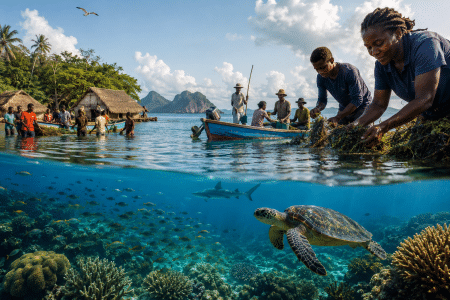
Tourism can supply critical finance and public attention for conservation if designed properly. Entrance fees for national parks, community reserves, and marine protected areas create direct revenue streams for habitat restoration, ranger salaries, and scientific monitoring. When tourists pay to enter protected sites, they are investing in the survival of species and ecosystems rather than extracting value without return.
However, poorly managed wildlife viewing and recreational activities introduce risks. Close encounters staged for tourists can stress animals, habituate them to humans, and in coastal settings increase safety hazards; an incident where swimmers froze as a shark struck close to a crowded beach underscores the unpredictability of wildlife interactions and the need for rigorous management and clear visitor guidance. See reporting at sustainability-times. Guided, regulated ecotourism that enforces distance rules, limits group sizes, and funds research reduces those risks while delivering educational benefits. Responsible operators structure tours around conservation outcomes and measure impacts.
Resource use within tourism—water, energy, and waste—must be deliberate. Accommodations that adopt solar systems, water-saving fixtures, and circular waste strategies reduce pressure on local supplies. Simple guest behavior, such as reusing towels or choosing hotels with recycling programs, compounds across millions of stays. Policymakers can support retrofits with incentives and local capacity-building, while certification schemes can signal credible practices to travelers.
Finally, cross-sector collaboration links conservation with economic stability: hoteliers, park agencies, transport authorities, and community groups must set shared targets, monitor indicators, and adapt interventions. Research and practitioner networks provide frameworks; for instance, peer-reviewed studies and synthesis pieces outline monitoring protocols and adaptive governance approaches that destinations can follow. Conservation succeeds when tourism revenue aligns with measurable ecological outcomes and governance is transparent.
Energy transitions must be balanced with cultural and heritage concerns; proposals like Venice’s electric water taxis have been criticized as a potential cultural catastrophe, reminding planners that technical fixes require social consent. Stakeholder engagement and impact assessment prevent well-meaning projects from creating unintended damage. Read more
Sustainable tourism faces a clear tension: the sector’s economic and cultural benefits are undeniable, yet its environmental impact—especially from long-haul flights and resource-intensive visitor flows—threatens the very destinations travelers seek. This is not an abstract problem. Rising carbon emissions, increased pollution, and pressure on local water and energy supplies demand targeted responses. Arguably, the most effective responses combine traveler choices (like selecting carriers with credible offset programs) with industry commitments to lower emissions and invest in renewable energy.
Cultural integrity is another battleground. When traditions are repackaged for mass consumption, communities lose agency and authenticity erodes. The remedy is straightforward but often resisted: prioritize respectful engagement and economic equity. Choosing locally owned hotels and guides, buying handcrafted goods, and supporting community-led initiatives shifts revenue back to residents. These practices not only preserve local cultures but also create incentives for communities to safeguard their heritage rather than commodify it.
Operational habits matter more than they appear. Last-minute decisions—crowded entry queues, peak-season surges—exacerbate wear on fragile sites and fuel unnecessary emissions. Booking timed entries for heritage sites, traveling off-season, and opting for public transport or cycling reduce pressure on hotspots and improve visitor experiences. Tackling over-tourism requires distributors and policymakers to decentralize demand: encouraging longer stays in fewer places and promoting alternative destinations distributes economic benefits while lessening environmental strain.
Finally, sustainable tourism is a lever for conservation and community empowerment if guided by education and accountability. Visitors who support parks, adhere to leave-no-trace principles, and choose operators with tangible conservation commitments convert tourism into a funding stream for protected areas. The challenge is systemic, but the opportunity is clear: align incentives so that protecting ecosystems and empowering local populations becomes the most profitable and respected model for travel.
Sustainable Tourism: Frequently Asked Questions
Q: What is sustainable tourism and why does it matter?
A: Sustainable tourism is travel that deliberately minimizes harm and maximizes benefits for the environment, local cultures, and economies. It matters because unchecked travel accelerates carbon emissions, depletes resources, and can erode cultural identity; therefore, travelers must choose practices that protect destinations rather than exploit them.
Q: What are the biggest environmental impacts of international travel?
A: The primary drivers are air travel-related emissions, local pollution, habitat disturbance, and pressure on water and energy supplies. Addressing these requires systemic choices—both by travelers and industry—toward low-carbon transport, eco-friendly accommodations, and stricter environmental guidelines for tourist activities.
Q: How can an individual traveler reduce their carbon footprint?
A: Travelers can prioritize airlines with verified carbon programs, book fewer flights by staying longer, use public transport or active mobility like biking and walking, and select lodgings that implement renewable energy and water-saving measures. These decisions lower individual emissions and encourage market demand for greener options.
Q: How do we protect cultural integrity while traveling?
A: Protecting culture requires research, respect, and restraint: learn local norms in advance, avoid commodifying rituals or exploiting communities for entertainment, and seek meaningful, community-led exchanges. Demand for authentic, respectful interactions pressures operators to design tours that preserve rather than dilute traditions.
Q: Why do some communities see little benefit from tourism, and what can be done?
A: Tourism revenue often leaks to external corporations, leaving local people with few gains. To reverse that, travelers should intentionally support locally owned businesses, hire local guides, buy local crafts, and choose operators with transparent, fair employment practices—actions that redistribute economic value to host communities.
Q: Do last-minute travel choices really affect sustainability?
A: Yes. Impulsive decisions—like rushing to popular sites without planning—create crowding, emergency measures, and inefficient resource use. Booking in advance for high-demand heritage sites, choosing off-peak times, and planning local transport reduces congestion and the environmental strain of reactive management.
Q: What practical steps reduce the risks of over-tourism?
A: Avoid peak seasons, explore less-visited alternatives, and extend stays rather than hopping between destinations. These choices spread visitor pressure, lower cumulative impacts, and often yield more meaningful experiences, while encouraging destinations to manage tourism sustainably rather than chase volume.
Q: How can tourism contribute to conservation rather than harm it?
A: Responsible tourism channels funds and attention to protected areas, wildlife projects, and habitat restoration. Visitors can support conservation by choosing parks and reserves with transparent fees, following strict wildlife-watching protocols, staying on trails, and participating in certified ecotourism programs that reinvest in preservation.
Q: What role does resource efficiency play in sustainable tourism?
A: Efficient use of water, energy, and materials is central. Travelers should favor accommodations with water-saving fixtures, solar or renewable energy, and recycling programs—and practice simple behaviors like reusing towels and switching off lights—to reduce the sector’s cumulative environmental footprint.
Q: How can visitors help empower local communities?
A: Prioritize businesses that employ and train local people, join community-led tours, respect local decision-making, and advocate for fair wages and governance. Empowered communities can set terms for tourism development that protect cultural values and ensure the sector supports long-term wellbeing.
Q: What can travelers do to raise awareness and encourage broader change?
A: Educate yourself about destination-specific challenges, practice responsible behaviors, and share informed insights with peers. By modeling and communicating better choices—on social media or in conversation—travelers create social pressure that rewards sustainable providers and reforms industry practices.