




| IN A NUTSHELL |
|
For nearly a century, the fossils of Paranthropus robustus have intrigued scientists worldwide. This upright-walking hominin, known for its robust build and powerful jaws designed for chewing tough foods, lived in southern Africa between 2.25 million and 1.7 million years ago. Recent discoveries have allowed researchers to delve deeper into its mysteries, providing insights into early human evolution. The study of these fossils offers a glimpse into the diverse evolutionary paths that shaped modern humans and highlights the complex web of ancestral lineages that once flourished on the African continent.
Unraveling Decades of Questions
When P. robustus fossils were first discovered in 1938, they sparked numerous questions that have persisted for generations. Researchers have long debated the extent of variation within the species. Were the size differences due to biological sex, or did they indicate the presence of multiple species? Furthermore, what genetic traits distinguished P. robustus from other early hominins and the first members of the Homo genus? These questions remained largely unanswered, primarily due to the difficulty in extracting ancient DNA in Africa’s warm climate.
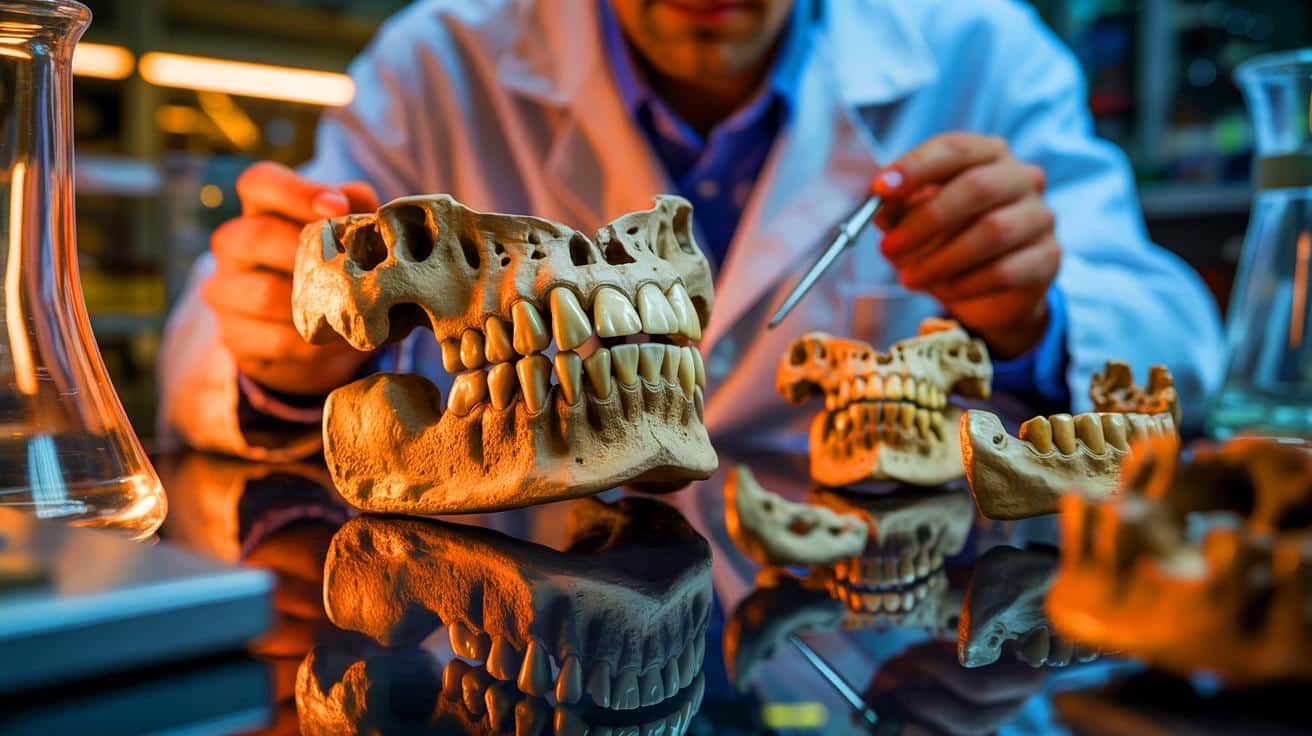
To address these challenges, scientists turned to paleoproteomics, a novel approach that studies ancient proteins. By extracting proteins from the enamel of four P. robustus teeth found at Swartkrans Cave in South Africa’s Cradle of Humankind, researchers were able to gather genetic data that had eluded them for years. Unlike DNA, proteins are more robust and can survive the test of time, providing a new avenue for exploring ancient genetic information.
The discovery of ancient proteins has opened up unprecedented opportunities to study human evolution in regions where DNA preservation is challenging.
The Oldest Genetic Clues from Africa
The extraction of proteins from P. robustus teeth not only provided some of the oldest molecular data from Africa but also offered new insights into early human diversity. The protein sequences revealed intriguing genetic variations among the specimens. Notably, variations in a gene responsible for producing enamelin, an enamel-forming protein, were observed. While some specimens shared amino acid sequences with humans, chimpanzees, and gorillas, others exhibited a unique version specific to Paranthropus.
In a groundbreaking discovery, one fossil exhibited heterozygosity, possessing two versions of an amino acid sequence. This marked the first-ever evidence of such genetic diversity in proteins that are 2 million years old. These findings suggest that P. robustus may have represented a more diverse group than previously thought, with varying genetic lineages contributing to its evolutionary story.
Paranthropus robustus may not have been a single uniform species, but rather a mix of populations with different ancestries.
A More Complex Family Tree
The mutations found in protein sequences provide valuable insights into evolutionary divergence. Initially perceived as a mutation unique to P. robustus, further analysis revealed variations among individuals within the same group. This complexity suggests that P. robustus may not have been a singular species but a collection of populations with distinct ancestries. By combining molecular data with physical anatomy, scientists are now constructing a more intricate picture of early human relationships.
Future research aims to analyze enamel proteins from additional P. robustus fossils to test these findings further. This ongoing exploration will help refine our understanding of how these early hominins were related and whether they represent a single species or a more complex family tree. The study of ancient proteins is reshaping our perception of early human evolution and unveiling a far richer tapestry of ancestral diversity.
Preserving Africa’s Fossil Heritage
The groundbreaking research on Paranthropus robustus highlights the importance of preserving Africa’s fossil legacy. The research team adhered to strict South African regulations to protect these irreplaceable fossils. Local laboratories and African researchers played integral roles in the project, ensuring that the science and its benefits remained closely tied to the continent’s heritage.
This collaborative approach represents a significant step toward transforming and decolonizing the field of paleontology. By conducting advanced molecular research in Africa, the project strengthens local expertise and fosters equitable collaboration. It ensures that discoveries continue to enrich the regions where they originate, empowering African scientists to lead the exploration of their continent’s rich fossil history.
The exploration of ancient proteins from Paranthropus robustus has unveiled a new blueprint for human origins research. By merging molecular and morphological data, scientists are redefining our understanding of early human diversity and complexity. As paleoproteomics techniques continue to advance, more revelations about our distant ancestors are expected. These discoveries not only deepen our understanding of human evolution but also raise intriguing questions about the diversity and complexity of our ancient family tree. What other secrets might these ancient proteins hold about the history of humanity?


Wow, this study is a game-changer! Who knew teeth could tell us so much about our ancestors? 🦷
Wow, 2 million years old! That’s mind-blowing. 🦷✨
How do proteins survive for 2 million years? Isn’t that too long? 🤔
Is it just me, or does “Paranthropus robustus” sound like a dinosaur? 😂
Great article! I appreciate the focus on preserving Africa’s fossil heritage. Thank you! 🙏
Does this mean Paranthropus robustus wasn’t a single species? That’s fascinating!
The preservation of Africa’s fossil heritage is crucial. Thanks for emphasizing local collaboration in the research process. 🙏
Is there a way to see these fossils in a museum? I’d love to learn more!
How reliable are protein sequences compared to DNA for studying ancient species?
I’m a bit skeptical. Can proteins really last that long?
This is an exciting development in understanding human evolution! Keep it coming! 😃
Can this new technique be used on other fossils around the world?
How does this discovery change our understanding of early human life?
Very insightful article! It’s fascinating how much information can be gleaned from teeth fossils.
Can someone explain what paleoproteomics is? It sounds complicated.