




| IN A NUTSHELL |
|
In a recent discovery that could reshape our understanding of avian history, scientists have unearthed the fossilized remains of a bird species dating back 17-18 million years. This discovery, made at the renowned Riversleigh site in Queensland, Australia, offers new insights into the evolutionary lineage of Australia’s distinctive songbirds. Riversleigh is a treasure trove of ancient life, preserving a remarkable array of fossils that date between 25 and 15 million years ago. This site has consistently provided scientists with invaluable data on the continent’s unique evolutionary journey, and the recent find is no exception.
The Significance of Riversleigh
Riversleigh stands as one of the top ten fossil sites in the world, according to the Australian Fossil Mammal Sites World Heritage Area. This location has unveiled hundreds of extraordinary extinct species that offer a window into Australia’s evolutionary history. The fossils discovered here span a vital period, providing a continuous record of life and how it adapted to past climate changes. The site is particularly noted for its preservation of mammals, birds, and reptiles, offering a snapshot of ancient ecosystems.
The recent discovery of the bird fossil at Riversleigh underscores the site’s enduring importance. This new species adds to the list of significant finds, offering insights into the ancient climates and environments in which these creatures thrived. The fossil record at Riversleigh is not only a key to understanding the past but also a tool for predicting how current ecosystems might react to ongoing climate changes.
An Ancient Relative of the Lyrebird
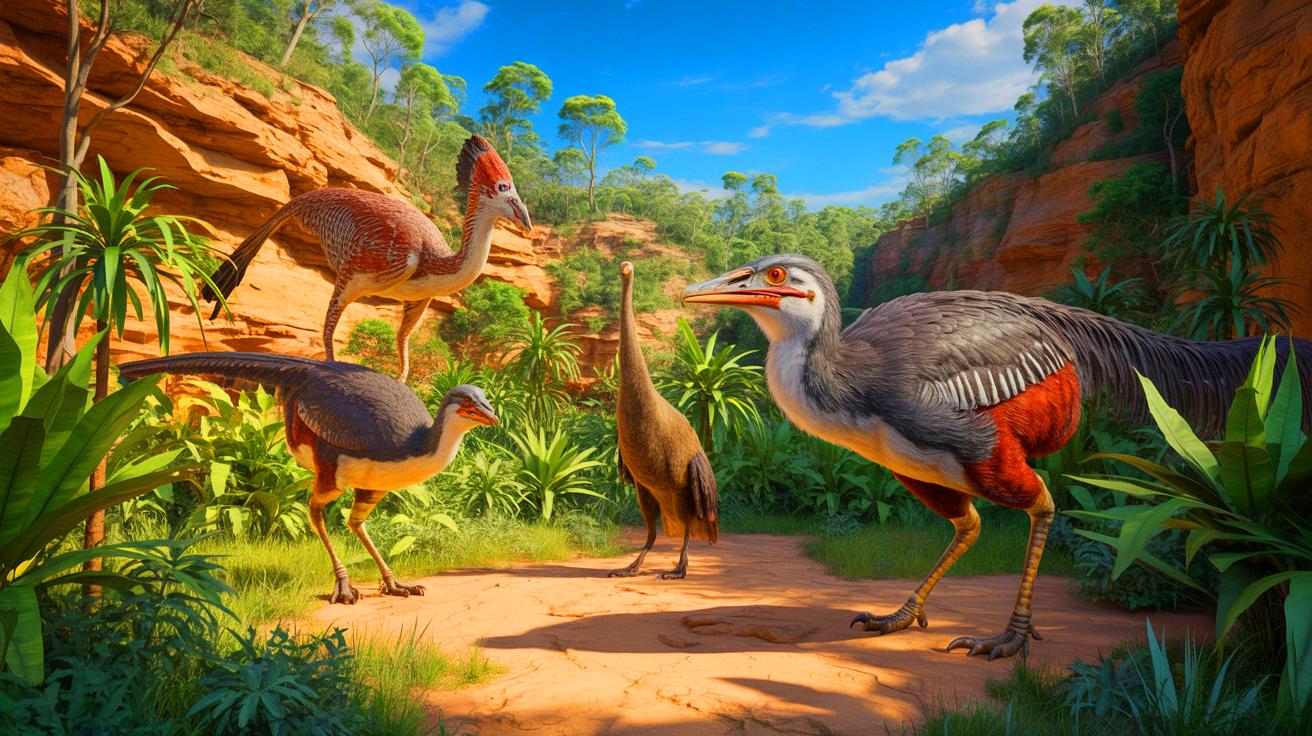
The newly identified species, Menura tyawanoides, is a close relative of the modern lyrebird. Known for their spectacular vocal mimicry and elaborate tail feathers, lyrebirds are iconic in Australian wildlife. The fossilized wrist bone of Menura tyawanoides was discovered at Boodjamulla National Park, shedding light on the bird’s terrestrial nature. Like its modern relatives, this ancient bird was largely ground-dwelling, capable of only short bursts of flight.
This revelation positions the Menura tyawanoides among a unique group of birds like ostriches and penguins, which are primarily earthbound. These birds inhabited the dense understory of ancient lowland rainforests, painting a vivid picture of Australia’s prehistoric environment. The presence of such species suggests a complex and rich ecosystem that once flourished across the continent.
Why National Parks Are Important
The discovery of Menura tyawanoides highlights the critical role national parks play in preserving our natural heritage. Professor Mike Archer from the University of New South Wales emphasized the breathtaking environment where the fossil was found, characterized by emerald-green waters and towering sandstone cliffs. Such protected areas are invaluable for conserving biodiversity and studying past ecosystems.
National parks like Boodjamulla not only safeguard diverse wildlife but also hold historical records critical for understanding climate change. The fossil discoveries provide clues about past biodiversity and extinctions, offering lessons on how to prevent future losses. The preservation of these sites ensures that they continue to educate and inspire future generations while contributing to global conservation efforts.
The Broader Implications of the Discovery
The unearthing of Menura tyawanoides is more than just a scientific curiosity. It provides a critical piece of the puzzle in understanding the evolutionary history of birds in Australia. This discovery could help scientists trace the lineage of songbirds back millions of years, offering insights into their adaptations and survival strategies.
The implications extend beyond paleontology. By studying these fossils, scientists can infer climate patterns and environmental changes over millions of years. This data is invaluable for predicting how current ecosystems might respond to ongoing climate changes. As climate change continues to impact habitats globally, understanding past adaptations becomes increasingly relevant.
The discovery of Menura tyawanoides at Riversleigh is a testament to the site's significance in understanding Australia’s natural history. As scientists continue to explore these ancient treasures, they unravel stories that have been buried for millions of years. What other secrets might these prehistoric landscapes reveal about our planet's past and future? This question remains at the forefront of ongoing research, inviting further exploration and discovery.


Wow, 18 million years old! Imagine if it could talk, what stories it would tell! 🦜
This discovery is mind-blowing! Can’t wait to see what else they find at Riversleigh! 😮
Is this discovery really going to affect the theory of evolution, or is that just sensationalism?
Does this mean the theory of evolution is wrong, or does it just add more detail to it?
Riversleigh sounds like an amazing place for fossils. How do they preserve these sites from damage?
Why is it always Australia with the crazy animal discoveries? 😆
I’m curious, how do they date these fossils with such precision? 🤔
What does this mean for the understanding of modern birds? Are they directly related?
Thank you for sharing such an enlightening article. It’s fascinating to learn about ancient ecosystems.
Thank you for sharing this fascinating information! Riversleigh seems like an incredible place.
The article suggests evolution theory is crumbling, but isn’t this just a part of its refinement?
The article title is a bit sensationalist. Evolution theory crumbling? Really?
How big was this ancient bird compared to today’s lyrebirds?
18 million years old? That’s older than my grandma’s casserole recipe! 😂
Why are national parks so important for fossil discoveries? 🏞️
Can someone explain in simple terms how this discovery impacts climate change predictions?
Awesome discovery! I wonder what other secrets Riversleigh is hiding. 🤔
Did this bird have any predators back in its day?
Is this the “monster” bird discovery the biggest fossil find of the year?
Why do they call it a “monster”? Was it really that big or just sensationalism?
I’m skeptical about the claim that this could shake the foundations of evolutionary theory. More details, please!
How do the scientists date these fossils so accurately?
What implications does this have for our understanding of flightless birds?
Just when you thought you knew everything about birds, they dig up another surprise! 🐦
Could this discovery help in preserving current bird species?
I’m curious about the techniques used to dig up and preserve fossils. Any insights?
Are there any other significant fossils found recently at Riversleigh?
It’s incredible to think about how much the Earth’s climate has changed since this bird was alive.
How was this fossil discovered? Were they looking for something else at the time?
Is this related to the “Jurassic lizard” mentioned at the end of the article?
Why don’t we hear more about these amazing fossil sites in mainstream media? 🤷♂️
Was the area where this bird lived similar to today’s Australian landscapes?
Thank you for this fascinating read! It truly expands our understanding of ancient life.
I wonder what other mysteries are waiting to be unearthed in Australia!
Can this discovery help scientists with current conservation efforts?
How is this fossil different from other bird fossils found in the same area?