


| IN A NUTSHELL |
|
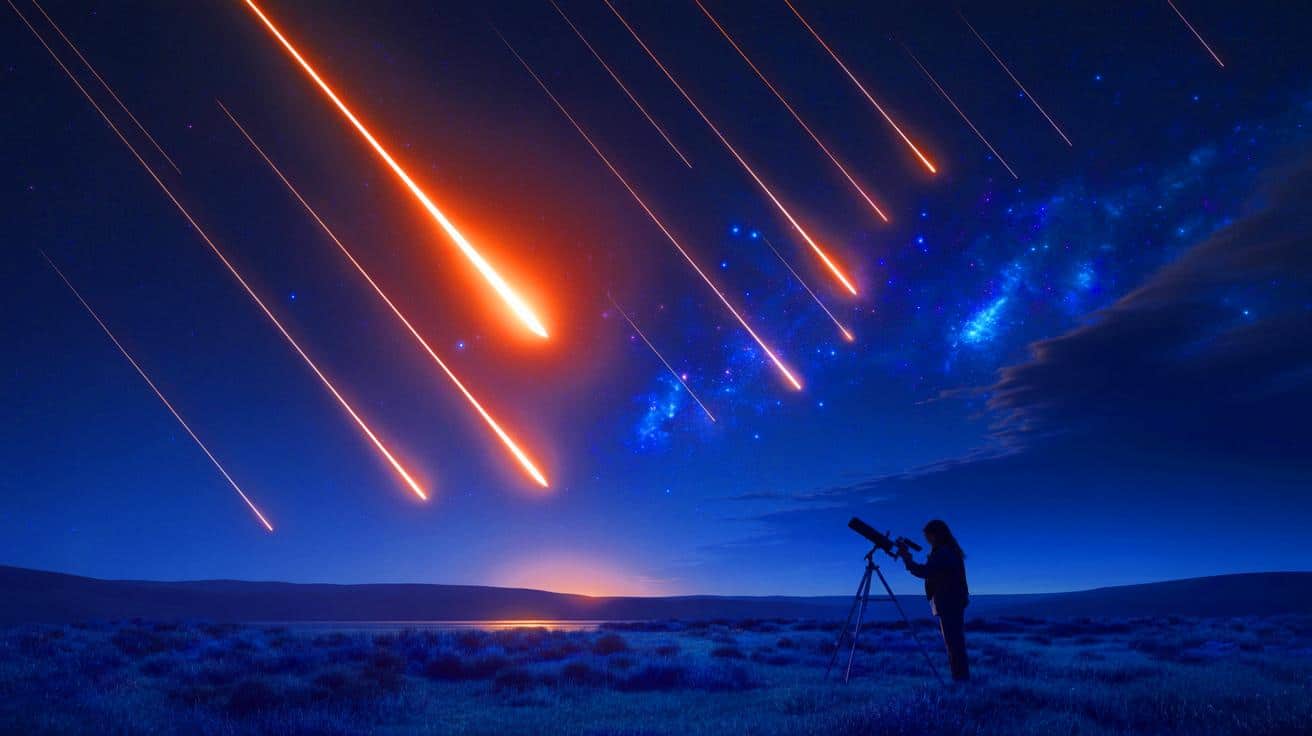
The Taurid meteor shower, often referred to as the “Halloween fireballs,” is a celestial event that illuminates the night sky from late October through early November. Originating from the constellation Taurus, these meteors offer a spectacular display, especially in areas with minimal light pollution. New Mexico, known for its clear skies, provides an excellent vantage point for stargazers. However, recent studies suggest that the Taurid stream may pose more than just a visual spectacle. Research indicates that larger objects within this stream could present potential hazards, raising questions about planetary defense and the role of near-Earth objects (NEOs).
Astronomical Origins and Annual Display
The Taurid meteor shower results from Earth’s passage through a debris field left by Comet Encke. As these fragments enter Earth’s atmosphere, they burn up, creating the bright streaks we observe. The Taurids are unique in that they occur twice a year: once around Halloween and again in June. However, the June meteors are usually visible only if they produce exceptionally bright fireballs. The origins of this meteor shower date back to Comet Encke’s orbit around the sun, where it sheds a trail of particles. This trail intersects with Earth’s orbit, resulting in the annual display.
While the spectacle is primarily a visual delight, it serves as a reminder of the dynamic nature of our solar system. The Taurids are an example of how celestial events can bring beauty and potential challenges. As we enjoy these meteor showers, it’s crucial to understand their broader implications. The Earth’s movement through these debris fields highlights the ongoing interaction between our planet and the wider cosmos.
Potential Hazards and Planetary Defense
Research led by Professor Mark Boslough has delved into the potential risks associated with the Taurid stream. The study, published in Acta Astronautica, explores whether the Taurid stream might increase the likelihood of impacts from NEOs in the coming decades. NEOs consist of asteroids, comets, and fragments whose orbits bring them close to Earth’s path around the sun. While small particles from the Taurid shower regularly enter our atmosphere, larger bodies capable of significant impacts are much rarer.
“Planetary defense is the multidisciplinary and internationally coordinated effort to protect the Earth and its inhabitants from impacts by near-Earth objects (NEOs),” said Boslough.
Hidden Asteroid Crater Revealed: Stunning 3D Image Uncovers Atlantic’s 5-Mile Wide Geological Secret
This research underscores the importance of planetary defense initiatives, which involve discovering and tracking NEOs, characterizing potential threats, modeling impact effects, and developing mitigation strategies. The study suggests that small NEOs capable of producing atmospheric explosions, known as airbursts, could pose a higher-than-anticipated risk. The potential existence of a “Taurid resonant swarm” (TRS), influenced by Jupiter’s gravity, further complicates the risk assessment.
Future Close Approaches and Preparedness
The hypothetical Taurid swarm is expected to pass close to Earth in 2032 and 2036. These close approaches could increase the risk of impacts during those years. Boslough emphasizes the importance of using existing telescopes for targeted sky surveys during these periods to identify potential threats. If larger objects are present, they might be detectable as they move away after missing Earth. This data could provide valuable insights into the concentrations of larger bodies within the swarm.
Preparedness is key to mitigating potential risks. Boslough’s previous work at Sandia National Laboratories involved modeling the Chelyabinsk explosion, which was caused by an object approximately 60 feet wide. Understanding the dynamics of such events can inform strategies for impact avoidance and civil defense. The research highlights the critical role of technological advancements, such as the new infrared telescope (NEO Surveyor), in providing early warnings of potential threats.
Public Awareness and Misinformation
While the probability of a significant impact remains low, public awareness and education are crucial. Boslough encourages individuals to stay informed about natural hazards and maintain perspective. The Chelyabinsk event demonstrated that most injuries resulted from shattered glass when people approached windows to observe the flash. Experts advise staying away from windows during such events and avoiding direct observation of bright flashes.
It’s also essential to combat misinformation surrounding asteroid impacts. Boslough highlights the proliferation of false information on social media and other platforms, which can distort public understanding of NEOs and their potential impacts. Accurate information and scientific research are vital in dispelling myths and ensuring informed public discourse. Efforts by institutions like the Magdalena Ridge Observatory and national laboratories in New Mexico contribute to this educational mission.
As we continue to explore the cosmos and its potential risks, how can we balance scientific inquiry with public engagement to foster a well-informed society ready to address the challenges posed by celestial events?


Wow, I had no idea Halloween fireballs could be dangerous! Thanks for the info. 🎃
Wow, I had no idea Halloween could be so dangerous! 🎃 Thanks for the heads-up!
Are we really supposed to worry about meteors that only come around once a year? 🤔
Isn’t it just a bit of media hype? I’ve been watching the Taurids for years and nothing’s happened.
This is fascinating! I love learning about space stuff. Keep it coming! 🌌
Isn’t this just fearmongering? I’ve never heard of anyone getting hit by a meteor.
How can we really prepare for these “hidden dangers”? Seems like a lot of guesswork.
Great article. More people need to be aware of these cosmic threats. Thanks for sharing!
Great article! It’s important to raise awareness about potential space hazards. 🌌
How likely is it that a “Taurid resonant swarm” will actually hit us?
I’ve always loved watching the Taurid showers, but now I’m a bit scared!
Thank you for the detailed explanation. I learned so much about the Taurid meteor shower!
Do we have any real way to stop a big meteor from hitting Earth?