


| IN A NUTSHELL |
|
In a groundbreaking discovery, scientists have observed a subduction zone in the Pacific Northwest region in the act of breaking apart. This phenomenon, where one tectonic plate plunges beneath another, has long intrigued geologists due to its role in shaping Earth’s surface. The recent findings, published in Science Advances, offer new insights into the dynamic processes that drive earthquakes and volcanic activities. As researchers focused on the Cascadia region off Vancouver Island, they uncovered substantial tectonic shifts that could reshape our understanding of geological events in the Pacific Northwest and beyond.
Witnessing a Geological Transformation
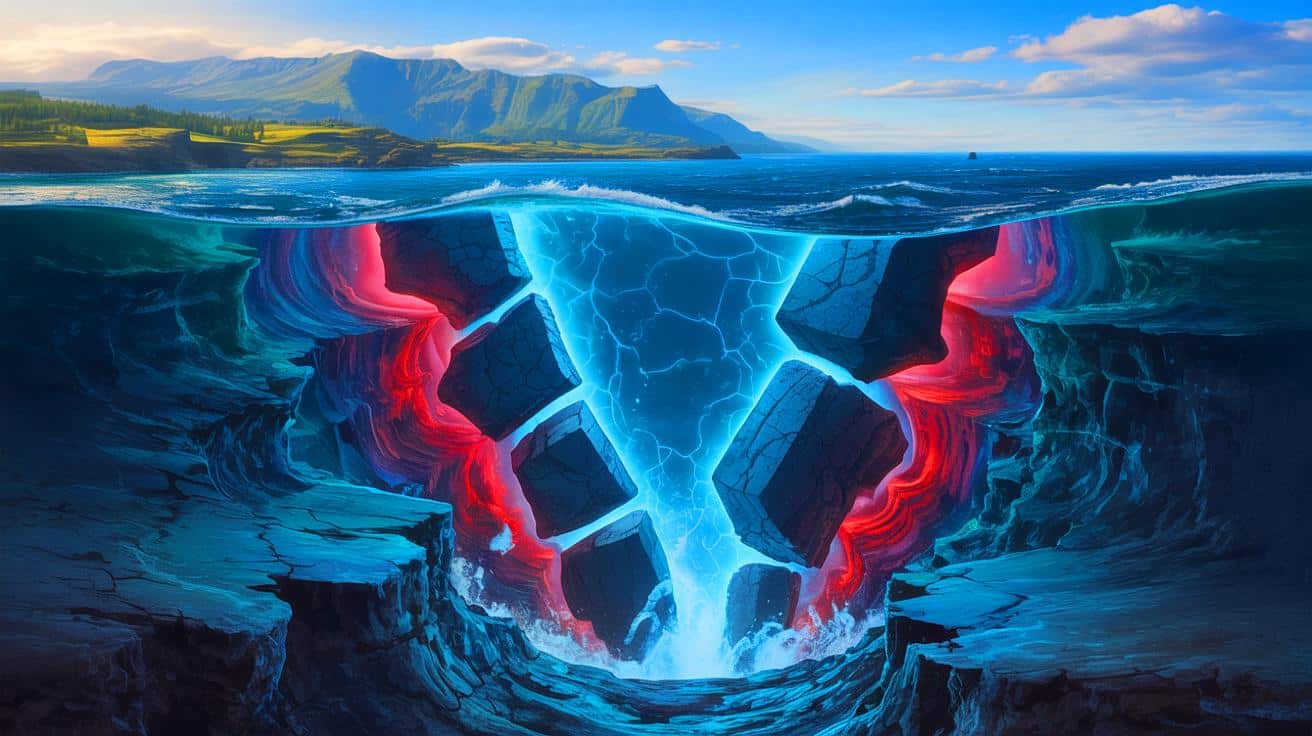
Off the coast of Vancouver Island, researchers have captured an unprecedented view of a subduction zone in transformation. The phenomenon was observed as the Juan de Fuca and Explorer plates slowly slid beneath the North American plate, revealing a dramatic geological process. By employing seismic reflection imaging, akin to an ultrasound of the Earth’s interior, scientists observed the subduction zone’s gradual disintegration. This observation was part of the 2021 Cascadia Seismic Imaging Experiment, funded by the National Science Foundation. Sound waves sent from a vessel into the seafloor returned echoes revealing the structural changes occurring beneath the surface.
The findings showed deep fractures where the oceanic plate was splitting apart, providing a clear picture of a subduction zone in its dying stages. This insight challenges the traditional view of subduction zones failing in a single catastrophic event. Instead, the process unfolds gradually, with the plate tearing apart piece by piece, ultimately creating smaller microplates and new boundaries over time. This revelation is akin to watching a train derail slowly, one car at a time, rather than a sudden wreck.
Understanding the Piecewise Termination
The study revealed that subduction zones do not cease abruptly but rather through a process called “episodic” or “piecewise” termination. This gradual breakdown involves the plate tearing apart in sections, with transform boundaries acting like scissors to isolate fragments and form new microplates. The team discovered significant tears within the oceanic plate, including a major offset where one section has dropped about three miles. This active fault highlights the ongoing transformation and gradual cessation of the subduction process.
Earthquake data supported these visual observations, indicating that some sections of the plate remain seismically active while others have become silent. This pattern suggests that detached plate segments no longer produce earthquakes, pointing to a gradual widening of the gap over time. As the larger plate loses pieces, it also loses momentum, akin to cutting cars off a runaway train. Each break reduces the downward pull until the entire subduction process grinds to a halt. Although each stage takes millions of years, these gradual phases mark the eventual death of a subduction zone.
Odd-Looking Animal Defies Aging, Offering New Insights into Longevity and Human Health Benefits
Decoding Earth’s Geological Mysteries
This slow breakup sheds light on some of Earth’s ancient tectonic mysteries, such as abandoned fragments of old tectonic plates and unexpected bursts of volcanic activity. For instance, off Baja California, fossil microplates from the once-vast Farallon plate have puzzled scientists for years. The current observations in the Cascadia region provide a direct understanding of how these processes occur, revealing step-by-step tearing rather than a sudden collapse.
As each fragment detaches, the planet’s surface reshapes, opening “slab windows” where hot mantle material rises, leading to volcanic activity. Over time, new microplates form, and old ones drift, causing the boundaries to shift once again. This progressive breakdown aligns with geological records, where the age of volcanic rocks reflects this sequential tearing. It’s a revelation that advances our understanding of Earth’s tectonic evolution.
Implications for Earthquake Hazards
Looking ahead, researchers are exploring how these newly identified tears could influence seismic activity in the region. While this discovery enhances models of complex fault systems, it does not significantly alter the immediate earthquake risk for the Pacific Northwest. However, the Cascadia region remains capable of generating large earthquakes and tsunamis. Understanding how these fractures might impact future ruptures is crucial for refining hazard assessments.
By deepening our knowledge of how Earth’s most powerful geological engines operate, scientists can better predict and mitigate the impacts of such natural events. The ongoing research holds the potential to transform our approach to geological hazards, ultimately enhancing our preparedness for future seismic activities.
The study of subduction zones, especially their gradual disintegration, offers crucial insights into Earth’s geological processes. As we continue to explore these dynamic systems, the question remains: how will this newfound understanding of subduction zones influence our strategies for predicting and managing natural disasters in the future?



Wow, this is a game changer for geologists! Can’t wait to see what comes next. 🌋
Wow, this is mind-blowing! Can you imagine watching a tectonic plate crack like that in real-time? 😮
How does this new discovery impact the earthquake predictions for the area?
So does this mean we’re going to have more earthquakes in the Pacific Northwest? 🧐
Is this process common in other parts of the world, or is it unique to the Pacific Northwest?
This is why I love geology—always full of surprises. Thanks for the great article!
Thanks for the article! I’m always fascinated by tectonic plates. 😄
Wait, does this mean the “big one” is coming sooner than we thought?
This is mind-blowing! Who knew the Earth’s crust was so dynamic?
I’m skeptical of these findings. How can they be sure it’s happening so gradually? 🤔
Can you imagine the view from inside the Earth’s crust? #Fascinating
Great read! It’s fascinating how these processes take millions of years but we can still study them.
Does this mean the Pacific Northwest is in immediate danger?