




| IN A NUTSHELL |
|
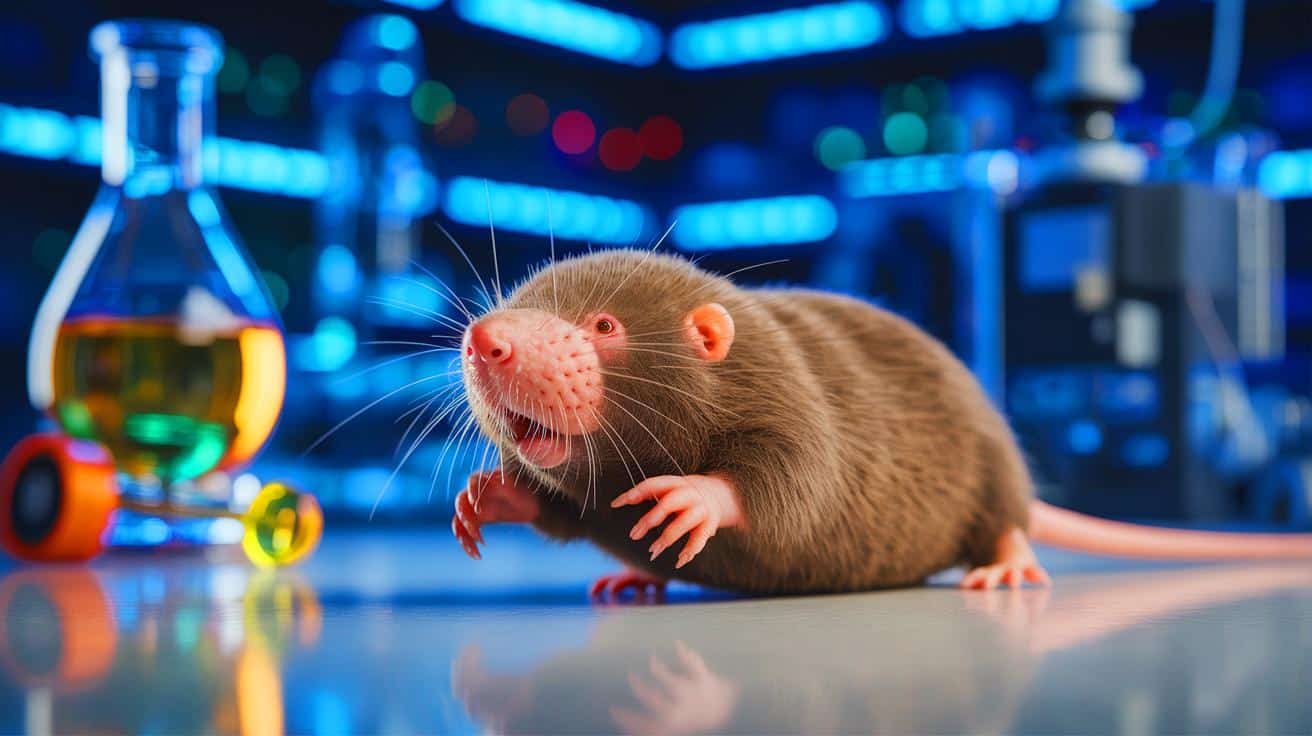
Naked mole-rats, with their peculiar wrinkled appearance, have long fascinated scientists due to their exceptional lifespan, reaching up to 40 years. Recent research sheds light on the potential reasons behind their longevity, suggesting that subtle changes in only four amino acids might hold the key. These changes affect an enzyme called cGAS, which plays a crucial role in the innate immune system by detecting DNA damage and initiating repair. Unlike in humans and mice, where cGAS can hinder DNA repair, in naked mole-rats, it might enhance this process. This discovery opens new avenues for understanding how genetic stability is maintained over extended periods.
How Naked Mole-Rats Protect Their DNA
Naked mole-rats have intrigued scientists with their ability to maintain genome stability, a critical factor in longevity. A central component in this process is homologous recombination (HR), a DNA repair pathway crucial for fixing genetic breaks. In humans and mice, the DNA-sensing enzyme cGAS can disrupt this repair mechanism, leading to genome instability and reduced lifespans. However, naked mole-rats seem to have evolved a unique adaptation to counteract this.
Recent studies by Yu Chen and colleagues reveal that the naked mole-rat’s version of the cGAS enzyme has undergone four specific amino acid substitutions. These changes prevent the enzyme from being marked for degradation, allowing it to remain active longer after DNA damage. This increased stability enables cGAS to interact more effectively with essential DNA repair proteins, such as FANCI and RAD50, enhancing the HR repair process. By bolstering this repair pathway, naked mole-rats can better preserve their DNA integrity, contributing to their remarkable longevity.
Eating Breakfast After This Hour Cuts 5 Years From Your Life Expectancy Scientists Warn
Evolutionary Mutations That Extend Life
The impact of these amino acid substitutions was further highlighted when researchers removed cGAS from naked mole-rat cells and observed a significant increase in DNA damage. This finding underscores the enzyme’s protective role in maintaining genome stability. In a fascinating twist, fruit flies genetically engineered to carry the same four mutations in human cGAS lived longer than their counterparts with the unmodified enzyme.
This discovery suggests that these precise molecular changes may transform cGAS from a potential inhibitor of DNA repair into a facilitator. As a result, naked mole-rats have a natural mechanism to combat aging effects, potentially offering insights into extending lifespans in other species. This research underscores the profound impact that minor evolutionary mutations can have on an organism’s longevity.
A New Clue in the Search for Longevity
The findings from Chen et al. have provided an unexpected perspective on the role of cGAS in the nucleus, influencing longevity. As noted by John Martinez and colleagues in a related Perspective, further research is necessary to determine the roles cGAS may play in other organisms, both short- and long-lived. The complexity of these mechanisms may exceed initial predictions.
The study of naked mole-rats offers a compelling glimpse into the potential for genetic adaptations to extend life. By understanding how these creatures maintain their genetic integrity over decades, researchers may uncover new strategies for promoting longevity in humans. The implications of this research extend beyond the naked mole-rat, potentially reshaping our approach to aging-related diseases and therapies.
Implications for Human Health and Longevity
The remarkable longevity of naked mole-rats could have profound implications for human health. By uncovering the mechanisms that enable these rodents to repair age-related genetic damage, scientists may develop novel interventions for age-associated diseases in humans. The potential to enhance DNA repair processes could lead to breakthroughs in preventing conditions like cancer and neurodegenerative diseases.
As researchers continue to explore the genetic adaptations of naked mole-rats, the possibility of translating these findings to human applications becomes increasingly promising. The study of these unique animals not only deepens our understanding of longevity but also inspires new avenues for medical research aimed at extending healthy human lifespans. What other secrets might nature hold in its quest for prolonged life, and how can we harness them for human benefit?
As we unravel the mysteries of naked mole-rats and their longevity, a critical question arises: how can these insights be applied to improve human health and extend lifespans? The search for answers continues, promising to reshape our understanding of aging and its impact on human life.



Wow, naked mole-rats are like the Benjamin Button of the animal kingdom! 🐀
Wow, naked mole-rats are like the superheroes of the animal kingdom! 🦸♂️
Interesting! But how far off are we from applying these findings to humans?
Is there a chance this research could lead to a real-life fountain of youth? 💧
Could this research lead to a new anti-aging cream? Asking for a friend. 😂
Thank you for such an insightful article! I never knew mole-rats were so fascinating.
Fascinating read. Thank you for shedding light on such an intriguing topic!
I’m curious, how long until we see these findings applied to human medicine?
Great, now I have to worry about mole-rats living longer than me. 😂
I wonder if these mutations could be artificially induced in humans? 🤔
Why the focus on naked mole-rats? Aren’t there other long-living species to study?
Could the amino acid changes in mole-rats be replicated in humans safely?
This is amazing! I wonder what other animals have secrets to longevity.
Great article, but I think the implications for human health might be overstated.