

| IN A NUTSHELL |
|
Recent discoveries in Ecuador have offered an unprecedented glimpse into the past, unveiling secrets from the ancient supercontinent Gondwana. Researchers have unearthed amber deposits containing 112-million-year-old insects and plants, providing a rare window into the ecosystems of the Cretaceous period. This finding is particularly significant as it sheds light on the Southern Hemisphere’s biodiversity during a time when the continents were separating from Gondwana. Prior to this, most amber deposits were discovered in the Northern Hemisphere, leaving a substantial knowledge gap regarding the southern regions. This new discovery in Ecuador may help fill that void, offering insights into the ancient ecosystems that once thrived there.
Unveiling the Secrets of Ancient Amber
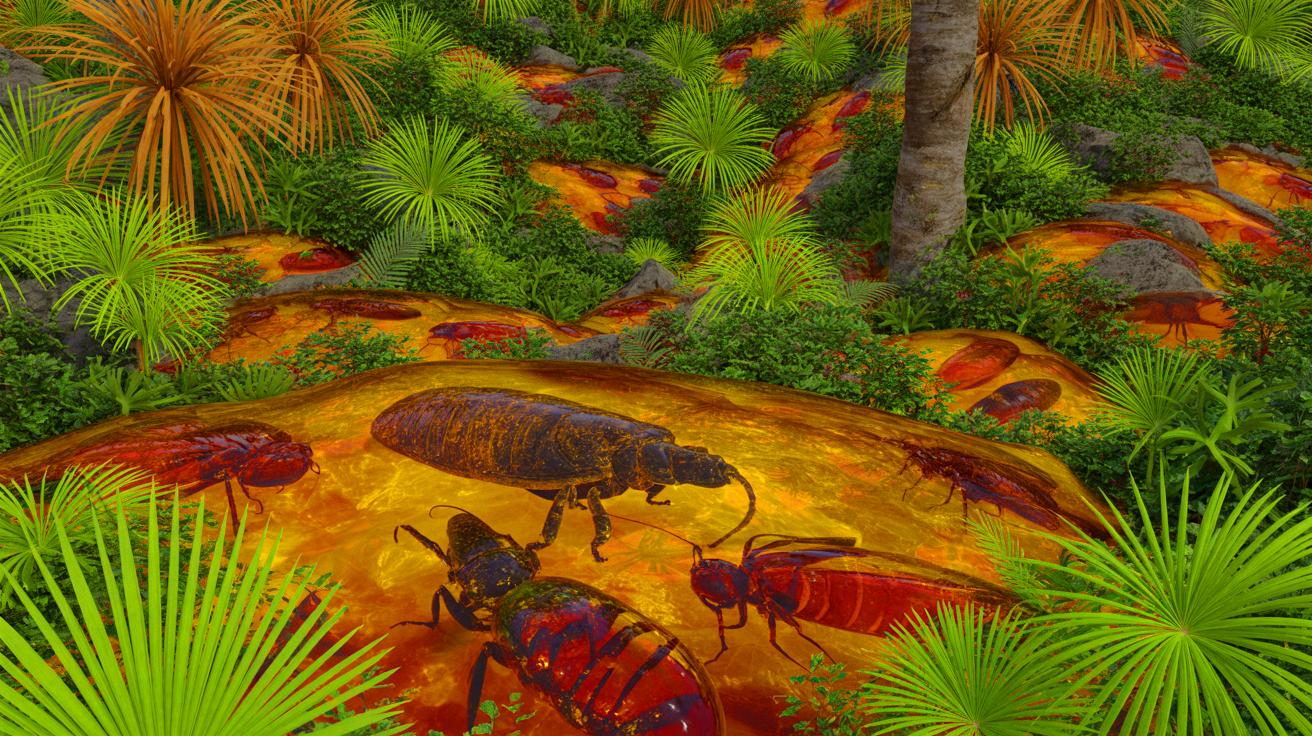
The discovery of amber deposits in Ecuador marks a significant milestone in paleontological research. Found in a quarry within the Hollín Formation, this amber dates back 112 million years to the Cretaceous era, a period known for a substantial increase in amber formations. These fossilized tree resins are crucial for scientists because they can trap bio-inclusions, preserving ancient life forms such as insects and plants. This preservation allows researchers to study organisms that are otherwise rarely found in the fossil record.
Up until now, significant amber deposits have predominantly been found in the Northern Hemisphere, limiting our understanding of the Southern Hemisphere’s ecological dynamics during this period. The Ecuadorian amber, therefore, provides a unique opportunity to explore the biodiversity and environmental conditions of Gondwana, the ancient supercontinent that once included South America, Africa, Antarctica, and Australia. This discovery offers valuable insights into the evolution of ecosystems and the dispersal of species across what are now separate continents.
Ecuadorian Quarry Reveals Bio-Inclusions
Research led by Xavier Delclòs and his colleagues has brought to light fascinating findings from the Genoveva quarry in Ecuador. Their analysis involved studying samples of amber and the surrounding rock, which revealed 21 bio-inclusions within 60 samples of aerial amber. These bio-inclusions consisted of various insect orders, including flies, beetles, ants, and wasps, and even a fragment of a spider web. The presence of a diverse range of plant fossils, such as spores and pollen, further underscores the rich biodiversity of the region during the Cretaceous period.
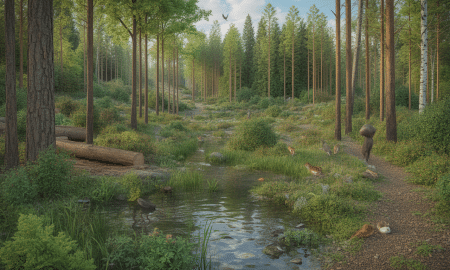
The researchers identified two types of amber: one formed underground around the roots of resin-producing plants, and the other formed when resin was exposed to air. The characteristics of these bio-inclusions suggest that the amber formed in a humid, densely vegetated forest environment dominated by resin-producing trees. This finding highlights the importance of the Ecuadorian amber deposit for understanding the ecological dynamics of Gondwana’s southern regions and underscores the potential for future studies to uncover more about this period.
Implications for Understanding Gondwana
The discovery of Ecuadorian amber not only enriches our understanding of ancient ecosystems but also has broader implications for the study of Gondwana. This supercontinent, which existed during the Paleozoic and Mesozoic eras, played a critical role in the distribution of flora and fauna across the Earth. Understanding the ecosystems that thrived on Gondwana can provide insights into how species evolved and dispersed when the continents began to drift apart.
The presence of such well-preserved bio-inclusions in Ecuadorian amber suggests that similar deposits may exist elsewhere in the Southern Hemisphere. This opens up new avenues for research, potentially leading to the discovery of more amber deposits in South America and beyond. By studying these deposits, scientists can gain a deeper understanding of the biodiversity and ecological interactions during the Cretaceous period, contributing to our knowledge of Earth’s evolutionary history.
Future Prospects in Paleontological Research
The Ecuadorian amber discovery marks a pivotal moment in paleontology, offering a fresh perspective on ancient ecosystems. It emphasizes the need for continued exploration and study of amber deposits, particularly in under-researched regions like the Southern Hemisphere. As scientists continue to analyze these findings, they may uncover new species and gain insights into the environmental conditions that shaped ancient life.
This discovery also highlights the importance of interdisciplinary collaboration, as researchers from various fields come together to piece together the puzzle of Earth’s past. By combining expertise in geology, biology, and paleontology, scientists can develop a more comprehensive understanding of the factors that influenced the evolution and distribution of species across the globe. As we uncover more about Gondwana’s ancient forests, one question remains: what other secrets lie hidden within the amber deposits of the Southern Hemisphere?

Wow, 112 million years old insects! Anyone else thinking Jurassic Park? 😄
Wow, 112 million years old! How do they even date this stuff? 🤔
This is fascinating! I had no idea Ecuador had such ancient treasures hidden beneath its surface.
This is truly fascinating. How do scientists ensure the accuracy of the dating of the amber?
So, when can we expect a Jurassic Park-style theme park in Ecuador? 😂
Is it just me, or does the phrase “still moving inside” sound a bit creepy? 😅
Such discoveries make me wonder what else is hidden in the Earth’s crust.
Hope this leads to more funding for paleontological research in South America! 🌎
Is there a chance these insects could be cloned, like in science fiction movies? 🦟
The article mentions “Gondwana” a lot. Can someone elaborate on what that is?
This is a great find, but I wish the article had more images of the amber itself.
Anyone else think this could be a plot for a new Indiana Jones movie? 📽️
The thought of insects trapped for millions of years is both fascinating and creepy! 😱
I’m curious about the types of plants they found. Any chance we’ll get more details?
Why have similar discoveries mostly been in the Northern Hemisphere until now?
What kind of techniques are used to study these ancient bio-inclusions?
Absolutely amazing! Just goes to show how little we know about our planet’s past.
Is it possible that other regions might have similar undiscovered amber deposits?
Soo, are these insects still alive? The title made me curious. 😅
Can someone explain what “bio-inclusions” are? I’m a bit lost here.
This is cool and all, but how does it impact us today?
Great article, very informative. I learned a lot about the Cretaceous period!
Does this discovery have any implications for modern-day ecosystems in Ecuador?
How do they determine what species these insects belong to? Seems like a tough job!
I’m blown away by how much history is buried beneath our feet. 🌿
Is there any chance this amber discovery could include dinosaur DNA? 🦖
Thank you for such an informative article! It’s amazing to learn about the Southern Hemisphere’s past ecosystems. 🌍
Thank you for the detailed write-up. Truly an educational read! 📚
What other regions might hold similar ancient secrets? I’m intrigued!
Can we expect this discovery to change current theories about ancient ecosystems?
How often do such significant paleontological discoveries happen?
Incredible find! But why wasn’t Ecuador a focus for amber before this?
I’m amazed by the preservation of these organisms. Nature is truly a wonder! 🌟
Thank you for sharing this incredible discovery! It’s amazing to learn about Earth’s ancient history. 🙏
The discovery seems groundbreaking, but how do they differentiate between bio-inclusions and contamination?
I’m skeptical. How can they be sure the amber is really that old? 🤨
I’m curious, how does this discovery impact our current understanding of the Cretaceous period?
Does this mean we’ll find more amber deposits in the Southern Hemisphere soon?