




| IN A NUTSHELL |
|
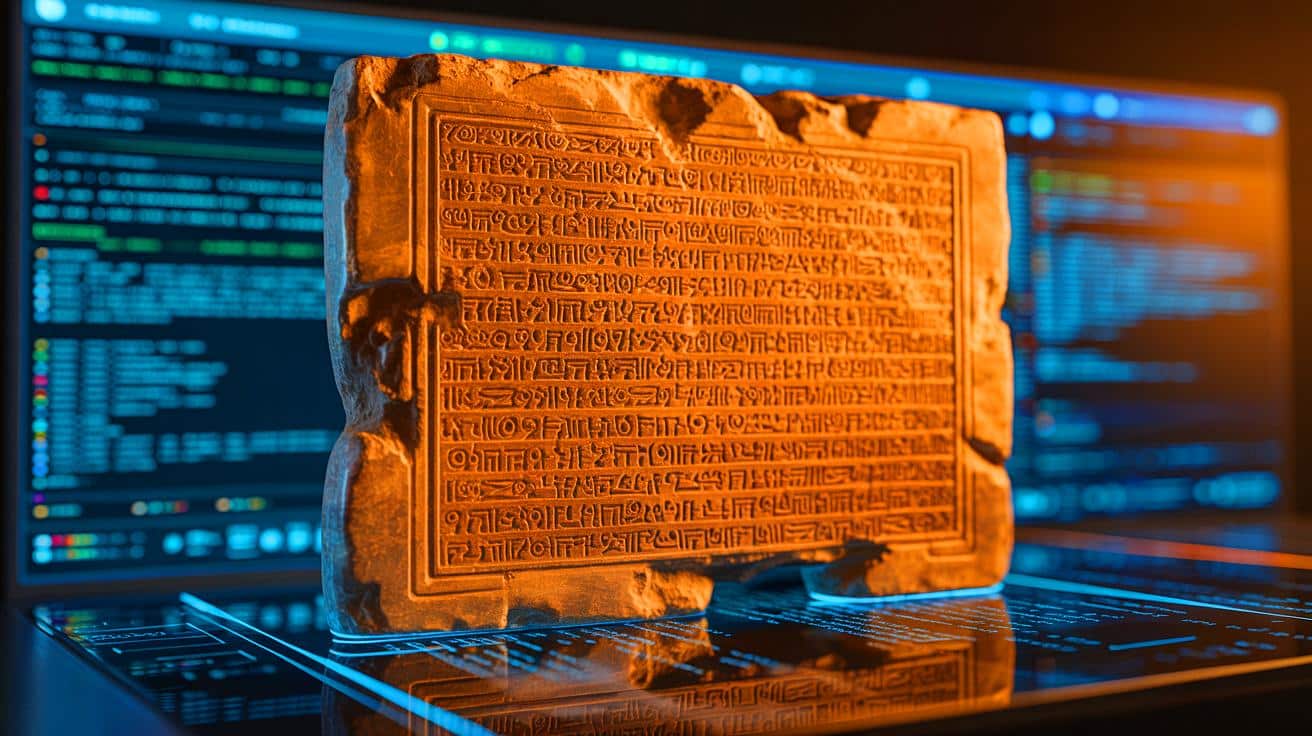
In a groundbreaking discovery, a hymn dating back to around 1000 BCE has been revived through the use of artificial intelligence. Professor Enrique Jiménez from LMU has unearthed this ancient text and connected it to 30 additional manuscripts with the assistance of advanced technology. This collaboration, involving the University of Baghdad, has brought a long-lost Babylonian hymn back to life, offering a glimpse into the cultural and social dynamics of an ancient civilization. The hymn not only praises Babylon’s grandeur but also provides insights into the everyday lives of its people.
Rediscovering Babylonian Culture Through Technology
The rediscovery of the Babylonian hymn is a testament to the power of modern technology in uncovering the past. Professor Enrique Jiménez, alongside the University of Baghdad, has managed to bring back a piece of Babylonian history that had been hidden for more than a millennium. “It’s a fascinating hymn that describes Babylon in all its majesty and gives insights into the lives of its inhabitants, male and female,” Jiménez remarked. Founded around 2000 BCE, Babylon became a thriving hub for culture and scholarship, leaving a significant impact on world literature.
This collaborative effort is part of a larger project aimed at preserving Babylonian works, many of which were inscribed in cuneiform on clay tablets. These tablets have survived largely in fragments, posing a challenge to scholars. The project seeks to decipher these texts from the renowned Sippar Library, a collection that legend says was hidden by Noah before the flood. By using artificial intelligence, Jiménez and his team have been able to match fragmented pieces, revealing connections that scholars have long sought.
The Role of Artificial Intelligence in Ancient Texts
The Electronic Babylonian Library Platform is a groundbreaking tool that is digitally archiving all known cuneiform fragments worldwide. Artificial intelligence plays a crucial role in this process, connecting pieces of texts that were previously thought to be isolated. Jiménez noted, “Using our AI-supported platform, we managed to identify 30 other manuscripts that belong to the rediscovered hymn — a process that would formerly have taken decades.” This technological advancement has allowed for the full reconstruction of the hymn, including parts that were incomplete.
The implications of this discovery are immense. The ability to reconstruct such texts provides a more comprehensive understanding of Babylonian society. This hymn, with its 250 lines of poetry, offers insights not only into the architecture and natural environment of Babylon but also into the societal roles and values of its people.
Insights Into Babylonian Society and Daily Life
One of the most intriguing aspects of the rediscovered hymn is its popularity in ancient Babylon. The presence of multiple copies suggests that the hymn was widely known and possibly used in educational settings. “The hymn was copied by children at school. It’s unusual that such a popular text in its day was unknown to us before now,” Jiménez stated. The hymn’s content is rich with descriptions of Babylon’s buildings and the natural landscape, such as the Euphrates River’s role in agriculture, which was a rarity in surviving Mesopotamian literature.
Beyond the physical descriptions, the hymn sheds light on the social structure of Babylon. It highlights women’s roles, including priestly duties, which were not well-documented previously. Moreover, the text portrays Babylonian society’s values, emphasizing respect and hospitality toward foreigners, a perspective not often found in ancient literature. This newfound understanding enriches our knowledge of Babylonian culture and its influence on subsequent civilizations.
Cockroaches Expose Hidden Threat: How These Pests Secretly Poison Indoor Air, Impacting Your Health
A Legacy Preserved in Stone and Song
Today, the ruins of Babylon stand about 85 kilometers south of Baghdad, Iraq, designated as a UNESCO World Heritage Site. These remnants continue to offer a window into a civilization that once thrived thousands of years ago. The revival of the Babylonian hymn through artificial intelligence not only preserves a piece of history but also revitalizes a cultural legacy that continues to resonate in modern society.
This rediscovery prompts us to reflect on the enduring impact of ancient civilizations and the stories they leave behind. How will modern technology continue to reshape our understanding of history, and what other forgotten narratives are waiting to be uncovered?




Wow, AI is really taking us back in time! What’s next, a duet with Hammurabi? 🎤
Wow! It’s amazing how AI can bring history back to life! 🧠✨
How reliable is the AI in translating ancient languages though?
This is so cool! Imagine what else we might discover! 🤯
This is a fascinating use of AI! But how reliable are the translations of such ancient texts? 🤔
I’m skeptical. Can AI really interpret ancient texts accurately?
Thank you for sharing such an insightful article!
Gr8 work by the team! It’s amazing how tech can bridge millennia.
Will this technology be applied to other ancient cultures too?
Seems like AI is the new Indiana Jones! 🏺🤖
Is this hymn available to listen to somewhere? I’d love to hear it!
How can we be sure that the AI’s interpretation is correct?
This is an incredible fusion of tech and history. Kudos to the team!
AI: bringing back ancient culture one byte at a time! 😄
Isn’t it ironic that ancient texts are being saved by futuristic tech?
The AI revival of texts is fascinating, but what about their context?