


| IN A NUTSHELL |
|
The recent study published in Nature Geoscience unveils critical insights into the dynamic behavior of the East Antarctic Ice Sheet (EAIS) through a historical lens. Led by Professor Yusuke Suganuma, a team of international researchers explored a period around 9,000 years ago when this massive ice sheet experienced significant retreat. The study sheds light on the mechanisms driving such changes, particularly focusing on the feedback loop between melting ice and ocean currents. This research not only enhances our understanding of past ice sheet behavior but also provides valuable perspectives on current and future climate scenarios.
Reconstructing Ancient Ice-Sheet Collapse
The research team embarked on a comprehensive effort to identify the factors behind the large-scale ice loss in East Antarctica millennia ago. The East Antarctic Ice Sheet, containing more than half of Earth’s freshwater, is a critical component of our planet’s climate system. Today, some coastal zones are already experiencing ice loss, echoing past events. By investigating how the ice sheet responded to earlier warming periods, the study offers insights into its potential future behavior.
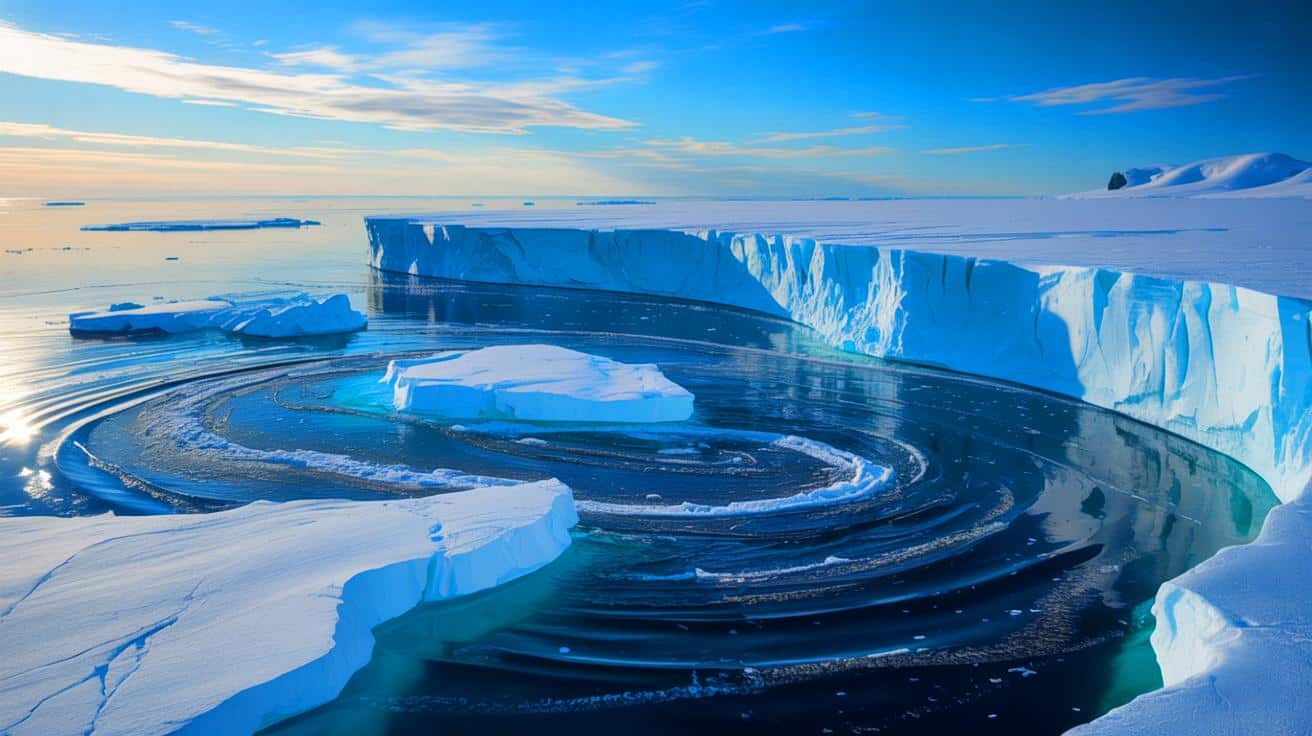
To reconstruct historical ice-sheet dynamics, the team analyzed marine sediment cores from Lützow-Holm Bay. These cores were collected over decades through the Japanese Antarctic Research Expeditions. The data, combined with geological surveys, allowed researchers to trace environmental changes in the region. Their findings indicate that around 9,000 years ago, warm Circumpolar Deep Water (CDW) entered the bay, triggering the collapse of floating ice shelves. This collapse facilitated the rapid movement of inland ice towards the sea.
Modeling Reveals a Cascading Ocean Feedback
The study utilized climate and ocean circulation models to explore the intensification of warm deep water during that period. The simulations revealed that meltwater from other Antarctic regions, such as the Ross Ice Shelf, contributed to changes in the Southern Ocean’s properties. This influx of freshwater enhanced vertical stratification, preventing the mixing of cold surface water with deeper layers.
Consequently, warm deep water was able to penetrate East Antarctica’s continental shelf, setting off a reinforcing cycle. The increased stratification facilitated further warm-water inflow, which in turn accelerated melting. The models demonstrated that this interconnected “cascading feedback” could allow melting in one Antarctic sector to influence ice loss in others. Such large-scale ocean circulation patterns highlight the potential for regional changes to have widespread impacts.
A Warning Echoing Across Millennia
The study’s findings provide compelling evidence that Antarctica’s ice sheets are susceptible to self-reinforcing, widespread melting during periods of planetary warming. Although the event studied occurred during the early Holocene epoch, when global temperatures were naturally higher, the underlying physical processes remain relevant today. Observations indicate that portions of the West Antarctic Ice Sheet, including the Thwaites and Pine Island glaciers, are experiencing rapid retreat as warm deep water intrudes.
If similar cascading feedbacks are active now, localized melting could spread, accelerating overall ice loss and contributing to faster global sea-level rise. This historical perspective underscores the urgency of understanding and addressing the current and future impacts of climate change on Antarctic ice dynamics.
International Collaboration and Global Implications
The study was a collaborative effort involving over 30 institutions worldwide. This partnership combined extensive field surveys, marine sediment studies, cosmogenic nuclide dating, and advanced climate-ocean modeling to reconstruct the evolution of the Antarctic ice-ocean system. The international nature of the research highlights the global significance of understanding Antarctic ice behavior.
Professor Suganuma emphasized the broader implications of the findings, noting that the study provides essential data and modeling evidence for predicting future Antarctic ice-sheet behavior. The identified cascading feedbacks illustrate how seemingly minor regional changes can have global repercussions. This research serves as a crucial reminder of the interconnectedness of Earth’s climate systems and the potential for significant impacts from localized alterations.
As the world grapples with the challenges of climate change, the insights gained from this study offer valuable guidance for future research and policy decisions. By understanding the past, we can better anticipate and mitigate the impacts of future changes. How will these findings shape global strategies to address the pressing issue of sea-level rise, and what further research is needed to refine our predictions?


Wow, 9,000 years ago! It’s amazing how much we can learn from ancient ice. 🌨️
Wow, 9,000 years ago! 🌍 Time to update my ice age jokes. 😂
Isn’t it possible that the current melting is part of a natural cycle? 🤔
How accurate are these climate and ocean models? Can they really predict future scenarios?
Thank you for this insightful article! It’s crucial to understand these processes to tackle climate change. 🌍
Thanks for the informative article! It’s crucial to understand how quickly our planet can change. 🙏
More evidence that we need to act now before it’s too late. 😟
So, is East Antarctica the new canary in the coal mine for climate change?
How do they ensure the accuracy of these climate models?
The feedback loop concept is fascinating but also terrifying. Are we too late to reverse this?
This is scary stuff, but also fascinating! Who knew ice could tell such a story? 🧊
Can someone explain what “cascading feedback loop” means in simpler terms?
Could these findings influence current climate policies?
Why don’t we hear more about this in mainstream media? This seems like a big deal. 🤔