




| IN A NUTSHELL |
|
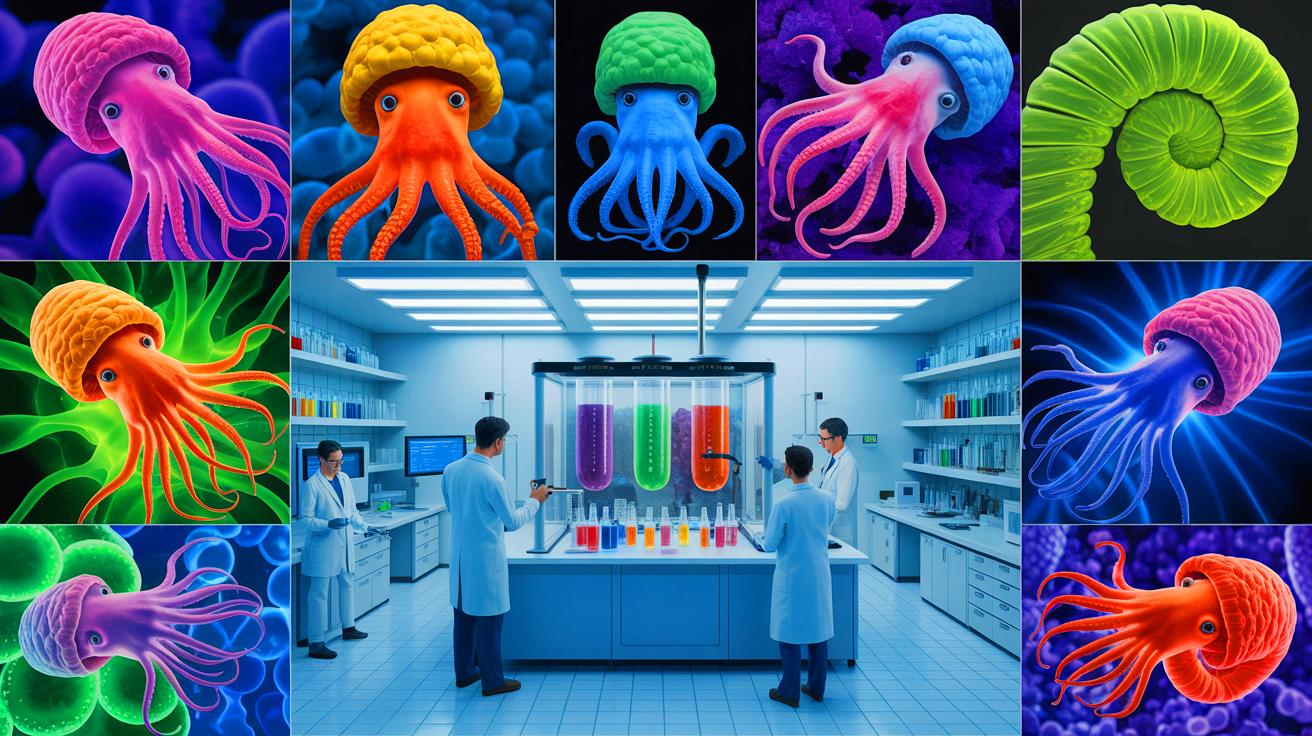
In a remarkable breakthrough, scientists at the University of California, San Diego, have advanced our understanding of camouflage by focusing on xanthommatin, a pigment responsible for the extraordinary color-changing abilities of octopuses and other cephalopods. This achievement, highlighted by the successful production of xanthommatin within bacteria, opens new avenues for sustainable applications in various fields. The research, published in Nature Biotechnology, demonstrates the potential of this pigment for use in materials, cosmetics, and beyond. This innovation not only deepens our understanding of natural camouflage but also signifies a shift towards sustainable biotechnological solutions.
Unveiling the Secrets of Cephalopod Camouflage
Cephalopods such as octopuses, squids, and cuttlefish are renowned for their ability to blend seamlessly into their surroundings. This remarkable skill is primarily due to xanthommatin, a pigment that enables these creatures to alter their skin color instantaneously. Scientists have long been fascinated by this pigment’s light-responsive properties, yet replicating it in a laboratory setting has proven to be a daunting challenge. The research team at the University of California, San Diego, has finally overcome these obstacles, marking a significant milestone in understanding animal coloration.
The breakthrough involves producing xanthommatin in bacteria, achieving levels up to 1,000 times greater than previous methods. This innovative approach not only promises to enhance our grasp of camouflage but also sets the stage for a plethora of applications in industries such as photoelectronics, thermal coatings, and UV-protective products. By leveraging the natural pigment production capabilities of bacteria, researchers have paved the way for more sustainable and efficient solutions.
Bacteria as Natural Pigment Factories
The UC San Diego team employed a biologically inspired method to transform bacteria into efficient pigment producers. By linking the survival of genetically engineered bacteria to the production of xanthommatin, researchers created a self-sustaining system. The bacteria were engineered to rely on the production of both the pigment and formic acid for their growth, creating a feedback loop that enhances pigment production.
This innovative technique, known as “growth coupled biosynthesis,” represents a novel departure from traditional biotechnological approaches. By integrating the production of xanthommatin with the bacteria’s survival, researchers effectively tricked the microbes into generating the desired pigment. This method not only simplifies the production process but also offers a glimpse into future possibilities for sustainable manufacturing of valuable compounds and materials.
Challenges and Innovations in Pigment Production
Producing xanthommatin in sufficient quantities has been a persistent challenge due to the inefficiencies of traditional lab methods. Harvesting the pigment from animals is neither scalable nor efficient, while chemical synthesis has yielded low outputs. The UC San Diego team addressed these challenges by employing robotics and automation to guide the bacteria through adaptive laboratory evolution. This advanced methodology facilitated the gradual improvement of the bacteria’s performance, resulting in significantly higher pigment yields.
Using specialized bioinformatics software, researchers identified key genetic changes that boosted the bacteria’s productivity. These advancements allowed the engineered bacteria to produce xanthommatin efficiently with minimal resources. The results of this approach are impressive, yielding between one to three grams of pigment per liter, a substantial improvement over traditional methods.
Future Applications and Implications
The successful production of xanthommatin in bacteria holds promising implications for various industries. The U.S. Department of Defense and cosmetics companies have already shown interest in exploring the material’s applications, from natural camouflage to innovative sunscreen formulations. Additionally, the pigment’s potential extends to color-changing paints and environmental sensors, highlighting its versatility.
This breakthrough underscores the importance of nature-inspired solutions in addressing modern challenges. By tapping into the potential of xanthommatin, scientists have not only advanced our understanding of natural camouflage but also paved the way for sustainable innovations that can benefit both people and the planet. The research demonstrates that biology-driven approaches can revolutionize material production, offering a glimpse into a future where sustainability and innovation go hand in hand.
The achievement of producing xanthommatin in bacteria marks a significant step forward in the quest for sustainable biotechnological solutions. As researchers continue to explore the potential applications of this pigment, the question remains: how will nature-inspired innovations shape the future of material science and industry? This open-ended inquiry invites further exploration into the intersection of biology and technology, promising exciting developments in the years to come.



Wow, this sounds like science fiction! Can’t wait to see color-changing sunscreen! 🦑
Wow, this is incredible! How long until we see these applications in everyday products? 🐙
Interesting read, but how safe is this technique for large-scale production? 🤔
How long until we can expect to see these applications in the market?
Can this technology be used to clean up environmental pollutants? 🌍
This could be a game-changer for sustainable materials. Thanks for sharing!
Is there any risk of these bacteria escaping into the wild? 🤔
Are there any potential risks of using genetically engineered bacteria? 😬
Thank you for sharing this groundbreaking research! It’s amazing to see nature-inspired solutions. 🌍
How does xanthommatin compare to synthetic pigments in terms of cost and efficiency? 💸
I’m amazed at how nature continues to inspire technological advances. Truly fascinating!
This is incredible, but how do the bacteria “know” to produce xanthommatin?
Will this research lead to new types of camouflage gear for the military?