




| IN A NUTSHELL |
|
For nearly 300,000 years, early humans in the Turkana Basin of Kenya demonstrated remarkable resilience and adaptability. This region, now known for its challenging environment, was once the cradle of a significant technological tradition. Researchers have uncovered evidence of Oldowan stone toolmaking that persisted for hundreds of millennia. This discovery not only reveals the ingenuity of our ancestors but also underscores their ability to thrive amid dramatic climatic shifts. The findings highlight a pivotal chapter in human evolution, illustrating how early humans used technology to navigate and adapt to their changing world.
Discovering the Ancient Toolmakers
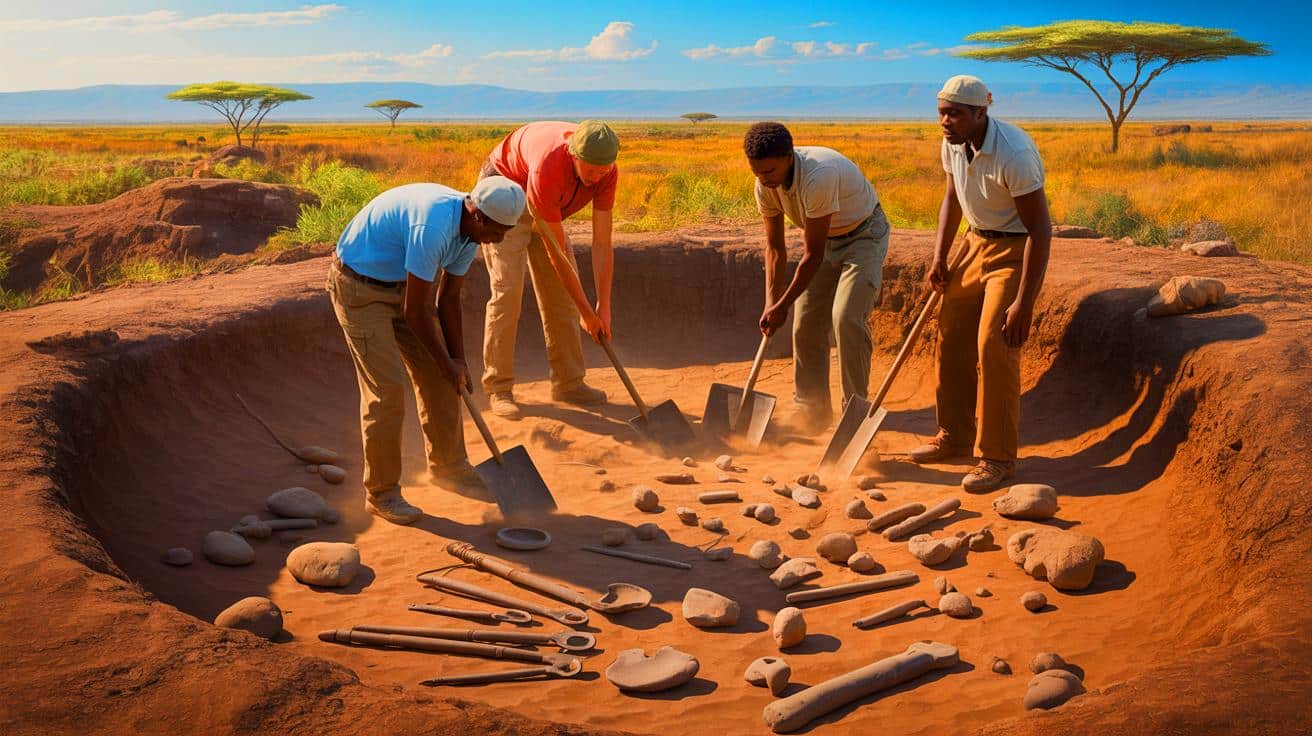
At the heart of this groundbreaking study is the Namorotukunan Site in Kenya, where an international team of researchers has unearthed one of the earliest records of Oldowan stone toolmaking. These tools, dating from approximately 2.75 to 2.44 million years ago, represent more than just functional implements. They embody a rich tradition of craftsmanship and cultural continuity. According to David R. Braun, lead author of the study, this site offers an “extraordinary story of cultural continuity.” The tools reveal that early humans had mastered the art of stone shaping with precision, passing down this skill through countless generations.
The Oldowan tools, often likened to early multi-purpose “Swiss Army knives,” were crucial for survival. They enabled early hominins to adapt to an ever-changing environment, transforming natural challenges into evolutionary advantages. This adaptability is a testament to human ingenuity, even in the face of adversity.
Environmental Challenges and Human Resilience
The period during which these tools were crafted was marked by intense environmental changes, including wildfires, droughts, and shifting landscapes. Despite these challenges, the toolmaking tradition endured. Researchers used advanced techniques such as volcanic ash dating and chemical analyses to reconstruct the environmental timeline of the region. This timeline reveals a dynamic ecosystem where early humans had to navigate and adapt.
The resilience of these toolmakers is evident in their ability to innovate. They developed versatile tools that opened up new dietary possibilities, including access to meat. This broadened diet was crucial for survival and may have played a significant role in human evolution. As Susana Carvalho, a senior author of the study, suggests, tool use may have been a generalized adaptation among our primate ancestors, allowing them to thrive despite environmental upheaval.
The Science Behind the Discovery
The research team employed an array of scientific methods to uncover the secrets of the Namorotukunan Site. By analyzing magnetic patterns in ancient sediments and studying microscopic plant traces, scientists were able to paint a vivid picture of the past. This multidisciplinary approach provided a comprehensive understanding of how early humans interacted with their environment.
Key findings from the study indicate that the landscape underwent significant transformations, shifting from lush wetlands to dry grasslands and semideserts. Despite these changes, the consistency in toolmaking techniques remained steady. As Rahab N. Kinyanjui from the National Museums of Kenya notes, this stability in craftsmanship reflects the resilience of early humans, underscoring their ability to adapt to a rapidly changing world.
Implications for Understanding Human Evolution
The implications of this study extend beyond the discovery of ancient tools. They offer a window into the past, providing insights into the evolutionary journey of our species. The enduring nature of Oldowan technology suggests that early humans were not only skilled artisans but also pioneers of innovation. Their ability to create and maintain a technological tradition over millennia speaks to a fundamental aspect of human nature: the drive to overcome challenges through innovation.
Furthermore, the study’s findings challenge previous assumptions about the timeline of human technological development. As Niguss Baraki from George Washington University remarks, these discoveries hint that the origins of Oldowan technology may be older than previously thought. This revelation prompts a reevaluation of the evolutionary timeline and highlights the need for continued exploration in regions like the Turkana Basin.
The story of the ancient toolmakers of Kenya’s Turkana Basin is a testament to human resilience and ingenuity. These early humans not only survived but thrived amidst environmental challenges, using their technological prowess to adapt and evolve. The enduring legacy of their craftsmanship offers valuable insights into the nature of human evolution. As we continue to uncover the mysteries of our past, we must ask ourselves: How can these lessons from our ancestors inform our approach to the challenges we face today?



Wow, 2.7 million years old! That’s mind-blowing. 🌍
Wow, 2.7 million years old?! That’s older than my morning coffee 😄
Do you think these tools were used for hunting or more for gathering?
This is fascinating! How did they determine the exact age of these tools?
Can we visit the Namorotukunan Site in Kenya? Sounds fascinating.
Great article! Thanks for sharing such an interesting discovery.
Love the article! Thanks for sharing this incredible discovery. 😊
How do they even date something that old? 🤔
I wonder if these tools were used for cooking or just hunting? 🤔
So if these are like “Swiss Army knives,” were they used for camping too? 😂
It’s amazing to think about the skills our ancestors had so long ago!
I wonder how many tools were found in total. Anyone knows?
Are there any plans to exhibit these tools in a museum? I’d love to see them!
It’s amazing how resilient early humans were. Truly inspiring!
This article really makes me appreciate modern technology!
Does this mean we need to rewrite history books again? 📚
What kind of rock were these tools made from? Granite? Slate?