



| IN A NUTSHELL |
|
The discovery of 6 million-year-old ice in the Allan Hills region of East Antarctica marks a significant breakthrough in climate science. Researchers have unearthed ancient ice samples that offer a rare glimpse into Earth’s distant past, a time when the planet was significantly warmer and sea levels were higher. This extraordinary find, led by scientists from the Woods Hole Oceanographic Institution and Princeton University, provides invaluable insights into ancient atmospheric conditions. The study, supported by the National Science Foundation’s Center for Oldest Ice Exploration (COLDEX), sets a new benchmark in the quest to understand long-term climate shifts.
A Journey Back in Time
In a remarkable scientific achievement, researchers have identified the oldest ice and air samples ever discovered on Earth. Extracted from the Allan Hills region, these samples are estimated to be about 6 million years old. This period coincides with a warmer Earth, presenting an extraordinary opportunity to study past climate conditions. The ice cores act as natural time machines, encapsulating tiny air bubbles that preserve a snapshot of the planet’s ancient atmosphere. For scientists, these samples are a treasure trove of data, offering insights that could reshape our understanding of historical climate patterns.
The research was spearheaded by Sarah Shackleton of the Woods Hole Oceanographic Institution and John Higgins of Princeton University. Both are integral to COLDEX, a collaborative initiative aimed at uncovering ancient ice records. The significance of this find cannot be overstated. According to Ed Brook, COLDEX Director and paleoclimatologist at Oregon State University, the discovery surpasses initial expectations of finding ice dating back 3 million years. Instead, the team has uncovered material twice as old, providing a glimpse into a world markedly different from our own.
Halloween Fireballs Pose Hidden Dangers, Sparking Concerns for Families and Communities Nationwide
The Race to Explore Ancient Ice
The Allan Hills discovery is part of a broader global effort to extend the ice core record beyond its previous 800,000-year limit. Numerous international teams are venturing into Antarctica with the aim of unearthing older ice samples. While a European project recently announced a continuous core dating back 1.2 million years, COLDEX’s findings extend the timeline by several million years, albeit in discrete fragments rather than a continuous core. This advancement is crucial for reconstructing a more comprehensive picture of Earth’s climatic history.
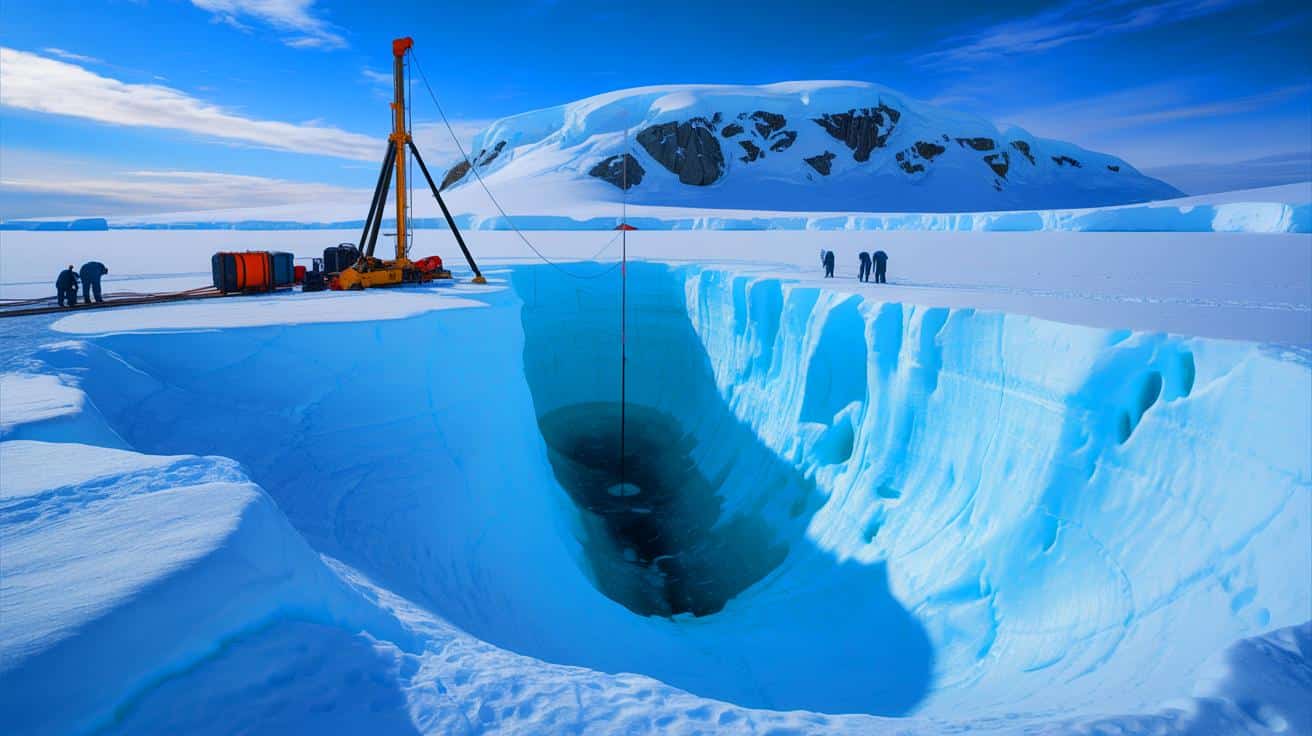
The fieldwork involved in accessing these ancient samples is both challenging and rewarding. Researchers operate in harsh conditions, drilling through hundreds of feet of ice. The unique topography and ice flow patterns in the Allan Hills region help preserve these ancient samples near the surface. However, the extreme cold and strong winds pose significant challenges. Despite these obstacles, the team remains committed to unlocking the secrets buried within this ancient ice.
Understanding Long-Term Climate Change
Analysis of the ice cores has already yielded valuable information. Oxygen isotope data suggests that the region has cooled by approximately 22 degrees Fahrenheit over the last 6 million years. This finding provides the first direct evidence of the cooling trend in Antarctica since that ancient warm period. Future research will delve deeper into the composition of greenhouse gases and ocean heat levels preserved in the ice bubbles. These elements are critical for understanding the natural forces that drive long-term climate change.
The implications of this research are far-reaching. By extending the climate record, scientists can better understand the natural variability of Earth’s climate system. This knowledge is essential for predicting future climate scenarios and informing policy decisions aimed at mitigating climate change impacts. The team’s ongoing efforts to extract even older samples could provide unprecedented insights into the planet’s climatic evolution.
Collaboration and Ongoing Efforts
The success of this research is a testament to the collaborative efforts of scientists from various institutions. Contributors to the study include experts from Oregon State, Princeton, the University of Washington, and the Scripps Institution of Oceanography, among others. The project has received substantial support from the National Science Foundation and the U.S. Antarctic Program, highlighting the importance of interdisciplinary cooperation in advancing scientific knowledge.
Looking ahead, COLDEX plans to conduct further expeditions to the Allan Hills region. The goal is to recover even older ice samples and construct a more detailed record of Earth’s ancient atmosphere. These efforts are part of a long-term study scheduled between 2026 and 2031, reflecting the scientific community’s commitment to unraveling the mysteries of our planet’s past.
The discovery of 6 million-year-old ice in Antarctica has opened a new chapter in climate science. By peering into the distant past, researchers are gaining valuable insights into the natural forces that have shaped our world. As scientists continue to explore these ancient ice records, what new revelations about Earth’s climatic history might they uncover?


Wow, 6 million years old! That’s some seriously ancient ice! 🧊
Wow, 6 million years old? That’s older than my grandma’s recipe book! 😂
How exactly do they determine the age of this ice? Always curious about the methodology.
Is there any way this research could help predict future climate changes?
This is fascinating! Thank you for sharing such groundbreaking research! 🌍
Does this mean climate change isn’t just a recent issue? 🤔
I’m skeptical about these findings. How do they know the ice is really that old?
What do they mean by “direct evidence” of a warmer ancient world? Need more info!
So, in a nutshell, we’ve been cooling for millions of years now. That’s some serious AC! 🧊
Thanks for the fascinating article. The science behind it is mind-blowing! 🌍
I’m skeptical. How can we be sure the ice is really that old?
How do these findings impact our current climate models?
This is a huge breakthrough! Can’t wait to see what else they discover!
Love the interdisciplinary approach! More collaboration means more discoveries.
How do the researchers ensure the ice samples aren’t contaminated during extraction?
Is this research focused only on Antarctica? What about other regions?
Thanks for this article. It’s mind-blowing to think about Earth’s history like this!