




| IN A NUTSHELL |
|
Pore-forming proteins, found in a myriad of organisms, play crucial roles in biological processes. In humans, these proteins are vital for immune functions, while in bacteria, they often serve as toxic agents, disrupting cell membranes. Their primary function is to facilitate the movement of ions and molecules across cellular membranes, ensuring controlled and precise molecular traffic. This ability has made them indispensable in biotechnology, particularly in DNA sequencing and molecular sensing. Despite their widespread use, the erratic behavior of biological nanopores has puzzled scientists for years, especially phenomena like rectification and gating, which disrupt nanopore-based sensing.
Unraveling the Mysteries of Biological Nanopores
Biological nanopores have become a cornerstone in biotechnological advancements, yet their unpredictable behavior remains a challenge. Rectification, a key phenomenon, occurs when the flow of ions changes based on the voltage’s polarity. Meanwhile, gating refers to the sudden cessation of ion flow, which can severely disrupt sensing processes. These behaviors are not just scientific curiosities; they represent significant hurdles in the consistent application of nanopores in technology. Researchers have long been intrigued by these phenomena but lacked a comprehensive understanding of their underlying mechanisms.
A team led by Matteo Dal Peraro and Aleksandra Radenovic at EPFL has made strides in identifying the physical mechanisms behind rectification and gating. Their research combines experiments, simulations, and theoretical models to shed light on these complex behaviors. By investigating the electrical charges within the nanopores and how they interact with moving ions, the team has started to piece together the puzzle of why these phenomena occur. This understanding is a significant step forward in the quest to harness the full potential of nanopores.
Experimenting With Electric Charges
The research team focused on a bacterial pore known as aerolysin, frequently used in sensing applications. By altering the charged amino acids within the pore, they created 26 variants, each with unique charge patterns. This allowed them to observe ion travel under various conditions and isolate critical electrical and structural factors influencing rectification and gating. The application of alternating voltage signals further differentiated between these two phenomena, with rectification occurring rapidly and gating developing more slowly.
Biophysical models played a crucial role in interpreting the data, illustrating the intricate dance between electrical charges and ion movement. The researchers found that the charges along the nanopore’s inner surface act like a one-way valve, facilitating ion flow in one direction over the other. In contrast, gating results from a disruption in charge balance, leading to a temporary collapse of the pore’s structure. This collapse blocks ion passage until the system resets, highlighting the importance of structural flexibility in the phenomenon.
How Nanopores Learn Like the Brain
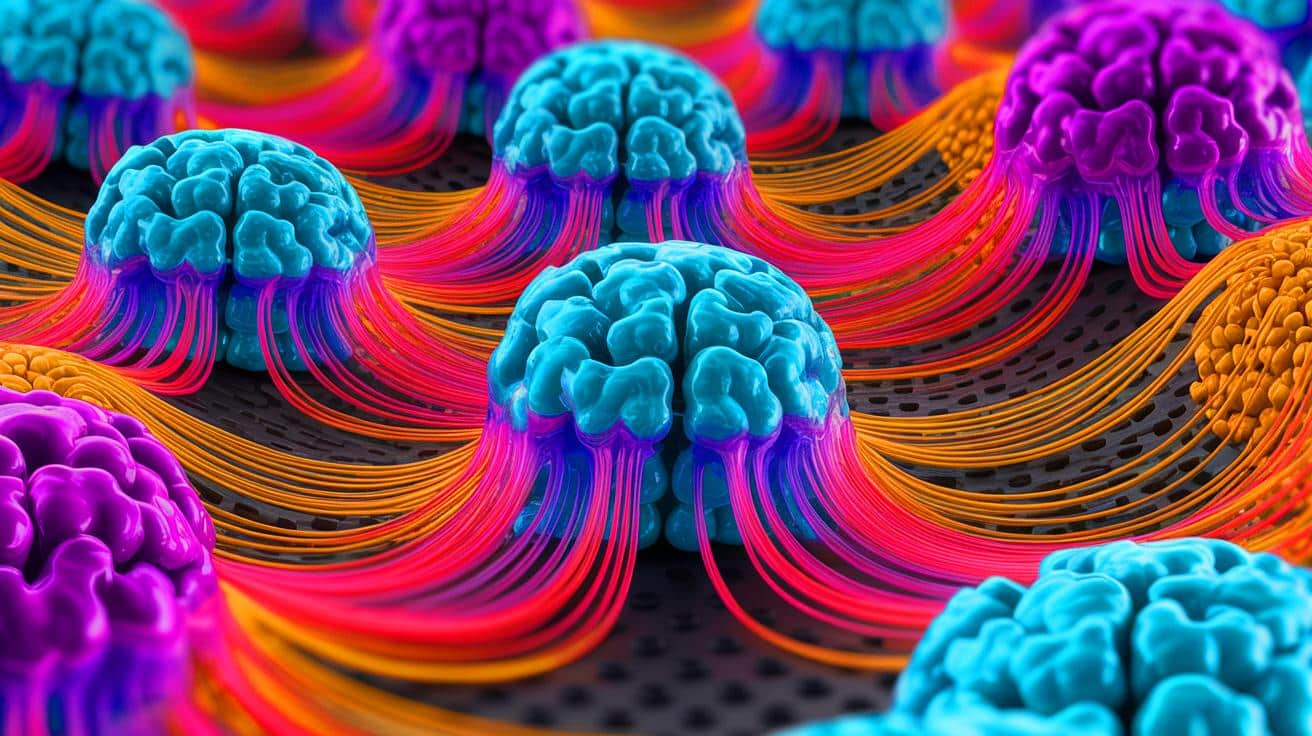
The discoveries made by the research team suggest that nanopores can be engineered to mimic certain brain functions. By manipulating the charges within the pores, they demonstrated a form of “learning” akin to synaptic plasticity in neural synapses. This learning occurs through voltage pulses, suggesting that future technologies could leverage these molecular processes for new forms of computing. The idea of ion-based processors utilizing this “learning” capability opens exciting avenues for bio-inspired computing, potentially transforming how information is processed and stored.
These insights into charge manipulation and structural flexibility not only provide a deeper understanding of nanopore behavior but also pave the way for designing smarter nanopores. Such advancements could lead to nanopores with custom properties, tailored to specific applications in biotechnology and beyond. The ability to control gating and rectification could enhance the reliability of nanopore-based sensors and open up new possibilities for computing technologies inspired by biological processes.
Toward Smarter Nanopores
The implications of this research extend far beyond current applications. By engineering nanopores with specific charge patterns, scientists can minimize unwanted gating or harness it for innovative purposes. The development of a nanopore that mimics synaptic plasticity is just one example of the potential for bio-inspired computing. This capability suggests that future processors could utilize molecular “learning” to achieve new forms of information processing. The fusion of biological principles with technological applications presents a frontier of possibilities yet to be fully explored.
The study’s findings highlight the interplay between electrical charges and structural dynamics, offering a blueprint for future nanopore engineering. As researchers continue to explore these mechanisms, the potential for smarter, more adaptable nanopores becomes increasingly viable. This leap forward could revolutionize fields ranging from molecular sensing to computing, challenging our understanding of what is possible at the intersection of biology and technology.
The groundbreaking research into biological nanopores not only advances our understanding of these microscopic structures but also opens up new possibilities for technological innovation. As scientists delve deeper into the mechanisms of rectification and gating, the potential to create smarter, more adaptable nanopores becomes increasingly tangible. With the prospect of bio-inspired computing on the horizon, a pivotal question emerges: How will these advancements reshape our technological landscape and redefine the boundaries between biology and technology?


Amazing article! Can these nanopores be used for brain-computer interfaces in the future? 🤔
Wow, this sounds like science fiction becoming reality! I can’t believe nanopores can learn like our brains. 🤯
Can someone explain what “rectification” means in simpler terms? I’m a bit lost. 🙈
Wow, bacterial nanopores mimicking brain learning? That’s mind-blowing! 🧠✨
This is absolutely fascinating. Thank you for sharing such an insightful article!
How long do you think it’ll be before we see practical applications of this research?
How long before we see practical applications of this research?
This is incredibly fascinating! Thank you for sharing such groundbreaking research.
Bio-inspired computing sounds incredible. Will it make our current tech obsolete?
I’m skeptical. Can these findings really be applied to real-world computing? 🤨
Did I read this right? Nanopores could be the next big thing in computing? Mind-blowing!
So, are these nanopores like mini-brains? 🤯