

| IN A NUTSHELL |
|
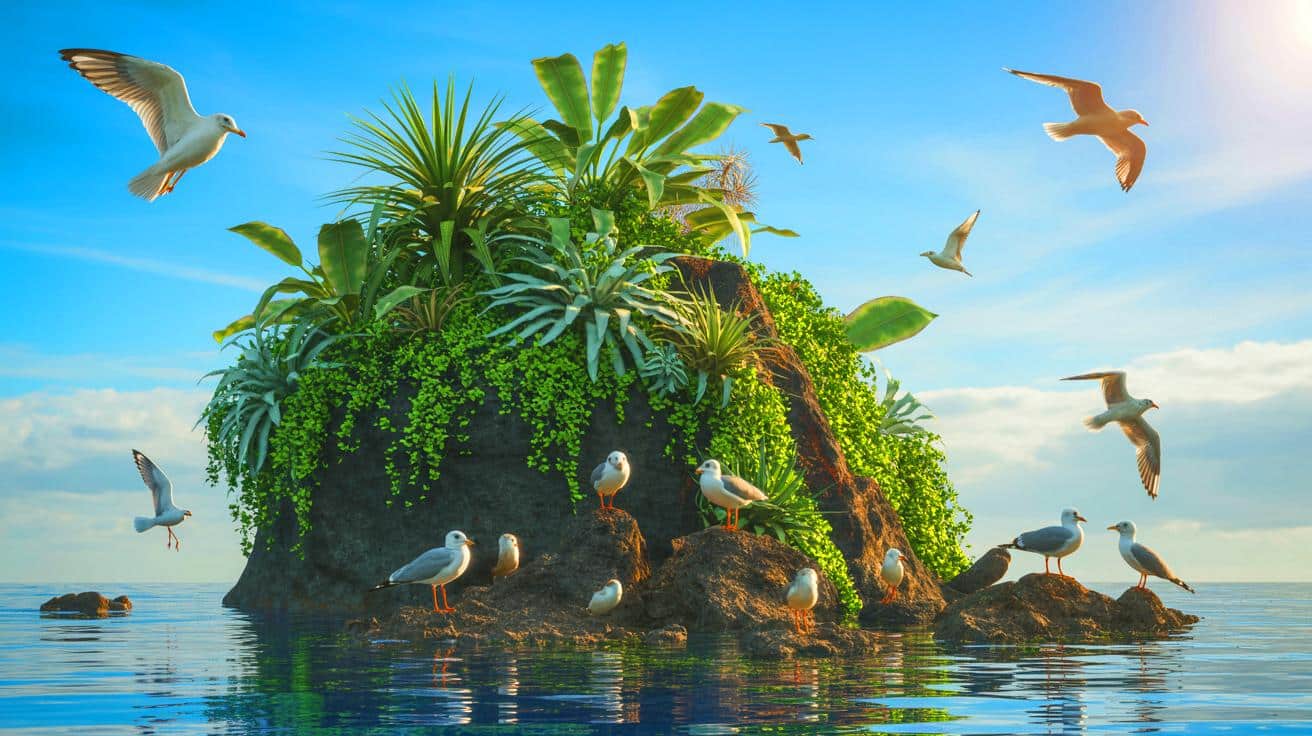
In 1963, a volcanic eruption in the North Atlantic gave birth to Surtsey Island, offering scientists an unparalleled opportunity to observe the birth of an ecosystem. For decades, the prevailing belief was that wind and ocean currents facilitated the arrival of plants on such isolated landmasses. However, recent research has turned this notion on its head, revealing that birds, not seed traits, are the true architects of the island’s developing ecosystem. This revelation not only challenges long-held assumptions but also underscores the intricate interconnectedness of life on Earth.
Birds as Nature’s Engineers
For many years, the scientific consensus was that plant species colonizing remote islands did so through evolutionary adaptations that enabled them to travel long distances. Traits such as buoyant seeds or fruits attractive to birds were considered crucial for plant dispersal. However, a study published in Ecology Letters challenges these ideas by showing that birds, particularly gulls, geese, and shorebirds, played a pivotal role in transporting seeds to Surtsey.
Dr. Pawel Wasowicz from the Natural Science Institute of Iceland stated, “Birds turned out to be the true pioneers of Surtsey — carrying seeds of plants that, according to conventional theories, shouldn’t be able to get there.” This insight shifts the focus from seed traits to the interactions between plants and animals, emphasizing that life spreads through dynamic ecological relationships. Birds, acting as winged gardeners, have carried a variety of plant seeds in their digestive systems or droppings, facilitating a burgeoning ecosystem on the island.
Implications for Ecology and Conservation
The discovery that birds are vital to plant colonization has far-reaching implications for the fields of ecology and conservation. As migration routes shift due to climate change, birds are expected to play a critical role in helping plant species adapt to new environments. Dr. Andy Green of the Estación Biológica de Doñana in Spain, who co-led the research, noted, “Animals — especially birds — are key drivers of plant dispersal and colonization. As migration routes shift under a warming climate, birds will play a vital role in helping plants move and adapt to new environments.”
This understanding calls for a reevaluation of current ecological models, which often prioritize physical seed traits over biological interactions. By acknowledging the integral role of animals in ecosystem development, conservation strategies can be more effectively tailored to support biodiversity and resilience in the face of ecological changes.
Surtsey: A Living Laboratory
Surtsey Island is more than just a natural wonder; it is a living laboratory for scientists studying the earliest stages of ecosystem development. Since its formation, researchers have been able to observe firsthand how life establishes itself and adapts to new conditions. The island’s unique status as a protected area ensures that it remains untouched by human activity, allowing for pure scientific observation.
Long-term research on Surtsey offers invaluable insights into the processes of colonization and adaptation. Dr. Wasowicz emphasizes the importance of such studies, stating, “It allows us to witness ecological processes that would otherwise remain invisible — how life colonizes, evolves, and adapts. Such work is essential for understanding the future of ecosystems in a rapidly changing world.” The island’s ongoing transformation serves as a microcosm for understanding broader ecological dynamics and evolution.
Revisiting Seed Dispersal Theories
The findings from Surtsey invite a reconsideration of traditional seed dispersal theories, which have long emphasized the role of specific seed traits. The research demonstrates that ecological interactions, such as those between birds and plants, can be more influential than previously thought. This shift in understanding highlights the need for an interdisciplinary approach to studying ecosystems, one that incorporates both biological and environmental factors.
As researchers continue to monitor Surtsey, the island remains a testament to the complexity of natural systems. It underscores the importance of looking beyond isolated traits to consider the broader ecological networks that facilitate life on Earth. The study of Surtsey not only enriches our understanding of island biogeography but also offers lessons applicable to other ecosystems facing environmental changes.
The story of Surtsey Island challenges us to rethink how ecosystems develop and adapt over time. As birds continue to shape its landscape, they remind us of the profound interconnectedness of life. What other hidden dynamics might we uncover if we look beyond traditional assumptions in ecological studies?


Wow, I had no idea birds played such a big role in shaping ecosystems! 🐦
Incredible how birds are the real MVPs of seed dispersal! 🐦🌱
Is there any evidence of other animals contributing to Surtsey’s ecosystem, or is it just birds?
I’m skeptical. How could birds be the main reason for plant colonization? 🤔
What a fascinating article! Thank you for shedding light on such an important ecological revelation.
Thank you for highlighting the importance of birds in ecology. Fascinating read!
Wait, so seeds can travel in bird poop? That’s both gross and amazing! 😂
Why haven’t we heard more about Surtsey Island before? Seems like a hidden gem!
How did the researchers confirm that birds are the primary seed carriers?
Amazing how nature finds its own ways to thrive. Go birds! 🌿
Is Surtsey island open for tourists, or is it strictly for scientific studies?