



| IN A NUTSHELL |
|
The recent discovery regarding the Southern Ocean’s carbon dioxide emissions has unveiled a significant oversight in previous climate models. A team of scientists from the Second Institute of Oceanography and the Nanjing Institute of Geography and Limnology found that during the Antarctic winter, the Southern Ocean emits 40% more CO2 than previously estimated. This revelation underscores the Southern Ocean’s crucial role in the global carbon cycle and raises questions about the accuracy of existing climate projections. By employing innovative technologies, researchers are challenging conventional understanding and opening new pathways for exploring Earth’s complex climatic systems.
The Ocean’s Role in Earth’s Carbon Balance
The Southern Ocean serves as a pivotal component in regulating Earth’s carbon cycle, absorbing a substantial portion of the carbon dioxide produced by human activities. Despite its significance, it remains the “largest source of uncertainty” in global CO2 flux calculations. One of the primary challenges in understanding the Southern Ocean’s carbon dynamics is the lack of wintertime observations. For several months each year, the region is enveloped in darkness and subjected to extreme weather conditions, rendering direct measurement difficult.
This period of darkness transforms the Southern Ocean into an “observational black box.” Traditional satellites, which rely on passive sensors that detect sunlight reflected off the ocean’s surface, are unable to collect data during this time. As a result, scientists have had to rely on incomplete models and estimates, which have contributed to the uncertainty surrounding the region’s carbon output. This gap in data has significant implications for global climate models and our understanding of the Earth’s carbon budget.
Using Lasers to See in the Dark
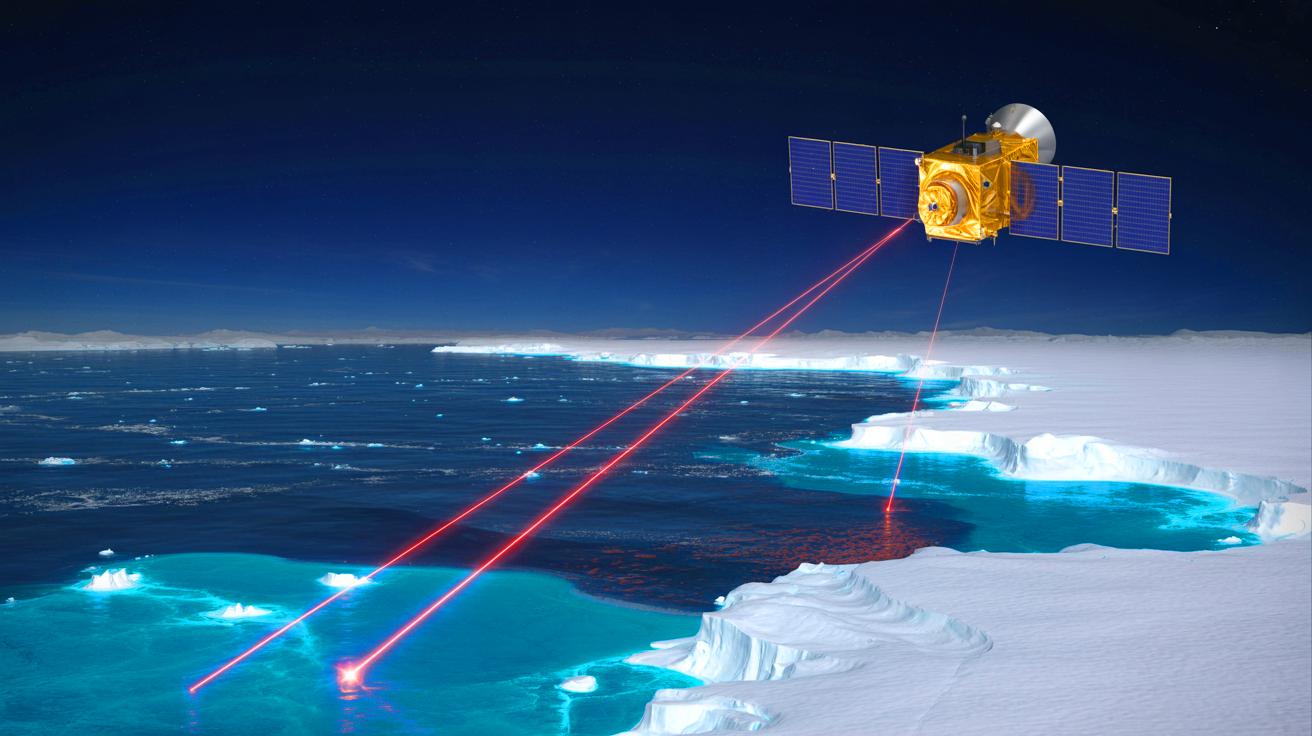
To address the challenges posed by the Southern Ocean’s harsh winter conditions, researchers have turned to advanced technologies that can penetrate the darkness. The team employed a laser-based satellite instrument known as LIDAR, part of the CALIPSO mission, to collect data over 14 years. Unlike traditional passive sensors, LIDAR operates by emitting its own light signals, similar to radar but utilizing lasers instead of radio waves. This capability allowed the team to gather continuous, observation-based data on CO2 exchange in the Southern Ocean, even during the polar night.
The findings were striking. Earlier estimates had overlooked nearly 40% of the Southern Ocean’s wintertime CO2 emissions. “Our findings suggest that the Southern Ocean’s role in the global carbon cycle is more complex and dynamic than previously known,” stated Prof. Kun Shi of NIGLAS. By filling this observational gap, researchers can now refine climate models to more accurately reflect the carbon dynamics of this critical region.
Rethinking the Ocean’s Carbon Dynamics
Beyond merely updating CO2 emission figures, the study introduces a new framework for understanding the Southern Ocean’s carbon dynamics. Researchers proposed a “three-loop framework” that delineates how CO2 exchange varies across distinct regions of the Southern Ocean. In the Antarctic Loop, located south of 60°S, physical factors like sea ice and salinity primarily drive CO2 exchange. Moving northward to the Polar Front Loop, between 45°S and 60°S, the interaction between atmospheric CO2 and biological activity, such as chlorophyll, becomes more pronounced.
In the Subpolar Loop, found north of 45°S, sea surface temperature plays the dominant role in influencing carbon dynamics. This nuanced understanding provides a more comprehensive view of the factors that govern CO2 exchange in the Southern Ocean, challenging previous assumptions and offering new insights into the ocean’s role in the Earth’s carbon cycle. The study’s findings may prompt scientists to revisit and revise existing models, leading to more accurate predictions of global carbon budgets.
Global Climate Implications
The implications of this research extend far beyond the Southern Ocean, promising to enhance our understanding of global carbon budgets and climate projections. Accurate carbon budgets are essential for organizations like the Intergovernmental Panel on Climate Change (IPCC), which relies on precise data to inform climate policies and projections. By filling the data gap in the Southern Ocean, this study could lead to more reliable climate forecasts and better-informed decision-making at the global level.
Furthermore, the research highlights the potential of combining active satellite sensing with machine learning to investigate Earth’s most remote and dynamic regions. This approach opens new avenues for studying the planet’s climate system year-round, offering the possibility of uncovering other overlooked aspects of Earth’s carbon cycle. As scientists continue to refine their understanding of the Southern Ocean’s carbon dynamics, the findings could have far-reaching implications for global climate policy and our collective efforts to mitigate climate change.
The groundbreaking research on the Southern Ocean’s carbon emissions underscores the importance of continued innovation in climate science. As scientists refine their understanding of the complex dynamics of Earth’s carbon cycle, they help shape more accurate climate models and policies. The study opens new doors for exploring other remote regions of the planet, where unseen processes may hold critical insights into our changing climate. How will this newfound knowledge influence future climate policies and our global approach to addressing climate change?




Wow, 40% more CO2? That’s a game-changer! 🌍
Wow, I had no idea the Southern Ocean was such a big player in CO2 emissions. Thanks for the eye-opening info! 🌊
Can someone explain how LIDAR works in simple terms? 🚀
How reliable is LIDAR technology in such extreme conditions? 🤔
Does this mean previous climate models were way off? 🤔
Does this mean previous climate models were way off? 🤯
Thank you for breaking down such a complex topic! 🙏
Great article! I always wondered how scientists gather data in the dark. 🌌
So, are we doomed or is there hope? 😅
So, are we doomed or what? Asking for a friend. 😅
Why didn’t they use LIDAR before if it’s so effective?
What other regions might hold similar surprises for climate science?
What’s the next step after this discovery?
This is exactly why climate policy needs to be based on the latest science. Keep it up!
More research like this is needed! Keep it coming! 🌟