




| IN A NUTSHELL |
|
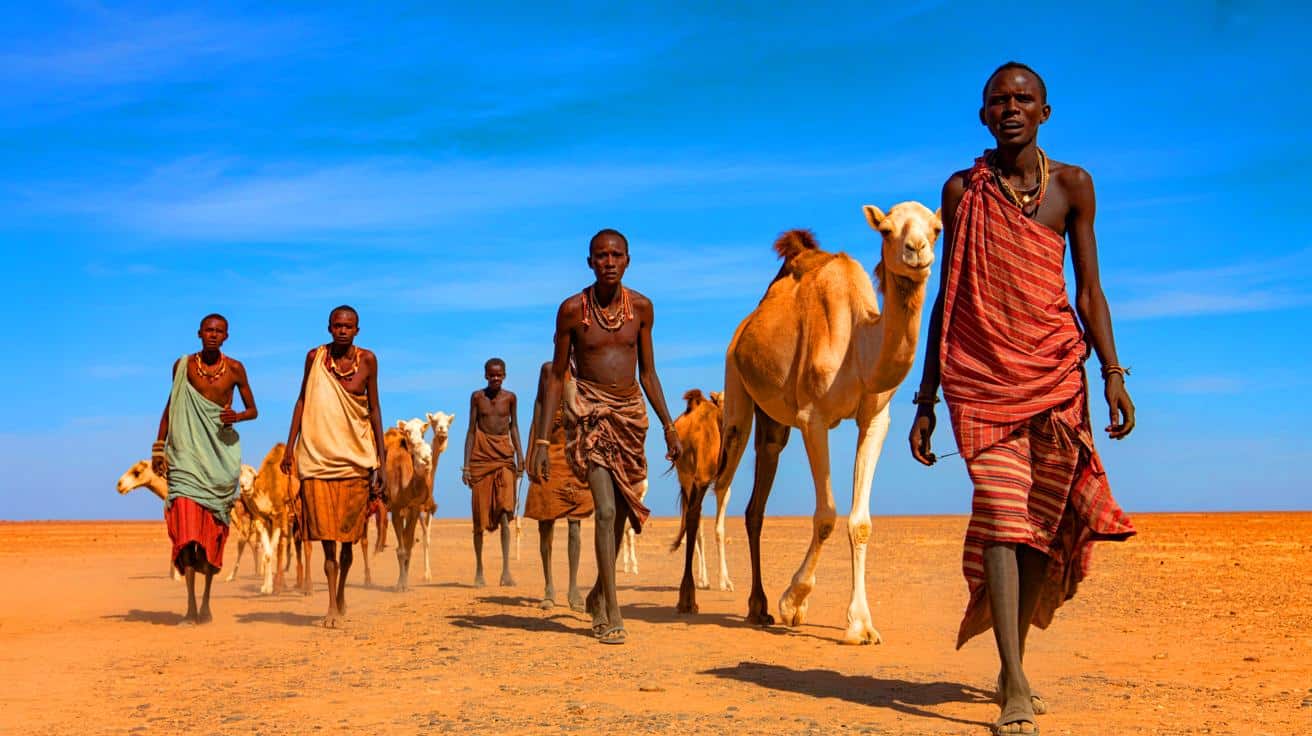
Northern Kenya’s arid landscape presents formidable challenges for human habitation. Yet, the Turkana people have thrived in this desert for thousands of years. Recent research reveals that their survival is not just a testament to cultural resilience but also to genetic adaptation. An international team, led by Cornell University, has uncovered genetic markers that illustrate how evolution can rapidly equip humans to endure harsh environments. This discovery highlights the dynamic interplay between human genetics and environmental pressures, offering insights into the mechanisms of adaptation that have enabled the Turkana to persist in one of the world’s most unforgiving climates.
Human Genes Shaped by Desert
The latest research focused on sequencing the genomes of the Turkana people, identifying eight DNA regions that have undergone recent natural selection. Among these, the STC1 gene stands out. This gene plays a crucial role in how the kidneys manage dehydration, a vital adaptation for survival in arid landscapes. By enhancing the body’s ability to retain water and manage the waste from protein-rich diets, STC1 becomes indispensable for the Turkana, whose diet relies heavily on milk, blood, and meat. These dietary staples, derived from livestock, are more than just nourishment; they are the pillars of the Turkana’s economic and cultural life.
Livestock, therefore, becomes both sustenance and currency, emphasizing the importance of genetic adaptations that support this lifestyle. The discovery of STC1’s role underscores how specific genetic traits can be honed by environmental challenges, enabling populations to thrive where others might fail.
This Robot That Replaces Human Pregnancy And Doctors Hide The Terrifying Medical Revolution
Adaptation in Real Time
The adaptive variant of the STC1 gene became prevalent between 5,000 and 8,000 years ago, coinciding with a period of increased aridity in the region. This environmental shift exerted intense evolutionary pressure, favoring individuals with the mutation. Interestingly, the same adaptation independently appeared in the Daasanach people, another East African group. This parallel evolution highlights the powerful influence of environmental factors on genetic development.
Associate Professor Philipp Messer of Cornell University notes, "This made a lot of sense because that’s when a lot of aridification happened in the region. We were also able to measure how strong selection was at this locus, and it’s very strong." This statement encapsulates the profound impact of environmental changes on genetic evolution, demonstrating that even within a few thousand years, significant adaptations can occur.
Strength in Numbers
Researchers calculated that Turkana individuals carrying the STC1 variant had approximately 5% more offspring than those without it. While this figure might appear marginal, its cumulative effect over generations is substantial. As Professor Messer explains, "It might seem like a small number, but if you have enough individuals, then it becomes statistically significant, and that adaptation is very likely to spread through the population." This observation is consistent with other known instances of recent human adaptation.
The spread of beneficial genetic traits through a population is a testament to natural selection's power. Over time, even slight advantages can lead to significant demographic shifts, reinforcing the role of genetics in survival and evolution.
Useful Genes for Desert Life
The Turkana lifestyle, deeply intertwined with livestock herding, has shaped their genetic makeup through a process known as gene-culture coevolution. This concept describes how cultural practices, such as pastoralism, exert selective pressure on populations, favoring genes that enhance survival in specific environments. The water-conserving and waste-managing capabilities conferred by genes like STC1 are prime examples of this phenomenon.
Even today, the Turkana's traditional practices remain integral to their identity. Young men accompany herds through the desert, while families gather for meals centered on their livestock. This way of life not only sustains them but also continues to influence which genetic traits are maintained or discarded over time.
A Health Paradox
Despite lab results showing that around 90% of the Turkana are technically dehydrated, they remain healthy and active. In other settings, such dehydration would likely lead to health issues. Additionally, their protein-rich diet, which could increase gout risk, does not seem to pose such problems. The STC1 gene's protective role may explain why their kidneys handle dietary stress effectively.
However, as many Turkana transition to urban areas, these adaptive traits pose new challenges. Processed foods and decreased physical activity lead to increased risks of hypertension, obesity, and kidney disease. This scenario exemplifies an evolutionary mismatch, where traits beneficial in one context become detrimental in another.
The Turkana experience underscores the continuous nature of human evolution and its responsiveness to environmental pressures. In the deserts of Kenya, adaptation has equipped the Turkana with the tools to thrive. However, the rapid lifestyle changes associated with urbanization present new challenges that genetic evolution struggles to keep pace with. As we consider the implications of these findings, we must ask: How can modern societies balance cultural traditions with genetic predispositions in an ever-changing world?


Amazing how evolution works! 🧬 Nature never ceases to amaze. Thanks for sharing this fascinating insight!
Fascinating article! How can these genetic findings help improve urban health for the Turkana? 🏙️
This reminds me of the classic “adapt or perish” scenario. Evolution at work!
So the STC1 gene helps with water retention? Does this mean the Turkana have to drink less water than others?
Are there similar genetic adaptations in other desert-dwelling populations?
So, the STC1 gene is like a desert superpower! 🦸♂️
It’s incredible how gene-culture coevolution plays out in real life. But isn’t it kinda sad that urbanization poses new risks? 🤔
Why do these adaptations become harmful in urban settings?
Thanks for the insightful read. Nature never ceases to amaze me!
This is interesting, but how do these genetic findings impact the Turkana’s current health policies?
Is urbanization inevitable for the Turkana, or are there alternatives?
Does this mean that other desert-dwelling populations might have similar adaptations? Curious to know more!
How can scientists use this research to tackle modern health issues?
Is it possible to reverse engineer such adaptations for urban benefits? 🤔
Wow, science is like a real-life detective story. 🕵️♂️
What a paradox! Survival genes in the desert become health risks in the city.