




| IN A NUTSHELL |
|
The recent buzz about a Chinese company allegedly developing a “pregnancy robot” has sparked widespread intrigue and debate. While the story turned out to be a fabrication, it raises pertinent questions about the future of artificial gestation and the current state of scientific research in this field. As society grapples with the ethical and practical implications of such technology, it is crucial to separate fact from fiction and understand the genuine advancements and challenges in developing artificial wombs.
Debunking the Pregnancy Robot Myth
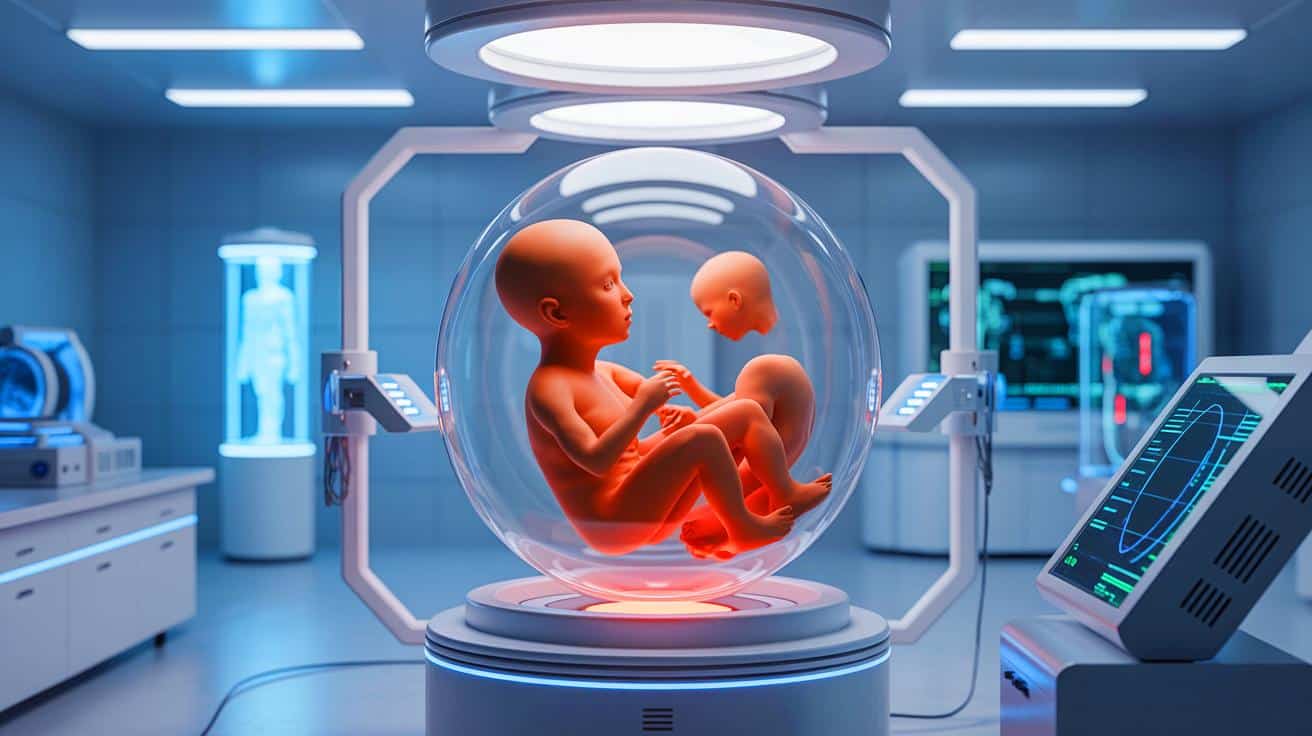
When the story first emerged, it captivated audiences with its promise of a futuristic solution to one of humanity’s oldest processes. However, independent investigations quickly revealed the tale to be a hoax. Fact-checking by Snopes and other outlets found that the images circulating online were AI-generated, and the supposed inventor, Zhang Qifeng, was a fictitious character. This revelation underscores the need for rigorous verification in journalism, particularly when dealing with extraordinary claims.
The story’s viral spread can be attributed to its compelling narrative and imagery. The idea of a humanoid machine carrying a human fetus to term is a captivating concept. However, the lack of concrete evidence and the absence of any legitimate research backing turned this narrative into a cautionary tale about media responsibility. As fact-checkers delved deeper, it became evident that the story lacked the essential components of truth, relying instead on sensationalism to capture public attention.
Jaya Anand Singh’s Research Path : A Journey from Curiosity to Contribution
The Real Technical and Biological Challenges
Building an artificial womb capable of supporting human life from conception to birth is fraught with immense technical and biological hurdles. The first major challenge is replicating the placenta’s function. This organ plays a critical role in regulating nutrient and oxygen supply, waste removal, and immune protection for the developing fetus. An artificial substitute would require a highly sophisticated system of pumps, sensors, and microfluidics to mimic these complex processes continuously and reliably.
Another significant obstacle is simulating the amniotic environment. Amniotic fluid serves multiple purposes, including cushioning the fetus, facilitating lung and muscle development, and maintaining stable temperature and chemical conditions. Creating a sustained, controlled artificial environment that replicates these functions over an extended period remains an elusive goal for researchers, despite progress in short-term experimental models for animal fetuses.
The Challenge of Infection Control
Maintaining a sterile environment is paramount in any attempt to replicate gestation outside the womb. The natural womb provides a largely sterile environment, protecting the fetus from infections. Any artificial system would need to ensure a similar level of biosecurity, requiring advanced sterilization technologies and continuous monitoring to prevent microbial intrusion. This is especially challenging when the system involves external interfaces, such as tubes and ports, which can serve as entry points for pathogens.
Moreover, the hormonal regulation that occurs during pregnancy is another complex issue. Hormones like progesterone and estrogen play dynamic roles in coordinating fetal growth and development. Replicating this intricate hormonal dialogue in an artificial system is a formidable task, demanding precise control and feedback mechanisms to mimic the natural stages of pregnancy.
Current Research and Future Directions
Despite the technical challenges, genuine progress is being made in the realm of neonatal and fetal medicine. Research efforts are primarily focused on improving outcomes for extremely premature infants rather than creating a complete artificial gestation system. For instance, the Children’s Hospital of Philadelphia has developed experimental systems that support premature lambs in liquid environments, demonstrating potential for short-term applications in human neonatal care.
These advancements highlight the potential of technology to enhance medical care for premature infants, offering hope for improved survival rates and health outcomes. However, the leap from supporting premature infants to fully replicating human gestation is vast and fraught with ethical and practical considerations. Researchers must tread cautiously, balancing technological possibilities with ethical imperatives and the complexities of human biology.
As the conversation about artificial gestation evolves, it raises fundamental questions about the role of technology in human reproduction. How far should science go in replicating natural processes, and what ethical frameworks should guide these advancements? As we ponder these questions, it is clear that while technology offers remarkable possibilities, it must be pursued with caution, responsibility, and respect for the intricacies of human life.



Wow, a pregnancy robot? I thought I’ve seen everything! 😂
Wow, this article really makes you think about the future! 🤖
Sounds like a sci-fi movie plot. Are we really ready for such a “revolution”?
Is it ethical to use robots for pregnancy? What do experts say about this?
Great read! Thanks for shedding light on the misinformation out there.
Thanks for debunking the myth. It’s scary how easily misinformation spreads. 🤔
Can anyone explain how a robot could replicate the placenta’s functions? Seems impossible!
Honestly, I thought the pregnancy robot was real at first. Good thing I checked this out!
Why are doctors hiding this, if it’s even real? Feels like a conspiracy. 🕵️♂️
Why do people fall for such hoaxes so easily? Media literacy is crucial!
I’m amazed at the potential for helping premature infants, but we need to be careful!
Imagine the possibilities if this were true. But are we playing God?