




| IN A NUTSHELL |
|
The human body’s “blood factory”—bone marrow—is an intricate network of bone cells, nerves, blood vessels, and various other cell types. Recently, researchers have achieved a milestone by recreating this complex system using only human cells in a laboratory setting. This development marks a significant advancement in biomedical research, as it not only promises to reduce the reliance on animal models but also offers a new avenue for studying blood-related disorders. Understanding and mimicking the nuanced environment of human bone marrow could revolutionize how scientists approach diseases like blood cancer, ultimately paving the way for more personalized medical treatments.
Human Cell Model Offers a New Research Tool
For many years, research on bone marrow heavily depended on animal models or overly simplified cell systems that lacked the complexity of the human environment. Recently, scientists from the Department of Biomedicine at the University of Basel and University Hospital Basel have developed a groundbreaking bone marrow model entirely from human cells. This innovative platform, led by Professor Ivan Martin and Dr. Andrés García García, has been documented in the journal Cell Stem Cell. The model holds promise for advancing blood cancer research, drug testing, and potentially even personalized medical treatments.
The newly developed model addresses several limitations of previous research methods. Unlike animal models, which may not adequately represent human biology, this human cell-based system offers a more accurate framework for studies. It provides a realistic environment for understanding how blood is produced and how various conditions can disrupt this process. By offering a human-relevant context, this model could lead to more targeted and effective medical interventions.
Jaya Anand Singh’s Research Path : A Journey from Curiosity to Contribution
Understanding Bone Marrow Niches
Bone marrow is composed of specialized microenvironments, or “niches,” each playing a vital role in blood cell production. Among these, the endosteal niche is particularly significant. Located near the bone surface, it is crucial for the creation of new blood cells and is also associated with blood cancer’s resistance to treatment. The endosteal niche includes a complex mixture of blood vessels, immune cells, nerves, and bone cells, making it challenging to replicate.
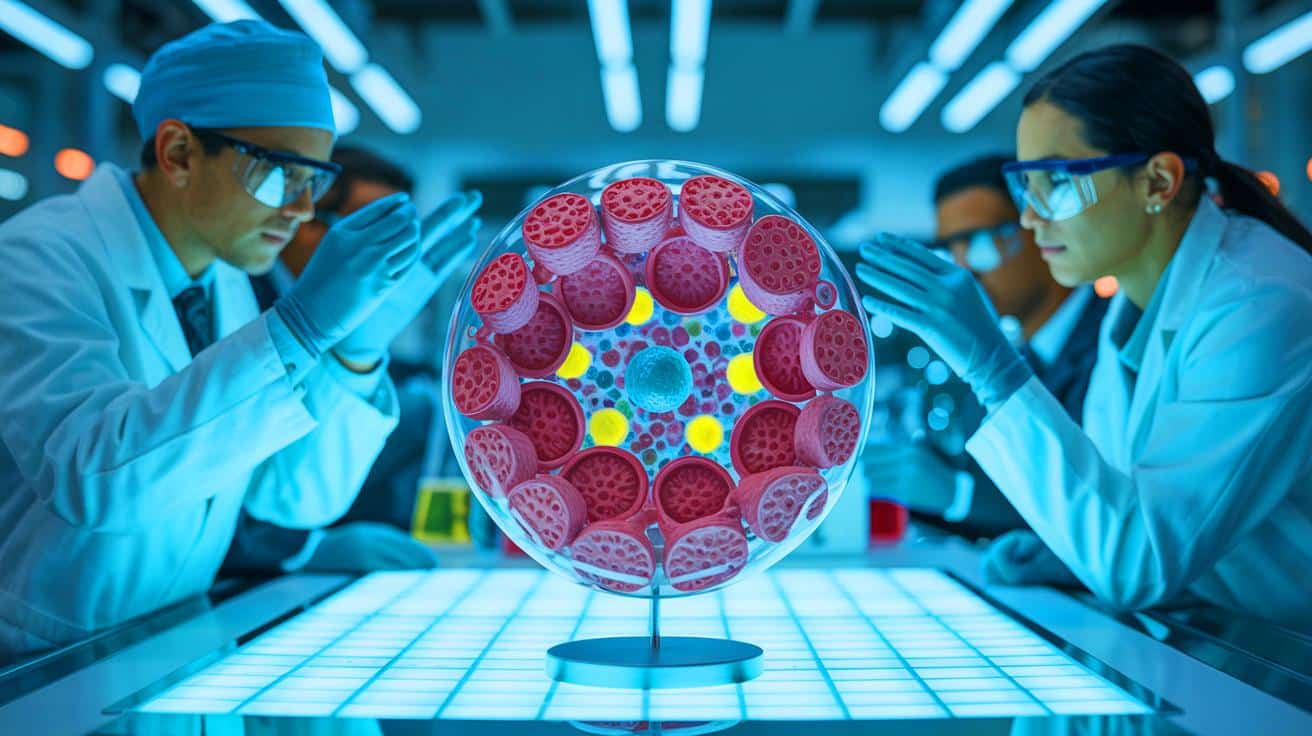
The researchers have successfully developed a model that replicates these complexities by starting with a scaffold of hydroxyapatite, a mineral found in bones and teeth. They then introduced human cells reprogrammed into pluripotent stem cells—capable of developing into various cell types depending on environmental signals. Through controlled developmental steps, these stem cells evolved into a diverse array of bone marrow cell types that closely resemble the human endosteal niche.
Building a Functional 3D Bone Marrow System
The team’s innovative approach has resulted in a 3D bone marrow model larger and more complex than any previous attempts. The model measures approximately eight millimeters in diameter and four millimeters in thickness, offering a more comprehensive platform for study. This structure has enabled the sustained formation of human blood cells in the laboratory for several weeks, marking a significant advancement in medical research capabilities.
By building a functional 3D system, researchers can delve deeper into understanding how blood cells are produced and maintained. This knowledge is crucial, especially when studying conditions like blood cancer, where the process of blood cell formation can go awry. The ability to maintain blood cell formation in a controlled environment also opens up new possibilities for drug testing and development.
Potential to Reduce Animal Experiments
The introduction of this human cell-based model has the potential to significantly reduce the need for animal experiments. “We have learned a great deal about how bone marrow works from mouse studies,” says Ivan Martin. “However, our model brings us closer to the biology of the human organism.” This aligns with broader scientific goals to reduce, refine, and replace animal testing whenever possible.
Additionally, the model could support drug development, although its current size may limit simultaneous testing of multiple drugs or doses. Future efforts may focus on optimizing the model for such applications. Researchers also see potential for this approach to guide personalized treatments for blood cancers. By creating patient-specific models, doctors could test therapies to identify the most effective options, tailoring treatments to individual needs.
The recreation of a human bone marrow model marks a leap forward in biomedical research, offering new insights into blood cell production and the potential for personalized medical treatments. As researchers continue to refine and optimize this model, its applications could extend beyond blood cancer to other areas of medicine. Could this be the beginning of a new era where personalized, patient-specific treatments become the norm in healthcare?



Wow, this is absolutely groundbreaking! Can’t wait to see how this changes medicine. 🎉
Wow, this is amazing! Could this mean a future without animal testing? 🐭❌
How long before this is actually used in hospitals?
Thank you for this insightful article. It gives hope for battling blood cancers. 🙏
I’m skeptical. Is this really going to work as advertised?
This could save so many lives in the future. Thank you, scientists! 🙏
Does anyone know how long it might take for this to be used in clinical settings?
What about the cost? Will it be affordable for everyone?
Finally, some good news in science! Keep it up. 💪
I’m a bit skeptical. How do they ensure the model truly mimics human bone marrow?
Are there any ethical concerns with this research?
How do they ensure the cells don’t mutate into something harmful?
This sounds like science fiction! 🌟 Exciting times in medical research!
This is like something out of a sci-fi movie! 🤖