


| IN A NUTSHELL |
|
In a remarkable discovery beneath the Pacific Ocean, scientists have unveiled a hidden nursery of marine life within a seemingly dormant underwater volcano off Vancouver Island. This geological marvel, initially thought to be extinct, is now revealed as an active habitat teeming with life. The volcano’s mineral-rich, hot water environment provides ideal conditions for nurturing an unprecedented number of giant eggs. As researchers delve deeper into this phenomenon, the implications for marine biology and conservation grow ever more significant. This discovery not only challenges previous assumptions about underwater volcanoes but also highlights the intricate relationship between geological activity and marine ecosystems.
A Volcano That Refused to Die
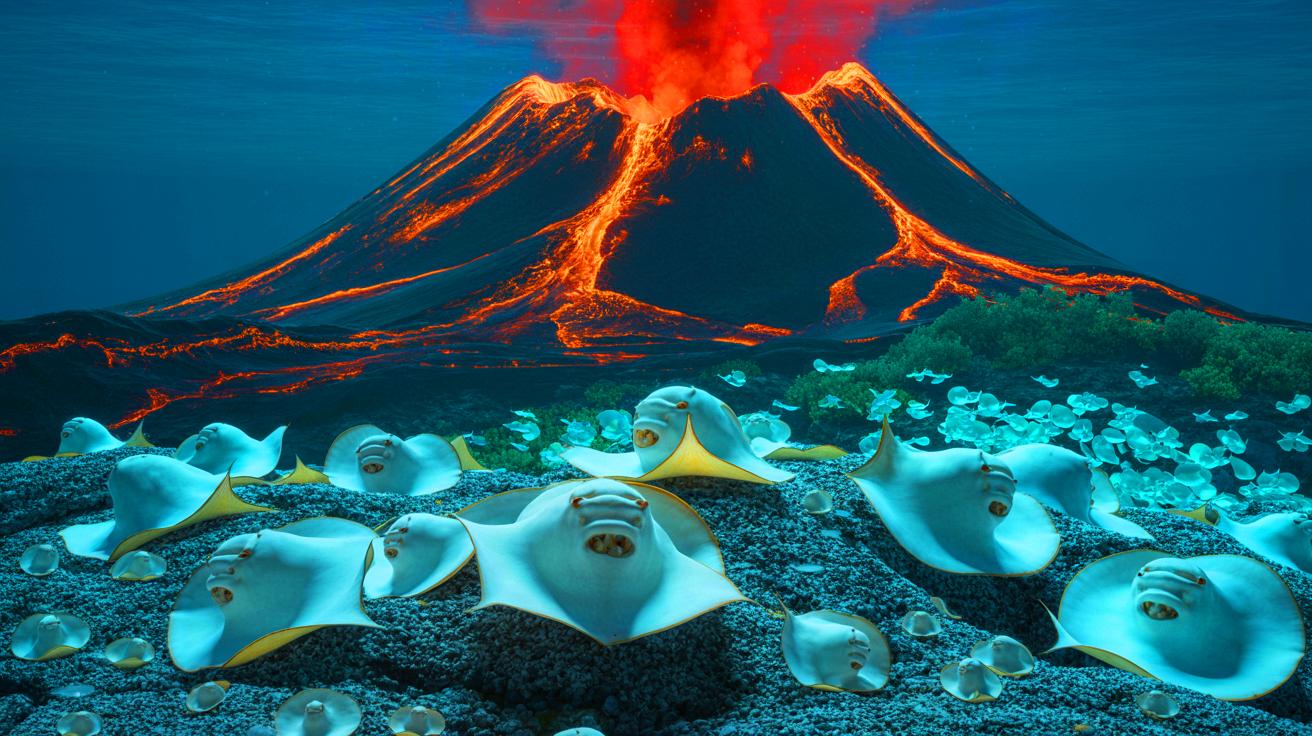
In 2019, a team of researchers from Fisheries and Oceans Canada set out on a mission to explore a seamount that rises more than 3,600 feet above the seafloor. Initially categorized as extinct, the volcano surprised scientists by venting mineral-rich hot water, indicating ongoing geological activity. This natural heat source has created a rare sanctuary for marine life, nurturing communities of deep-sea corals and sponges. However, the true marvel revealed itself when scientists discovered a significant number of white skate rays depositing eggs across the volcano’s summit, which lies nearly a mile below the ocean surface.
The presence of these rays and their eggs at such depths has transformed the volcano into a biological hotspot. The unexpected connection between the Earth’s geological processes and marine life underscores the complexity of life beneath the waves. Researchers are now focused on understanding how this symbiotic relationship functions, offering new insights into the resilience and adaptability of marine organisms.
An Unprecedented Egg Deposit
While marine biologists are familiar with deep-sea rays, the sheer scale of this reproductive event is unprecedented. Initial surveys and counts suggest that the site could host hundreds of thousands, potentially over a million eggs, making it a phenomenon never documented for this species before. The size of the eggs adds another layer of intrigue, as these rays produce egg cases nearly 20 inches long, resembling soft, curved pillows.
This reproductive strategy is energy-intensive, ensuring that each embryo receives ample nutrients necessary for survival in the harsh conditions of the deep sea. It highlights a remarkable adaptation to extreme environments, allowing the species to thrive in a niche that few others can exploit. This discovery provides a unique opportunity for scientists to study the reproductive strategies and life cycles of deep-sea organisms, offering potential breakthroughs in our understanding of marine biology.
Volcanic Warmth: Nature’s Incubator
The white skate rays typically inhabit depths ranging from 2,600 to 9,500 feet, making them elusive subjects for study. Scientists now theorize that these rays may strategically utilize the hydrothermal warmth provided by the volcano to speed up embryonic development, offering a significant advantage in the cold, slow-moving environment of the deep sea. According to marine biologist Cherisse Du Preez, incubation in these harsh conditions can extend up to four years, but the residual heat from the volcano might significantly reduce this period.
Beyond warmth, the summit of the volcano offers shallower, more sheltered terrain, providing a safe haven for hatchlings before they venture into deeper waters. This natural incubator exemplifies the dynamic interplay between Earth’s geological activity and the adaptability of marine life. The findings offer a new perspective on how environmental factors can influence the evolution and survival strategies of species in extreme habitats.
A Living Laboratory for Marine Evolution
The rare confluence of geology and biology presents researchers with a unique opportunity to study how extreme environments influence life. Similar to hydrothermal vents discovered near the Galápagos, this site affirms that even the most formidable locations can sustain complex life forms. The adaptive strategy of these rays—laying large eggs in volcanically active areas—demonstrates an evolutionary brilliance that may have gone unnoticed for centuries.
While the full extent of species inhabiting this hidden volcano remains unknown, this discovery serves as a poignant reminder of the vast unexplored frontiers beneath the surface. These environments are ripe for scientific inquiry and discovery, offering a living laboratory to understand the processes that drive marine evolution. The insights gained here could have far-reaching implications for biodiversity conservation and the management of marine resources.
As the enigma of the million eggs unfolds, it brings a renewed urgency to protect deep-sea ecosystems. These volcanic oases are fragile, and with threats like deep-sea mining and climate change looming, discoveries like this emphasize the need for responsible exploration and global cooperation in preserving what we’ve only begun to understand. This isn’t merely a story about a volcano or a rare marine species; it’s a compelling reminder of the ocean’s hidden secrets. As we continue to uncover these mysteries, what other wonders await discovery beneath the depths?


Wow, a million eggs! That’s egg-straordinary! 🥚
Wow, over a million eggs? That’s a lot of omelettes! 🍳
Does this mean we have a new tourist spot under the water near Vancouver? 😄
Is it possible to visit this underwater volcano?
How did scientists manage to count all those eggs? Seems like a tough job! 🥚
Absolutely fascinating! Thank you for sharing this discovery. 🌊
Are white skate rays endangered? This nursery sounds like it could be crucial for their survival.
How did the scientists count all those eggs? Seems like a daunting task!
Impressive discovery! Thank you for bringing these hidden wonders to light. 🙏
Why haven’t we heard about these skate rays before?
Speling mistake in the article: “unprecedent” should be “unprecedented”.
This reminds me of an underwater Jurassic Park! 🦕💦
What other species might be sharing this unique habitat?
I hope they protect this area from human interference.
How do the eggs survive in such depth and pressure?
Imagine the omelette you could make with those eggs! 😂
This is an incredible example of nature’s resilience. Kudos to the researchers!
Are there any videos or images available from the expedition?
Do they know how long this volcano has been active?
Such discoveries remind us how little we know about our oceans.
Could this discovery impact local fishing industries near Vancouver?
How do these skate rays compare to other deep-sea species?
Great article! Very informative. Thanks for the insights! 🙏
Is climate change affecting this underwater ecosystem?
I wonder if this discovery will lead to new marine protection laws.
How do the eggs get their nutrients? Do they have a yolk like chicken eggs?
Did anyone else think of Atlantis when reading about this? 🏝️🔍
Could this volcano’s activity cause earthquakes or tsunamis?
I hope more funding is directed towards exploring underwater volcanoes.
What a unique nursery! Nature never ceases to amaze. 🌿
How did they initially mistake the volcano as extinct?
Can we expect more such discoveries in the near future?
Wait, how does a volcano support life? I thought they were all about fire and lava! 🔥
Are there any dangers involved in exploring these depths?
Why is it called a “white skate ray”? Is it actually white?
Egg-citing news! Can’t wait to see what else they find. 😄
How do these findings compare to other hydrothermal vents globally?
Are there any conservation efforts being planned for this area?
Could studying these eggs lead to breakthroughs in marine biology?
I wonder if there are more such volcanoes with hidden nurseries…
I’m curious, do the eggs glow in the dark down there? That would be a sight to see!