



| IN A NUTSHELL |
|
Human-made structures have long been celebrated for their ability to reshape landscapes and improve lives. However, recent findings suggest that these structures may have far-reaching effects beyond their immediate surroundings. NASA has confirmed that infrastructure projects like the Three Gorges Dam in China can subtly influence Earth’s rotation. This revelation underscores the complex relationship between human activity and natural systems. As we advance technologically, understanding these connections becomes paramount. The implications of these changes are profound, questioning our role in the planet’s dynamics and the potential consequences of our constructions.
Ever Taller and More Massive
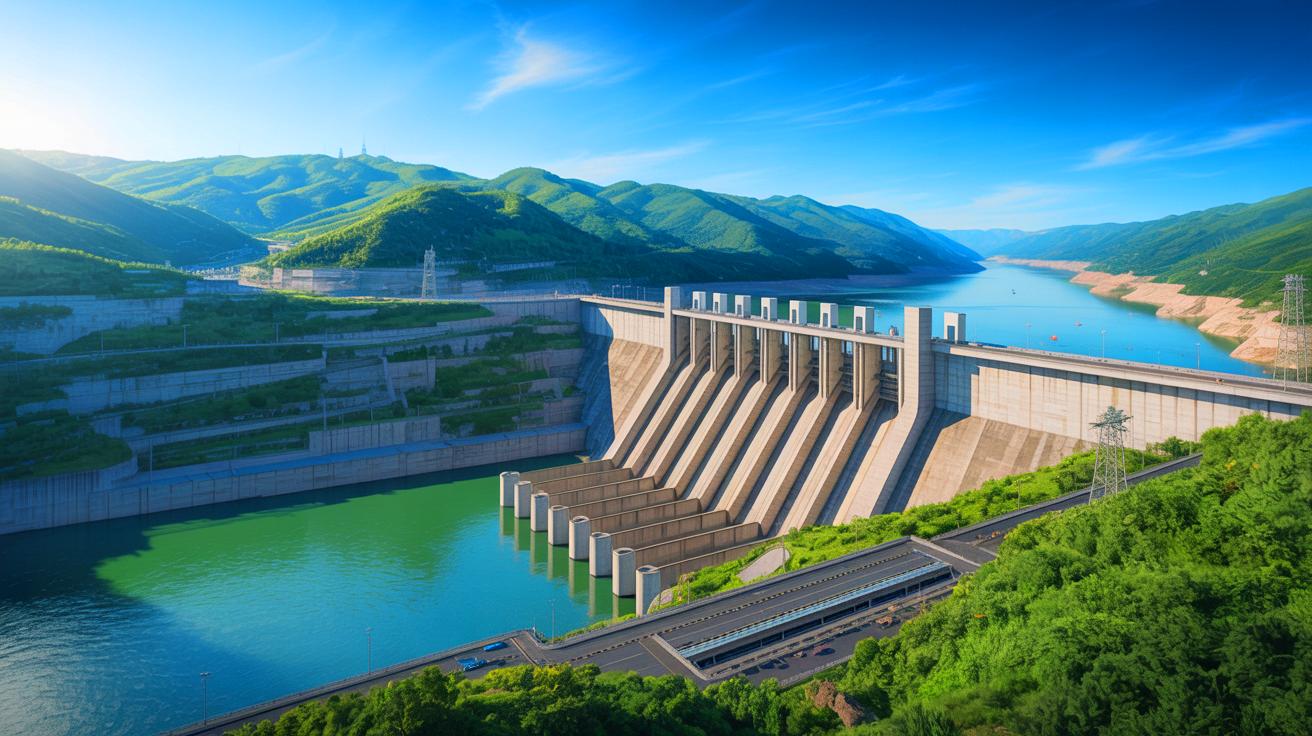
The quest for building taller and more massive structures is emblematic of human ambition. Skyscrapers such as the Burj Khalifa in Dubai and the Shanghai Tower in China are testaments to this relentless pursuit. Yet, the Three Gorges Dam in China stands out as a project of unparalleled scale and impact. Completed in 2012 after nearly two decades of construction, the dam spans the Yangtze River in Hubei Province. It was designed not only to harness hydroelectric power but also to control flooding and improve navigation.
While the dam’s immediate benefits are evident, its broader implications are worth examining. The dam serves as a strategic tool for China, enabling the redistribution of economic focus from coastal areas to the interior. This strategy aims to integrate less developed regions into the national economy. However, as we continue to construct such colossal infrastructures, the unintended consequences on Earth’s systems cannot be ignored. Projects of this magnitude demand a reevaluation of their environmental and geophysical impacts.
The Largest Hydroelectric Dam in the World
As the largest hydroelectric dam on the planet, the Three Gorges Dam is a symbol of China’s prowess in infrastructure development. Despite its monumental size, the dam contributes only 3% to China’s total energy consumption, a figure much lower than the anticipated 10%. This gap highlights the challenges of meeting growing energy demands even with massive projects. The dam’s significance extends beyond energy production, raising questions about its broader impact on Earth’s dynamics.
NASA has noted that global events involving significant mass movement, such as earthquakes, can affect Earth’s rotation. Dr. Benjamin Fong Chao from NASA’s Goddard Space Flight Center suggests that all forms of mass redistribution, including infrastructure projects, have the potential to alter the planet’s rotation. These insights prompt a deeper exploration of how human constructions contribute to subtle changes on a planetary scale, emphasizing the need for comprehensive studies on the cumulative effects of such projects.
0.06 Microseconds
To grasp the significance of these changes, consider the analogy of an ice skater spinning faster by pulling their arms inward. In 2004, an earthquake altered Earth’s seismic structure, shortening the day by 2.68 microseconds. Similarly, if the Three Gorges Dam’s reservoir were filled to capacity, it could increase the length of a day by 0.06 microseconds. Although these changes seem minor, they highlight the profound impact human activity can have on planetary systems.
Such alterations may have implications for timekeeping, navigation, and climate patterns. As our understanding of these relationships deepens, it becomes increasingly clear that the integration of engineering and environmental considerations is crucial. The subtle shifts caused by human activity underscore the importance of further research into how these changes affect the planet’s natural balance and our place within it.
The Interplay Between Human Activity and Natural Systems
As humanity continues to construct monumental infrastructures, the intricate relationship between our endeavors and natural systems becomes ever more apparent. While the direct impacts of such projects are often well-studied, their broader effects, like those on Earth’s rotation, remain largely speculative. The interplay between human activity and natural systems raises compelling questions about unforeseen global consequences.
Understanding these dynamics requires a multidisciplinary approach, integrating insights from engineering, environmental science, and geophysics. As we push the boundaries of innovation, what other unknown effects might emerge? How can we balance technological advancement with ecological stewardship? These questions invite a reexamination of our role in shaping the planet’s future, urging us to consider the long-term ramifications of our actions.
As we continue to build ever more massive structures, the interconnectedness of human activity and Earth’s natural systems becomes increasingly evident. These developments prompt a reevaluation of how we approach infrastructure projects and their potential impacts on the planet. What might be the next frontier in balancing human progress with planetary stewardship?

Wow, I never thought a dam could change the Earth’s spin! 😮
Wow, I had no idea that a dam could influence the Earth’s rotation! 😮
Is 0.06 microseconds really that significant in the grand scheme of things?
Wait, how does holding water slow down the planet’s spin? 🤔
Great article! It’s fascinating how human achievements can impact the planet. 🌍
So, does this mean we should reconsider building more massive structures like this?
Wait, if the Earth spins slower, does that mean I get to sleep more? 😴
Thank you for highlighting these important issues. Thought-provoking read!
Does this mean we need to reconsider how we build large infrastructure projects?
So, basically, we’re like the ice skaters of the universe? 😆
Is the dam’s impact on Earth’s rotation permanent or temporary?
I always knew humans were powerful, but this is on another level! 💪
Why is this not a bigger topic of discussion in the media?
The Three Gorges Dam is quite an engineering marvel, but at what cost?
Can other natural events, like volcanic eruptions, also affect Earth’s spin?
0.06 microseconds seems minor, but it’s still mind-blowing! 🤯
How do scientists measure such tiny changes in Earth’s rotation?
This is why we need to integrate environmental considerations in engineering.
Are there any other dams in the world with similar effects?
So we’re basically making Earth dance to our tune? 😜
It’s crazy to think our constructions can affect the entire planet’s dynamics.
What measures can be taken to mitigate such impacts on Earth’s rotation?
Can other large structures like skyscrapers have similar effects on Earth’s rotation?
How does this compare to the impacts of natural occurrences like earthquakes?
Can this impact climate patterns in any way?
Are there any other infrastructure projects being monitored for similar effects?
It’s amazing how interconnected everything is. Thanks for sharing!
0.06 microseconds doesn’t sound like much. Is it actually significant in the grand scheme of things?
Why don’t we hear more about the environmental impact of such projects globally?
Very informative article. This should be part of global environmental discussions. 🌱
So next time I’m late, I can blame the dam? 😅
It’s a reminder of how much we still have to learn about our impact on Earth.
Is this change in rotation something that can be reversed or controlled?
How does this discovery influence future infrastructure development policies?
Maybe we should focus more on renewable energy sources with less impact.
Does this mean the Earth is getting heavier on one side? 🤔
Thanks for the article! It’s a wake-up call for sustainable development.
This is amazing but also a bit scary. What are the long-term consequences?
Can someone explain how a dam affects the planet’s rotation? I’m a bit lost here.
How does this affect timekeeping and navigation systems?