



| IN A NUTSHELL |
|
In recent years, the intersection of human engineering marvels and environmental dynamics has become a topic of significant interest. Notably, the Three Gorges Dam in China serves as a prime example of how human activities may subtly influence natural systems, including the Earth’s rotation. As NASA confirms, large-scale constructions can alter the planet’s rotation, albeit in small increments measured in microseconds. This revelation prompts a deeper exploration into how such projects, alongside natural phenomena like earthquakes, contribute to the planet’s changing dynamics. Understanding these interactions is crucial as we continue to expand our engineering feats.
The Impact of Monumental Structures
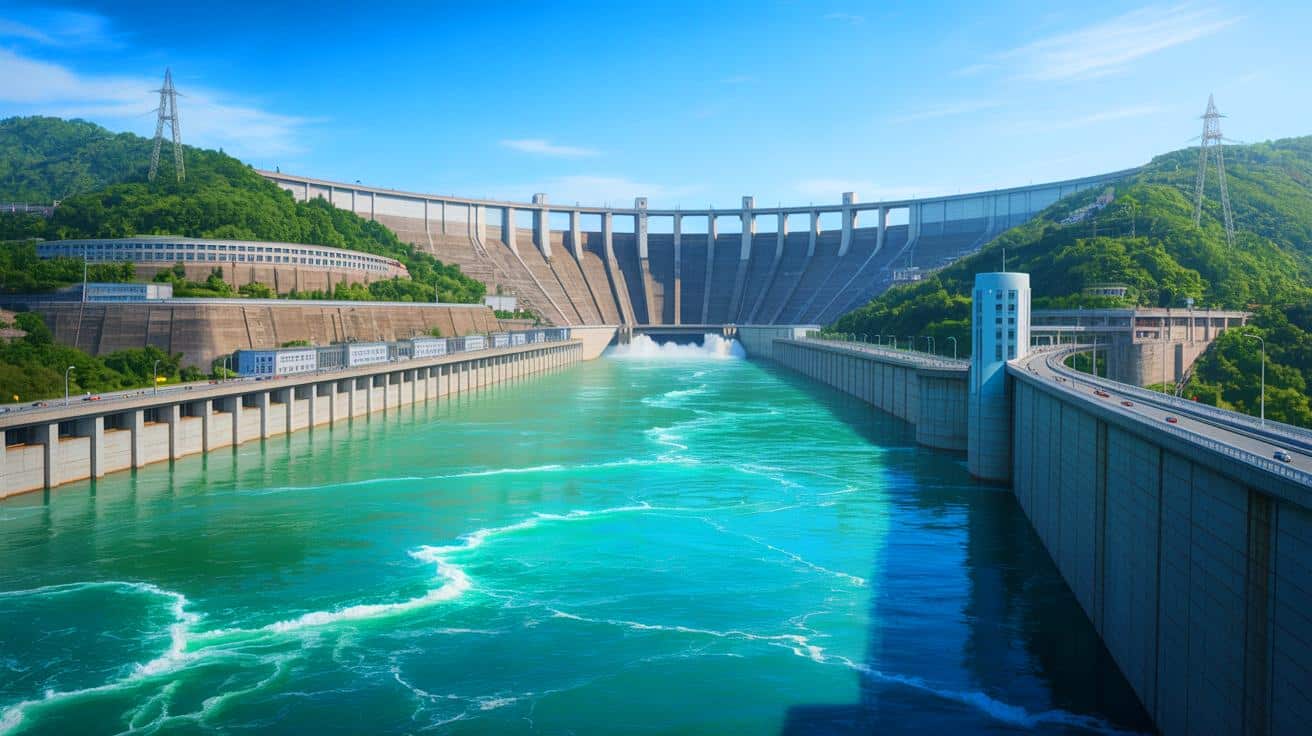
Human ambition has always driven the creation of towering structures and massive infrastructures. Iconic buildings like the Burj Khalifa and the Shanghai Tower symbolize our quest to reach unparalleled heights. However, the Three Gorges Dam stands out not only for its size but also for its broader implications. Located in China’s Hubei Province, this colossal hydroelectric dam took nearly 18 years to complete. It not only meets energy demands but also aims to control the Yangtze River and promote regional development.
While the dam’s immediate benefits are apparent, its broader consequences, particularly on Earth’s rotation, are less understood. According to NASA, movements of large masses, whether through natural events or human-made structures, can marginally affect the planet’s rotational speed. Such changes, although minute, underscore the interconnectedness of our actions and the global environment. As we continue to build larger infrastructures, it becomes imperative to consider their long-term impacts beyond their primary functions.
Hydroelectric Power and Its Limits
China’s leadership in hydroelectric power is undisputed, and the Three Gorges Dam is a testament to this prowess. Despite its massive capacity, the dam only fulfills 3% of China’s energy requirements, a figure significantly lower than anticipated. This highlights the challenges in meeting energy demands, even with grand projects. Beyond energy production, the dam exemplifies the complex relationship between human activities and Earth’s natural systems.
NASA’s observations suggest that mass movements, whether from natural disasters or large infrastructures, can influence the planet’s rotation. Dr. Benjamin Fong Chao of NASA’s Goddard Space Flight Center notes that such shifts, including those from driving a vehicle, have cumulative effects. The implications for global timekeeping and navigation systems are profound, raising questions about the broader impact of our constructions.
Understanding Microsecond Changes
To grasp the significance of these changes, consider the analogy of an ice skater who spins faster by bringing their arms closer. Similarly, the 2004 earthquake shortened the day by 2.68 microseconds due to shifts in Earth’s mass distribution. The Three Gorges Dam, when fully operational, holds an immense volume of water, potentially lengthening the day by 0.06 microseconds. Although these changes might seem trivial, they highlight the influence of human activity on the planet’s dynamics.
The potential consequences for timekeeping, navigation, and even climate patterns are vast. As humanity continues to expand its presence on Earth, understanding the subtle shifts caused by our activities becomes increasingly vital. The intricate relationship between engineered structures and natural systems warrants ongoing research and consideration.
The Broader Implications
As we advance in engineering and technology, the interplay between human endeavors and natural processes becomes more evident. While the direct impacts of monumental structures are well-documented, their broader effects, such as on Earth’s rotation, remain largely speculative. The Three Gorges Dam serves as a reminder of the unforeseen consequences that may arise from our pursuit of progress.
Given the ongoing development of such infrastructures worldwide, it is crucial to continue investigating their potential impacts. As we push the boundaries of engineering, what other unforeseen consequences might emerge? Understanding these dynamics will be essential in shaping a sustainable future for our planet.
In an era of unprecedented technological advancement, the balance between human ambition and environmental stewardship is more critical than ever. As we continue to build massive infrastructures, the interconnectedness of our actions and the Earth’s systems becomes increasingly apparent. What steps can we take to ensure that our engineering feats do not inadvertently disrupt the planet’s delicate balance?




Wow, I never thought a dam could affect the Earth’s spin! 😮
Is this really a problem or just an interesting fact? 🤔
Why isn’t this more widely discussed? Seems pretty significant! 🌐
Can changes in Earth’s rotation actually impact timekeeping?
Thanks for the article, very enlightening! 😊
Are there any other structures that have similar effects?
So, should I worry about the time on my watch being off by microseconds? 😂
Is NASA planning to study other massive infrastructures too?
How do scientists measure these tiny changes in Earth’s rotation?
I had no idea that human structures could have such global impacts!
Great read, but I’m skeptical about the long-term implications. 🤨
What can be done to mitigate these effects on Earth’s rotation?
This actually sounds like a plot for a sci-fi movie! 🎬
Is there a threshold where these changes become dangerous?
Hydroelectric power is great, but at what cost?
Thanks for shedding light on this under-discussed topic!
Are there any potential benefits to these changes in rotation?
Does this mean we need to reconsider large-scale engineering projects?
How does this compare to the effects of natural events like earthquakes?
Mind-blowing stuff, Mother Nature always wins in the end! 🌍💚
Is there a link between this and climate change?
How accurate are the measurements of these microsecond changes?
Who else is conducting research on this topic besides NASA?
Does this affect satellite navigation systems?
I wonder if other planets with infrastructure would face similar issues. 🪐
Thanks for the information, but I’m not too worried about a few microseconds. 😅
Do other countries have projects that could affect Earth’s rotation?
Fascinating article! What’s the next step in this research?
Will this impact daily life, or is it just a scientific curiosity?