




| IN A NUTSHELL |
|
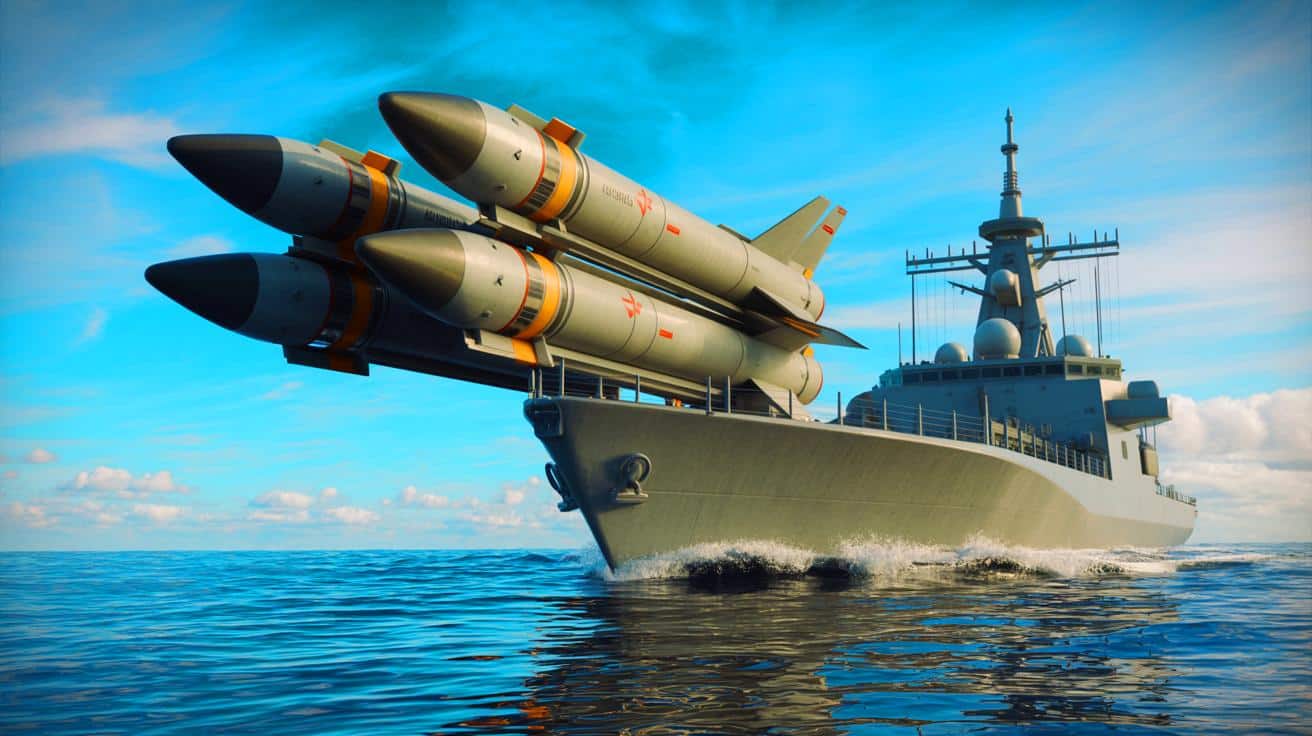
In recent years, Lockheed Martin has emerged as a pivotal force in advancing the U.S. Navy’s defense capabilities. The introduction of the Joint Air-to-Ground Missile (JAGM), alongside the JAGM Quad Launcher (JQL), marks a significant milestone in maritime defense technology. These advanced systems are designed to offer robust multi-domain defense capabilities, ensuring that the U.S. Navy retains its strategic advantage on the high seas. By integrating these cutting-edge systems, Lockheed Martin aims to provide unprecedented operational flexibility and effectiveness against an array of threats, enhancing the Navy’s readiness and response capability.
An Essential Reloading Capability for Naval Users
The JAGM Quad Launcher, developed by Lockheed Martin, is poised to revolutionize naval defense capabilities. This versatile system is engineered for rapid reloading, a critical feature for naval users operating in dynamic and unpredictable threat environments. According to Joey Drake, the program director for Multi-Domain Missile Systems, the JAGM is the natural successor to the LONGBOW HELLFIRE missile. The JAGM’s operator-selectable dual-mode seeker offers greater tactical flexibility and seamless platform integration, paving the way for enhanced naval operations.
The shift from the LONGBOW to the JAGM involves more than just technological upgrades; it also ensures continuity in logistical support. While LONGBOW production has ceased, it remains in use by the U.S. Navy’s littoral combat ships. The JAGM, being a cost-effective and in-production alternative, bolsters the Navy’s rapid response capabilities. This transition promises to strengthen the Navy’s operational prowess, enabling both defensive and offensive operations across multiple domains.
JAGM: Enhanced Capability Against Air, Maritime, and Land Threats
The JAGM stands out with its multi-mode seeker, significantly improving operational effectiveness against air, maritime, and land threats, even under challenging weather conditions. Its design enhances performance in scenarios where countermeasures are deployed. With over 1,000 units delivered to the U.S. Navy, primarily for deployment from USMC’s AH-1Z attack helicopters, the JAGM’s expansion into surface ship defense is a strategic move.
Chris Abt, director of advanced concepts at Lockheed Martin, highlights that deploying the JAGM on surface ships will not only broaden the Navy’s strategic options but also enhance logistical support across the fleet. The missile’s integration is expected to diversify naval forces’ capabilities while reducing operational costs, making it an invaluable asset for maintaining maritime superiority.
Performance Tested Against Maritime Threat Platforms
Lockheed Martin has successfully validated the JAGM’s effectiveness against maritime threats, including unmanned surface vessels. This validation is critical as the Navy encounters evolving threats from unmanned systems. The ongoing software upgrades aim to further bolster the missile’s capabilities, especially against unmanned aerial systems (UAS) targeting naval forces.
The adaptability of the JAGM, whether launched from the current surface-to-surface missile module or the new modular and reloadable JQL, underscores Lockheed Martin’s dedication to providing state-of-the-art defense solutions. This adaptability ensures that the JAGM remains a cornerstone of modern naval operations, capable of addressing emerging threats and sustaining strategic dominance.
Software Enhancements for Unmanned Aerial System Defense
The continuous software upgrades to the JAGM are crucial to its efficacy against the rising threat of unmanned aerial systems (UAS). These updates keep the JAGM at the forefront of missile technology, ensuring its relevance and effectiveness amid new challenges. Lockheed Martin’s commitment to innovation is evident in its efforts to enhance the missile’s capabilities through software-driven advancements.
By prioritizing technological excellence, Lockheed Martin establishes itself as a leader in the defense industry, ready to meet the demands of an ever-evolving battlefield. The JAGM’s software enhancements ensure it can adapt to current threats and remain prepared for future challenges. As these advancements progress, they will undoubtedly influence the future of global maritime defense.
As Lockheed Martin continues to advance missile technology, the global defense landscape is set for substantial transformations. The integration of advanced systems like the JAGM and JQL promises to redefine naval capabilities, offering unparalleled operational flexibility and effectiveness. Looking ahead, one pertinent question remains: How will these technological innovations continue to shape the dynamics of maritime defense on a global scale?




Wow, the JAGM sounds like a game-changer for Navy defense! 🚀
Wow, this sounds like something out of a sci-fi movie! 🚀
Isn’t this just another way to spend more taxpayer money? 🤔
Is it just me, or does the JAGM sound like a “jack of all trades” missile?
How does the JAGM compare to international missile systems?
Does anyone know how the JAGM compares to other modern missiles?
Lockheed Martin is really pushing the envelope with these innovations!👏
So, will this replace all existing missiles or just complement them?
Can the JAGM be integrated with existing naval ships without major modifications?
I’m curious, how does the dual-mode seeker work exactly?
What safeguards are in place to prevent these missiles from being hacked? 🤨
This is incredible! Lockheed Martin is really pushing the boundaries of technology. 🌟
Great article! Thanks for keeping us informed on the latest military tech. 👍