




| IN A NUTSHELL |
|
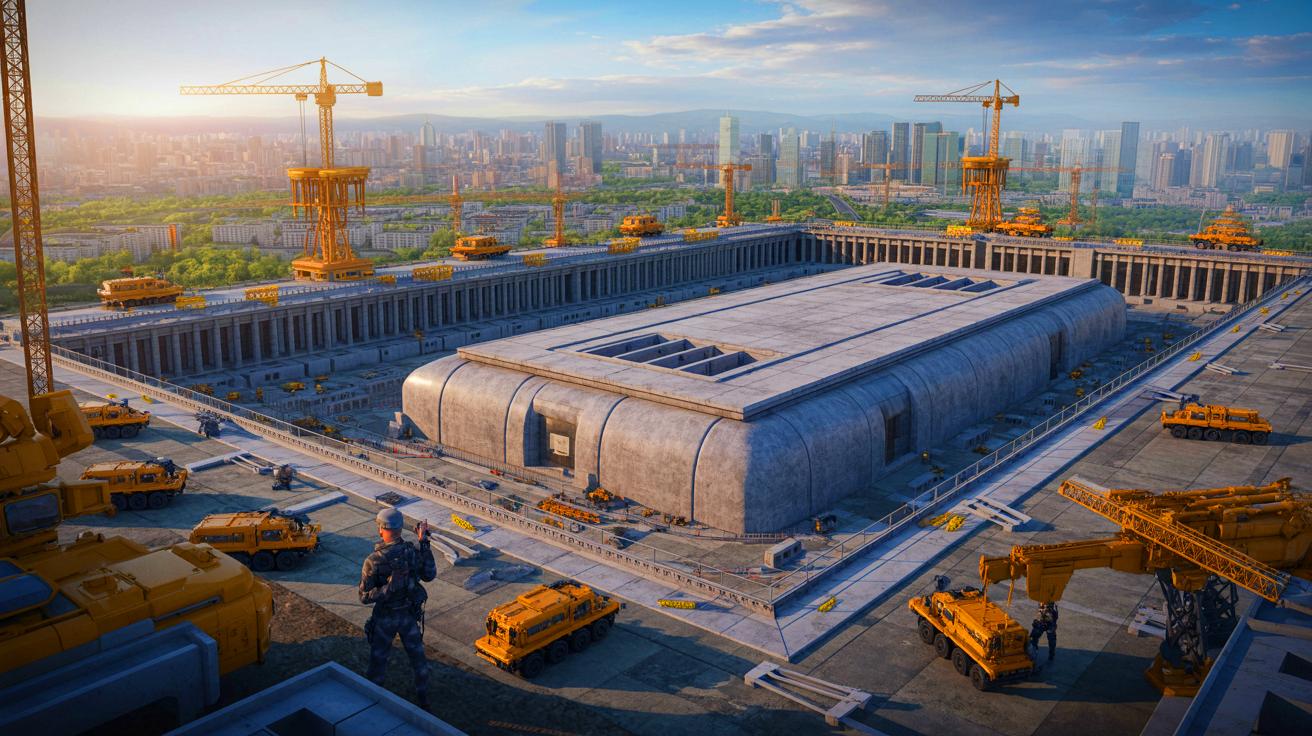
China’s latest military developments have captured global attention and sparked intense discussions about the country’s strategic intentions. The construction of a massive military base, known as the Beijing Military City, in southwest Beijing, has raised alarms among international observers. This complex, reportedly larger than the Pentagon, includes a nuclear-proof bunker, hinting at heightened war preparedness. Satellite images show rapid construction progress since 2022, aligning with China’s military reform goals set for 2027. Simultaneously, China’s push for a super embassy near the Tower of London has fueled concerns about espionage and diplomatic tension. These moves are reshaping global perceptions of China’s ambitions.
China’s Military Expansion: A New Global Power Play?
In recent years, China’s military ambitions have become increasingly apparent, drawing the attention of international security experts. The construction of the Beijing Military City is a significant example of this trend. Located just outside the capital, the facility is not a typical military base. Satellite images reveal that the once-residential area has been completely transformed into a colossal military compound. This development is seen as part of China’s broader strategy to modernize its military by 2027.
Security experts are particularly concerned about the inclusion of a nuclear-proof bunker within the base. This feature suggests that the facility could serve as a central command center in the event of a large-scale conflict, possibly even World War III. The sheer size and secrecy surrounding the project have led many to speculate about China’s long-term military objectives. With tensions rising globally, the Beijing Military City is a clear signal of China’s readiness to assert its influence.
Global Reactions to Beijing’s Military Ambitions
The international community has responded with growing unease to China’s military developments. The construction of the Beijing Military City coincides with China’s efforts to expand its global presence through diplomatic channels. One of the most controversial projects is the planned super embassy near the Tower of London. This initiative has faced significant political pushback in the UK, with concerns about potential espionage activities.
The UK Planning Inspectorate has approved the embassy project, despite warnings from intelligence officials about the risks it poses. The embassy, which is set to be larger than the Royal Albert Hall, is strategically located near key UK sites. This has prompted fears that China could use the facility for intelligence-gathering purposes. As China increases its diplomatic footprint abroad, questions about its intentions and the potential impact on international relations continue to arise.
China’s Diplomatic Strategy: Espionage or Engagement?
Security officials in both the UK and the US have expressed serious concerns about China’s diplomatic initiatives. The White House has voiced apprehensions about the embassy project, highlighting the potential risks to sensitive communications. In the UK, political leaders have urged the government to block the project, citing China’s history of espionage activities.
Despite these concerns, China has defended its plans, accusing critics of spreading misinformation. The embassy project was revived after intervention by President Xi Jinping, indicating its importance to China’s strategic goals. The debate over China’s diplomatic intentions is part of a larger conversation about its role on the global stage. As China seeks to expand its influence, the world is left grappling with the implications of these moves.
Implications of China’s Growing Global Influence
The timing and scale of China’s military and diplomatic projects suggest a coordinated strategy to enhance its global standing. Whether through fortified military bases at home or expansive embassies abroad, China is positioning itself as a dominant player in international affairs. These developments reflect a broader intent to be prepared and influential in an increasingly unstable world.
The construction of the Beijing Military City and the London super embassy are not isolated incidents. They represent China’s ongoing efforts to reshape global dynamics. As the country approaches its 2027 military reform deadline, the global community is closely monitoring its actions. The question remains: Is China simply preparing for defense, or are these developments indicative of a more aggressive posture?
As China’s military and diplomatic activities continue to unfold, the world is left contemplating the potential consequences. The construction of the Beijing Military City and the expansion of diplomatic projects abroad are reshaping perceptions of China’s global role. With tensions simmering and uncertainty on the rise, one key question lingers: Is the world witnessing the early signs of a new Cold War, or are these developments part of a different strategic narrative?



Wow, a military city larger than the Pentagon? That’s some serious commitment! 🤯
Wow, a military city larger than the Pentagon? That’s quite an undertaking! 😲
Why does China need a nuclear-proof war command center? Are they expecting something?
Isn’t this a bit too ambitious? Who needs a nuclear-proof bunker anyway? 🤔
This is concerning. How should other countries respond to this kind of military expansion?
China’s move is both impressive and terrifying at the same time.
Isn’t this just a big flex by China to show off its power?
Why does China feel the need to build such a massive military structure?
Thanks for the insight. The 2027 deadline adds an interesting timeline to these developments.
Thanks for the detailed article, but I’m still skeptical about the real intentions behind this project.
Is it true that China plans to build a super embassy in London? That sounds like something out of a spy movie! 🎥
This seems like a scene straight out of a James Bond movie! 🕵️♂️
Let’s hope this doesn’t lead to increased global tensions. We need more peace, not war.
2027? That’s just around the corner. Should we be worried?