




| IN A NUTSHELL |
|
Recent advancements in deep-sea technology have opened new frontiers in global communication and military strategies. China has introduced a groundbreaking device capable of cutting undersea cables at depths never before achieved, sparking international debate. This new tool, designed for advanced submersible use, has the potential to influence 95% of the world’s data transmission. While the innovation promises significant benefits, it also poses considerable risks to global security. As nations grapple with these implications, the international community is eager to understand the full ramifications of this technological leap.
China’s Pioneering Deep-Sea Technology
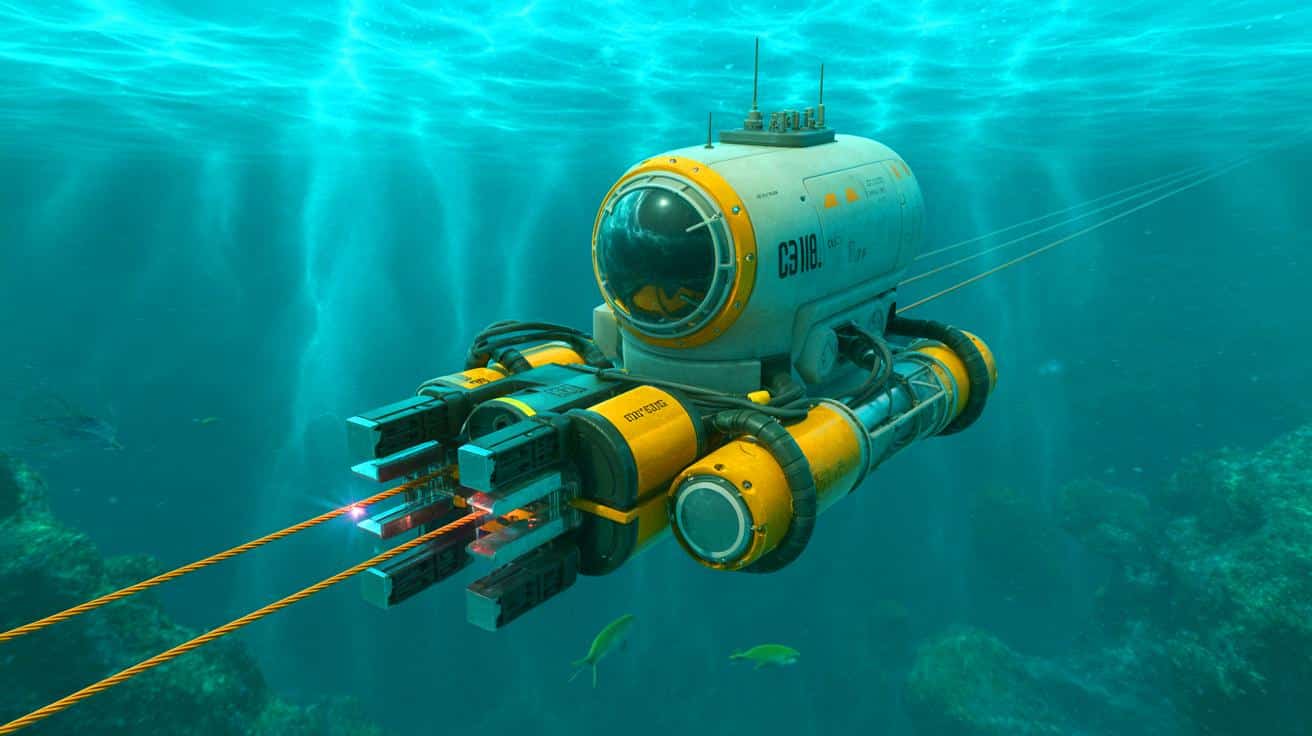
China has made a significant leap in deep-sea technology with the introduction of a cable-cutting device capable of operating at depths of up to 13,000 feet. This innovation, developed by the China Ship Scientific Research Centre, is designed for use with advanced submersibles, including both crewed and uncrewed models like the Fendouzhe and Haidou series. These submersibles are critical to maintaining global communication networks, as the cables they target carry 95% of the world’s data. The device uses a diamond-coated grinding wheel, rotating at 1,600 rpm, to cut through steel cables without disturbing ocean sediment.
The device’s construction includes a titanium alloy shell and oil-compensated seals, enabling it to withstand immense underwater pressures. Controlled by robotic arms and advanced positioning systems, it ensures precision even in low-visibility conditions. This development represents a significant engineering milestone but also raises pressing questions about global security. The ability to sever communication cables with such precision and efficiency could have far-reaching implications, both technologically and geopolitically.
Global Security and Communication Risks
While initially conceived for civilian purposes such as salvage operations and seabed mining, the dual-use potential of China’s cable-cutting device has ignited global concern. The capability to disrupt cables in strategic locations, such as those near Guam, could severely impact global communication networks, highlighting vulnerabilities in current infrastructure. Such a capability could exacerbate geopolitical tensions, particularly if leveraged in military scenarios. Reports emphasize the risk of severing cables near critical U.S. defense zones, underscoring the geopolitical stakes involved.
Led by engineer Hu Haolong, the team behind this device overcame numerous challenges to ensure its efficacy at extreme depths. With a 1-kilowatt motor and an 8:1 gear reducer, the device balances power with efficiency, though it requires careful management to avoid overheating during prolonged use. Documented in peer-reviewed studies, the device’s potential impact on global communication and security is undeniable, posing questions about the balance between technological progress and international stability.
Strategic Expansion of China’s Undersea Capabilities
China’s advancements in undersea technology are part of a broader strategy to enhance its oceanic infrastructure and influence. Boasting the largest fleet of submersibles globally, China is well-positioned to exploit extensive oceanic regions. The new cable-cutting device, operable from stealthy unmanned platforms, could be used to target strategic bottlenecks clandestinely, providing China with significant tactical advantages.
Chinese scientists claim that the device supports “marine resource development,” yet its potential military applications cannot be ignored. Demonstrating the ability to cut through cables as thick as 2.4 inches, the device underscores the dual-use nature of such technology. This capability raises concerns about the blurred lines between civilian and military uses, as seen in recent incidents involving seabed natural gas pipelines, making it essential to consider the broader implications of these technological developments.
Implications for Future Communication Infrastructure
As China continues to advance its undersea technology, the global community must consider the broader implications for communication infrastructure and international security. The ability to cut cables at unprecedented depths presents both opportunities for technological advancement and risks of significant disruption. Navigating these challenges requires international collaboration and dialogue to ensure that technological progress contributes to global stability rather than conflict.
The introduction of this deep-sea cable cutter raises critical questions about the future of undersea communication and security. As the world moves forward, nations must contemplate: How can technological advancements be balanced with the imperative for global cooperation and security?
The rapid development of undersea technology challenges the global community to balance innovation with security. As China continues to expand its capabilities, the international community must address how to manage these advancements responsibly. What measures can be implemented to ensure that such technological progress is aligned with international peace and cooperation? The future of global communication and security may depend on finding answers to these pressing questions.



Wow, this is a game-changer! How can the international community respond to this threat? 🤔
This raises so many questions about international regulations. Is there any existing framework to address such devices?
Well, that’s one way to cut corners! Or cables in this case. 😅
Sounds like a James Bond movie. Is it really that easy to disrupt global communication?
Thanks for the detailed analysis. This is indeed a concerning development. 🙏
Can other countries develop similar technologies to counteract this?
China’s really diving deep into tech advancements! But at what cost to global security?
Why is there a lack of international oversight on such technological developments?
Seems like a slippery slope. What’s stopping other nations from doing the same?
Is it just me, or does this sound like something out of a sci-fi novel? 🤖
Does this mean we need to start thinking about satellite-based internet more seriously?
Thank you for shedding light on this critical issue. More people need to be aware of this.
This could be a real threat to global economies dependent on undersea cables. What are the potential economic impacts?
Can we trust China to use this technology responsibly given their track record?
Why isn’t there a bigger public outcry about this? 🌍
How will this affect internet speeds and reliability globally?
It seems like a tool of war disguised as a technological advancement. Who else sees it this way?
What are the implications for international law and maritime security?
Are there any countermeasures in place to protect these undersea cables?
Imagine the possibilities if this tech falls into the wrong hands! 😨
Thanks for the informative article. It’s crucial to stay informed about these developments.
Could this lead to new alliances or conflicts in the Pacific region?
How does this device compare with existing technology from other countries?
Is this just fear-mongering, or should we genuinely be concerned? 🤷♂️
The future of global communication sounds more uncertain than ever!
Can international treaties be enforced to prevent the misuse of such technology?
Sounds like something straight out of a military strategy playbook! 🛡️
Are there any potential benefits to this technology that are being overlooked?
How long before other countries catch up and create their own versions?
Is this just another step in the ongoing tech race between major powers?
Why do I feel like this is the start of a new tech cold war? ❄️
This is both fascinating and terrifying. What a time to be alive! 🚀
What are the chances of this technology being used for peaceful purposes only?