




| IN A NUTSHELL |
|
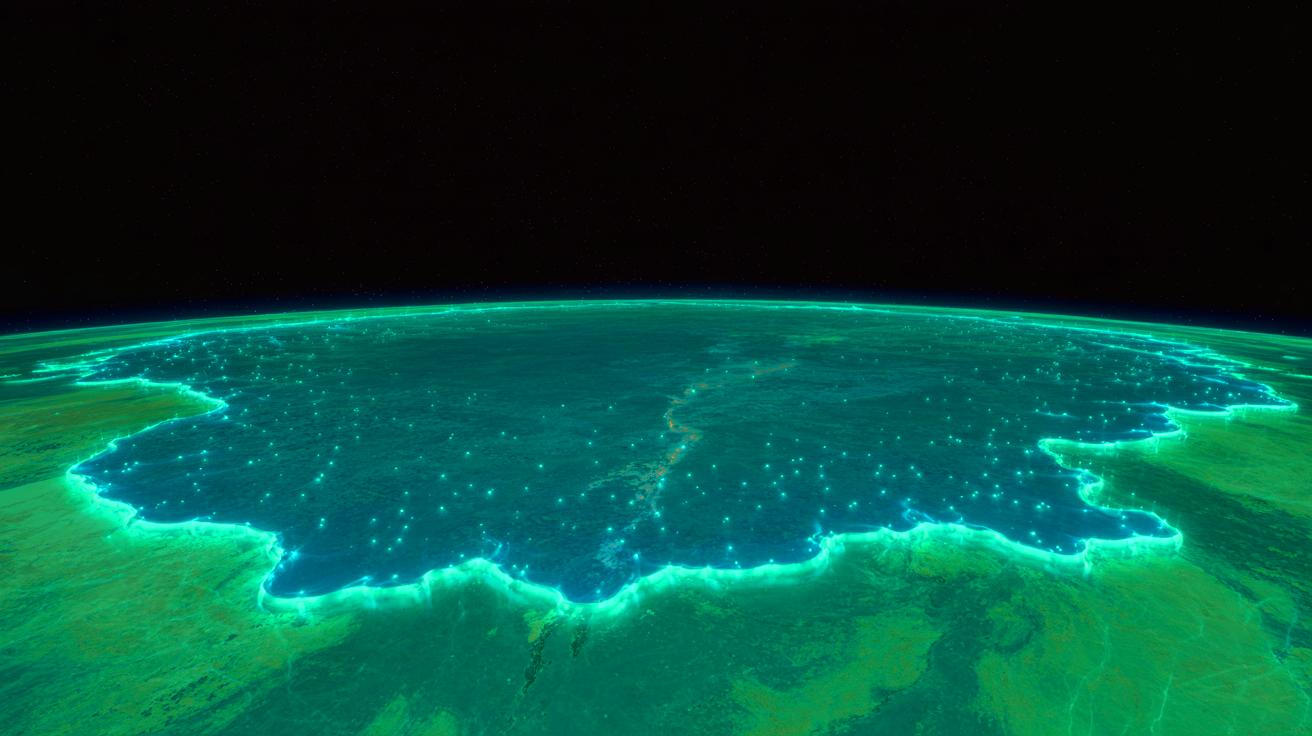
The discovery of a mysterious turquoise glow off Australia’s southern coast has captured global attention. Detected by NASA satellites, this bioluminescent spectacle in the Great Australian Bight and Tasman Sea is known as a phytoplankton bloom. These glowing marine organisms not only create stunning visuals but also play a crucial role in marine ecosystems. The event serves as a reminder of the intricate processes within our oceans that maintain ecological balance and biodiversity. As scientists continue to study these phenomena, they gain valuable insights into the dynamics of marine life and ocean health.
Phytoplankton Glow Captured From Space
The bioluminescent glow off Australia’s coast was first captured by NASA’s PACE spacecraft. Using the advanced Ocean Color Instrument, scientists documented the vibrant glow between mainland Australia and Tasmania. This area, known for its turbulent currents, is a crucial maritime route leading to Port Phillip Bay, home to Melbourne. The glow was not a one-time occurrence; previous sightings were made by the Suomi NPP and Terra and Aqua satellites in late 2023 and early 2024. These repeated observations have allowed researchers to track the bloom’s patterns and understand its seasonal nature. High-resolution satellite imagery provides valuable insights into the oceanographic dynamics of this region.
Such blooms have been observed in the past, but the current technology allows for more detailed tracking and analysis. Scientists can now study the consistency and timing of these blooms, which are influenced by various environmental factors. The data collected helps in understanding the broader implications for marine life and the potential impact on human activities. The ability to monitor these blooms from space underscores the importance of satellite technology in advancing oceanographic research.
Uncovering the Source of the Glow
The turquoise glow is primarily due to high concentrations of chlorophyll-a in the phytoplankton. This green pigment is essential for photosynthesis, enabling these microscopic organisms to thrive in the ocean’s photic zone. Here, sunlight penetrates the surface, allowing phytoplankton to utilize nutrients like nitrogen and phosphorus, released from decaying marine life. Oceanographer Jochen Kaempf from Flinders University has studied these blooms extensively. He notes that the green filaments seen from space indicate a phytoplankton bloom extending along the shelf break, approximately 500 feet deep. The surrounding blue hues may result from sediment disturbance in shallower areas or different phytoplankton species contributing to the glow.
This interplay of marine elements highlights the complexity of ocean ecosystems. The blooms are not only visually striking but also provide essential functions within the marine food web. Understanding the conditions that lead to such blooms can help researchers predict future occurrences and assess their impact on marine life. This knowledge is crucial for managing fisheries and protecting marine biodiversity.
Ecological Significance in the Bass Strait
Phytoplankton are the foundation of the marine food web, supporting diverse oceanic life. On the Bonney Coast, these blooms serve as critical feeding grounds for various species. Researchers estimate that up to 80 blue whales are attracted to the area annually, drawn by the abundance of krill and other small organisms that feed on the phytoplankton. The blooms also provide sustenance for sardines, anchovies, tuna, crabs, and numerous fish species, making the region a vibrant hotspot of marine biodiversity.
Beyond their ecological role, these algae are crucial for global oxygen production and climate regulation. NASA scientists emphasize that the visibility of such blooms from space highlights the importance of ocean circulation, nutrient cycling, and seasonal dynamics along the southern Australian coast. The presence of bioluminescent phytoplankton showcases both the beauty and ecological significance of microscopic marine life, reminding us of the ocean’s vital role in sustaining life on Earth.
Looking Ahead: What Next for Ocean Exploration?
As we continue to explore the ocean’s mysteries, discoveries like the bioluminescent phytoplankton bloom off Australia’s coast provide valuable insights into marine ecosystems. These phenomena captivate our imagination and highlight the importance of oceanographic research in understanding climate change and ecological balance. With advances in satellite technology, our ability to monitor and study these events will improve, offering new opportunities for scientific discovery and environmental protection. What other hidden wonders lie beneath the ocean’s surface, waiting to be uncovered by the watchful eyes of our satellites?



Wow, visible from space?! That’s some serious glow! 🌟
Is this phenomenon dangerous for marine life or humans?
China’s involved? Seems like a stretch. 🤔
Thanks for sharing such a fascinating article!
Why is NASA involved in studying the ocean? Aren’t they a space agency?
Great article, but what’s the connection to China again?
Absolutely amazing what technology can reveal these days.
So, is this glow harmful or just pretty?
Is there any connection between the glow and climate change?
There is NO climate change!
Hope this doesn’t mean more pollution in our oceans. 😟
Thanks NASA, for keeping an eye on our planet! 🌍
Sounds like something out of a sci-fi movie!
Is this related to the giant squid sightings from last year?
What are the alarming threats from China mentioned in the title?
Am wondering the same thing.
Badly written article.
But it would have confirmed what I already know and this is that China doesn’t care about the environment. They do whatever they need to do to satisfy their goals and the whole world pays the price.
China is a toxic landfill.
Can’t believe nature can be this spectacular!
LOL, I thought it was a new Godzilla movie. 😂
More articles like this, please!
Does this glow affect the fishing industry?
The ocean never ceases to amaze me!
How often do these blooms occur?
Turquoise glow? Sounds beautiful; wish I could see it in person.
What’s the role of blue whales in this ecosystem?
Should we be worried about this phenomenon?
It’s incredible how interconnected everything is in nature.
Does this have any impact on global warming?
Why aren’t other countries mentioned in this study?
Hope we find more ways to protect these marine ecosystems. 🙌
The ocean is full of surprises and mysteries!
Great read, but I need more info on the China aspect.
Would love to see those satellite images!
How did they determine the glow was from phytoplankton?
Are there any plans to further study this region?
Who knew algae could be so fascinating?
Is this glow visible all year round?
So cool, but what exactly are the ‘alarming threats’?
Phytoplankton are like the unsung heroes of the sea. 🌊
Is this an annual event or just a one-off? 🤷
Another stupid and incorrect title to a good article.