




| IN A NUTSHELL |
|
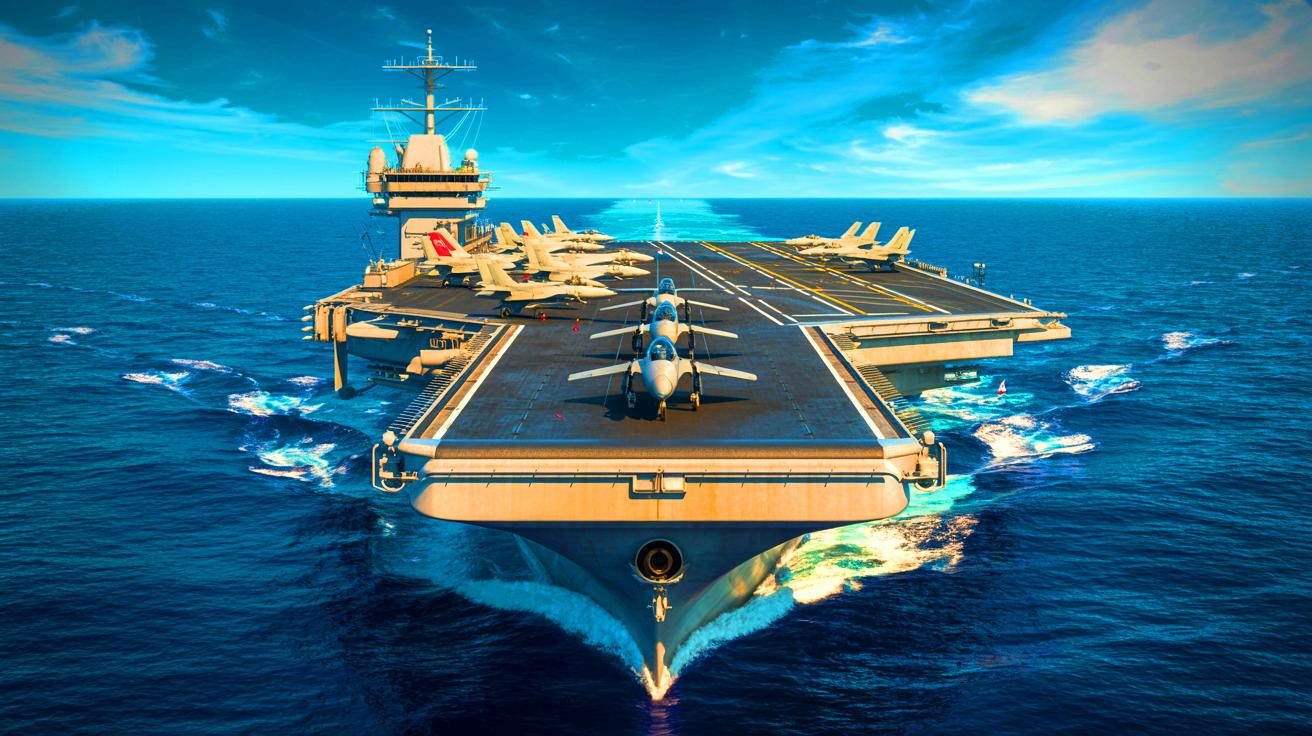
China’s assertive steps to bolster its naval capabilities have captured global attention, as the People’s Liberation Army Navy (PLAN) aggressively expands its aircraft carrier fleet. Historically, the United States has dominated the seas with its extensive and powerful carrier fleet, but China aims to challenge this status quo. With plans to construct a fleet of six carriers by the 2030s, Beijing is poised to alter the maritime landscape significantly. As China invests heavily in naval infrastructure, the international community closely monitors these developments, which could redefine the balance of power at sea.
China’s Ambitious Carrier Program
China’s foray into aircraft carrier operations began with the acquisition of the Varyag, an unfinished Soviet vessel bought from Ukraine. Renamed the Liaoning, this carrier marked the PLAN’s initial step into carrier-based naval capabilities. Since its commissioning in 2012, China’s carrier program has rapidly advanced, with the Shandong launched in 2019. These carriers serve as the foundation for China’s ambitious plan to field a fleet of six carriers by the 2030s.
Unlike the nuclear-powered behemoths of the U.S. Navy, China’s current carriers operate on conventional power. However, China’s future ambitions include developing nuclear-powered carriers, which would significantly enhance its operational range and capabilities. The nation’s commitment to expanding and modernizing its carrier fleet underscores its aspiration to become a dominant maritime power. This bold expansion reflects China’s strategic intent to project power and influence beyond its regional waters.
The Strategic Implications of a Six-Carrier Fleet
The PLAN’s goal of establishing a six-carrier fleet by the 2030s signals a strategic vision to exert influence across the Indo-Pacific region. According to Wang Yunfei, a retired PLA Navy officer, this number is intended to ensure a continuous carrier presence at sea, accommodating maintenance and training needs. Such a fleet would enable China to conduct simultaneous operations in multiple theaters, enhancing its responsiveness to regional conflicts and crises.
While the Liaoning and Shandong primarily serve training purposes, future carriers are expected to incorporate advanced technologies and capabilities. These developments align with China’s broader military modernization efforts, which include advancements in missile systems, submarines, and air defense. This strategic expansion represents a profound shift in the regional balance of power, prompting neighboring countries and global powers to reassess their naval strategies in response to China’s growing maritime presence.
Advancements in Carrier Airpower
A critical component of China’s carrier strategy is the development of a capable air wing. The Shenyang J-15, derived from the Russian Sukhoi Su-33, currently serves as the PLAN’s carrier-based fighter. However, its limitations have prompted the development of the more advanced J-35B, a stealthy aircraft resembling the U.S. F-35. Designed to operate from carrier decks, the J-35B features modifications such as folding wings to optimize carrier deck space.
The introduction of the J-35B underscores China’s commitment to enhancing its carrier airpower. With plans to deploy aircraft capable of carrying a full complement of weapons and fuel, China aims to rival the air capabilities of established naval powers. The integration of cutting-edge technology into its air wings highlights China’s focus on achieving parity with the world’s leading military forces, reinforcing its naval ambitions.
The Role of Aircraft Carriers in Modern Naval Warfare
Aircraft carriers have long symbolized naval supremacy, serving as mobile airbases that extend a nation’s power projection capabilities. For China, developing a robust carrier fleet is not merely about regional dominance but also about securing its interests on the global stage. The ability to deploy carriers in strategic locations allows China to safeguard its maritime trade routes, protect its interests, and exert influence in international waters.
As China continues to expand its carrier fleet, the international community must consider the implications of this shift in naval power. How will other nations respond to China’s expanding maritime presence? The answer to this question will shape the future of naval warfare and the global balance of power.
China’s ambitious carrier program marks a significant development in the realm of naval warfare. As the PLAN continues to expand and modernize its fleet, the strategic landscape of the Indo-Pacific region is poised for transformation. With China’s determination to challenge existing naval powers, how will the United States and its allies respond to this emerging maritime force? Will China’s rise lead to increased cooperation or heightened tensions in the world’s oceans?




Wow, six carriers by the 2030s? That’s quite the naval ambition! 🚢
Is the J-35B really comparable to the U.S. F-35, or is it just hype?
Thanks for the detailed breakdown of China’s naval expansion. Really informative!
Gotta wonder how other countries in the region are going to react to this. 🤔
Do you think this will lead to an arms race in the Indo-Pacific?
China’s strategy seems bold, but can they maintain such a large fleet?
Hope this doesn’t lead to increased military tensions. 🌏
Why does China need six carriers? Aren’t two or three enough?
Great article! Would love to see more on how this affects global trade routes.
Are their conventional power carriers a disadvantage compared to nuclear ones?
Interesting, but I doubt they’ll surpass the U.S. anytime soon.
Thanks for the insights! This is a game-changer for the region. 😮
Why are they focusing so much on carrier airpower?
Is anyone else concerned about the balance of power shifting in Asia?
Can other countries in the Indo-Pacific counter this expansion?
How will this affect China’s relations with its neighbors?
Wow, China’s really stepping up their game. 🚀
Is the PLAN capable of supporting such a large fleet logistically?
What about the tech in these new carriers? Are they cutting-edge?
What about the environmental impact all these new ships will have on the oceans?
How do you think the U.S. Navy will respond to this expansion?
Will this lead to a new cold war in the Pacific? 😬
Why is everyone always worried about China’s military? Relax, guys!
How significant is the J-35B’s development in the grand scheme of things?
Interesting read! But are we sure about the timelines? 2030s seems optimistic.
China’s carrier ambitions are impressive, but can they sustain them economically?
Can someone explain why carriers are such a big deal in modern warfare?
Thanks for the article! Really makes you think about future global dynamics. 🌐
Impressive, but can they match the U.S. in terms of operational experience?
Is this expansion a direct threat to the U.S., or just a play for regional influence?