




| IN A NUTSHELL |
|
The accelerating pace of technological innovation in deep-sea exploration is reshaping the global landscape, particularly in communication and military strategy. China’s development of a cable-cutting device capable of operating at depths of up to 4,000 meters has garnered significant international attention. This tool, a product of advanced engineering, has the potential to impact 95% of the world’s data transmission. While it promises new possibilities for technological progress, it also raises important questions about security and stability. Nations worldwide are now closely monitoring the implications of this development to assess its potential effects on global communication networks.
The Emergence of Advanced Deep-Sea Technology
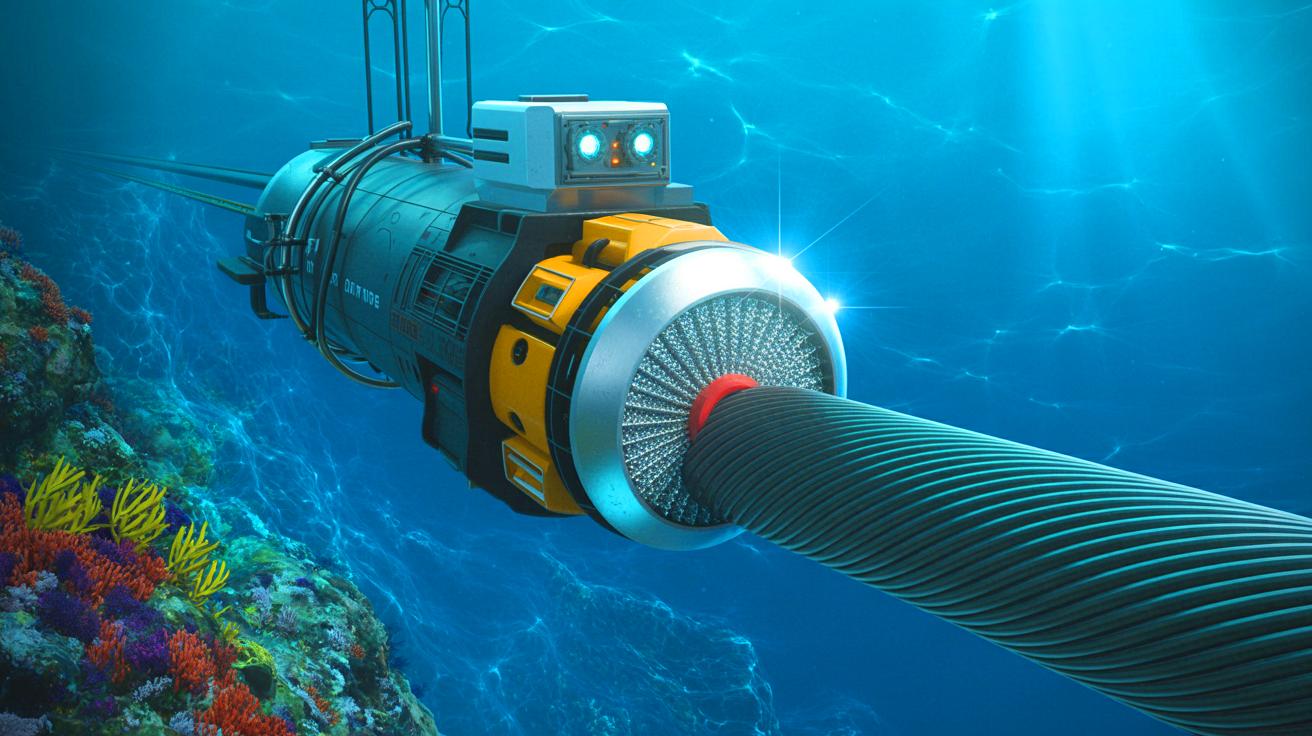
China’s newest deep-sea technology, a cable-cutting device, represents a significant leap forward in undersea innovation. Developed by the China Ship Scientific Research Centre, this tool is designed to sever cables at unprecedented depths of up to 4,000 meters. Such advancement doubles the current reach of existing technologies and is poised to redefine the capabilities of both crewed and uncrewed submersibles like the Fendouzhe and Haidou series.
The device employs a diamond-coated grinding wheel that operates at a high speed of 1,600 rpm. This allows it to shatter steel cables with precision while minimizing disruption to surrounding sediments. Additionally, the tool’s construction includes a titanium alloy shell and oil-compensated seals, enabling it to withstand extreme underwater pressures. These features, along with advanced positioning technology, ensure the device’s effectiveness in low-visibility conditions.
This innovation marks a milestone in engineering, offering new avenues for exploration. However, it also presents challenges to global security dynamics, as its capabilities could influence strategic military considerations.
Implications for Global Security and Communication
The dual-use nature of China’s cable-cutting device has sparked global security concerns. Originally intended for civilian applications like salvage and mining, its potential to sever cables in strategic locations such as Guam poses significant risks. Disruptions in these areas could have severe consequences for global communications, revealing vulnerabilities in existing infrastructures.
The possibility of utilizing this technology in military operations cannot be overlooked. Reports suggest that the device has the capability to disrupt communication near crucial U.S. military zones, highlighting its geopolitical impact. The engineering team, led by Hu Haolong, has tackled technical challenges to ensure the device’s functionality under extreme conditions, focusing on balancing torque and efficiency to prevent overheating.
These developments, documented in peer-reviewed studies, emphasize the device’s potential to influence global communication networks. As nations navigate these challenges, the need for international cooperation becomes more critical.
China’s Expanding Undersea Capabilities
China’s advancements in undersea technology are part of a broader strategy to enhance its oceanic infrastructure. With a vast fleet of submersibles, China is well-positioned to explore global oceans. The cable-cutting device, operable from unmanned platforms, provides a tactical advantage by exploiting strategic bottlenecks without detection.
Chinese scientists assert that the tool supports marine resource development, a claim underscored by its ability to slice through 60mm-thick cables during trials. While these capabilities have practical applications for resource extraction, the potential military uses are a source of concern. Recent incidents involving Russia’s seabed pipelines highlight the complex interplay between civilian and military applications of such technologies.
As China continues to develop its undersea capabilities, the global community must weigh the benefits of technological progress against the risks of geopolitical tension.
Looking Ahead in Undersea Communication
The introduction of deep-sea cable-cutting technology raises important questions about the future of communication infrastructure and international security. As nations grapple with these advancements, the balance between technological progress and global stability becomes a pressing issue.
The potential for disruption in communication networks underscores the need for international dialogue and cooperation. While technological advancements offer significant benefits, they also challenge existing frameworks for security and communication.
The future of undersea communication depends on how nations choose to integrate these developments into global systems. As we consider the path forward, we must ask: How will the international community balance the pursuit of innovation with the imperative for security and cooperation?
The emergence of China’s deep-sea cable cutter poses significant challenges and opportunities for the global community. As countries around the world adapt to these technological advancements, the dialogue surrounding security, cooperation, and innovation will continue to evolve. The implications of this new technology prompt a critical question: How can nations ensure that progress in deep-sea capabilities contributes to global stability rather than conflict?




Wow, this is like something out of a spy movie! 🎬 How will other countries respond to this?
This article mentions Guam a lot. Why is this location so strategic?
Thanks for the detailed breakdown. It’s both fascinating and terrifying.
Can this technology be countered with existing tech, or are we all vulnerable?
Is there any evidence that China has already used this device against other countries?
How do we balance technological progress with the risk of increasing military tensions?
Isn’t it time for a global discussion on underwater tech regulations? 🌊
Interesting read, but it feels a bit alarmist. Is there more to the story?
What are the environmental impacts of using such deep-sea technologies?
I wonder if this will lead to a new kind of “Cold War” under the sea. ❄️
Are there any other countries developing similar technologies?
This is scary. I hope world leaders are paying attention to this threat!
How long before this technology is used to disrupt global internet services?
Thank you for the article, but I’m left with more questions than answers! 🤷
What can individual companies do to protect their data and infrastructure?
Are there any diplomatic efforts underway to address these concerns?
Can this technology be used for peaceful purposes, or is it purely military?
Why wasn’t this type of technology anticipated before it became a threat?
Seems like every day there’s a new tech threat. How do we keep up? 😵
Are there examples of other countries using technology like this in the past?
What role does international law play in preventing the misuse of such technologies?
Grerat article! But how do we really know what’s happening deep under the sea?
Maybe we should invest more in cyber security and less in undersea warfare? 🤖
This whole thing sounds like a high-stakes game of underwater chess. ♟️
Are there any non-military applications for this technology that could benefit society?
Why is this issue only getting attention now? Hasn’t this been a threat for years?
Let’s hope this leads to more international cooperation rather than conflict!
How does this affect the average internet user? Should we be worried?
Is the US really prepared to protect its infrastructure from such threats? 🤔
Great article! Thanks for raising awareness on such a critical issue.
Are there any international treaties that regulate this kind of technology?
This sounds like a James Bond plot. What’s next, laser sharks? 🦈
What steps can other nations take to safeguard their undersea cables?