




| IN A NUTSHELL |
|
The development of hypersonic technology is setting new benchmarks in aerospace innovation, driven by strategic collaborations and technological advancements. At the forefront of this revolution is the partnership between Ursa Major and Stratolaunch, focusing on the Talon-A hypersonic test vehicle. With a hefty $32.9 million contract for advanced H13 rocket engines, this alliance aims to enhance the capabilities of the Talon-A. This initiative underscores the United States’ commitment to maintaining a competitive edge in the global race for technological superiority, particularly in military applications. The implications of these advancements extend beyond national defense, potentially influencing the future trajectory of aerospace technology.
Talon-A to Get New Engines
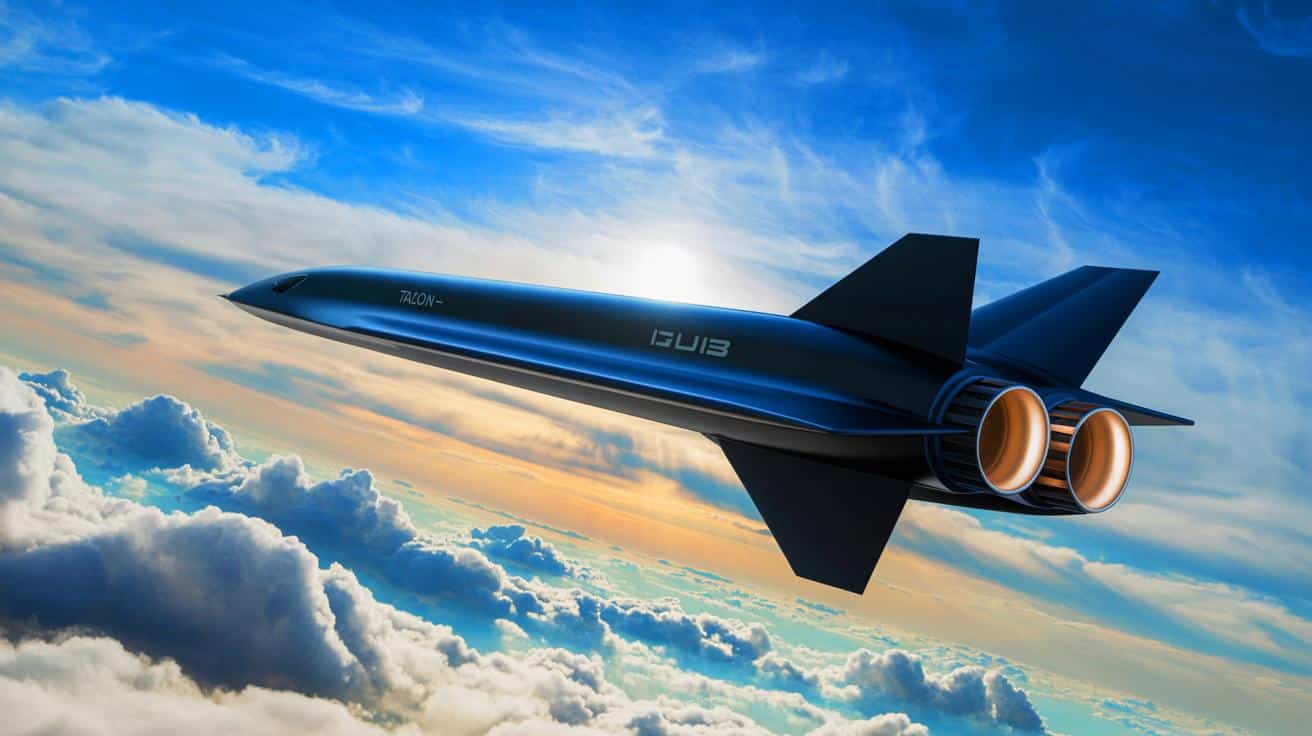
The Talon-A hypersonic test vehicle stands as a symbol of modern aerospace prowess. Launched from Stratolaunch’s large carrier aircraft, the Talon-A is powered by Ursa Major’s H13 engines, enabling it to reach speeds over Mach 5. This speed is crucial for testing military hypersonic technologies, a significant focus for the Pentagon. In a recent test, the Talon-A successfully demonstrated its capabilities by completing a second flight at these hypersonic speeds.
Dr. Zachary Krevor, the President and CEO of Stratolaunch, highlighted the importance of these trials, stating, “With the data collected from this second flight, we are able to apply lessons learned to enhance the strength and performance of the Talon-A vehicles.” The ongoing collaboration with Ursa Major aims to optimize propulsion systems, ensuring that the Talon-A remains at the cutting edge of hypersonic research. This effort aligns with the broader U.S. strategy to advance hypersonic testing, especially as other nations make strides in this field.
More Thrust, More Speed
Hypersonic testing is fraught with technical challenges and high expenses, making reusable platforms like the Talon-A indispensable. The H13 engines are designed to deliver a thrust of 5,000 pounds-force (lbf) using oxygen-rich staged combustion, a sophisticated cycle usually reserved for large space launchers. These engines promise reduced costs and increased testing frequency, essential for advancing hypersonic capabilities rapidly.
The partnership between Ursa Major and Stratolaunch is a strategic move to bolster the U.S.’s hypersonic testing infrastructure. By developing advanced, cost-effective engines, this collaboration seeks to accelerate the U.S.’s ability to develop hypersonic weapons and defenses. In a world where speed and technological superiority are paramount, such advancements are crucial for maintaining a competitive edge.
Strategic Importance of Hypersonic Testing
The contract with Ursa Major highlights more than just technological progress; it emphasizes the strategic importance of hypersonic testing for national defense. As China and Russia continue to advance in this domain, the U.S. must maintain its leadership. The enhanced Talon-A, with its upgraded propulsion system, positions the U.S. at the forefront of hypersonic research and development.
Dan Jablonsky, CEO of Ursa Major, emphasized the contract’s significance, stating, “This contract directly supports U.S. hypersonic test infrastructure and the broader imperative to accelerate high-speed flight programs that deliver for national security.” This collaboration aims to provide tangible capabilities in hypersonic technology, focusing on speed and efficiency without compromising performance. Such efforts underscore the critical role of hypersonic testing in global defense dynamics.
The Future of Hypersonic Technology
The evolution of hypersonic technology is poised to reshape the boundaries of speed and efficiency. The Talon-A, equipped with advanced H13 engines, represents a significant milestone in aerospace innovation. The partnership between Ursa Major and Stratolaunch exemplifies the potential of public-private collaborations in enhancing national defense capabilities.
As the U.S. strives to maintain its edge in the global hypersonic race, the focus on reusability and cost-effectiveness becomes even more critical. The Talon-A project, with its ongoing advancements, suggests a bright future for hypersonic vehicles in both military and civilian applications. These achievements signal the dawn of a new era, paving the way for future innovations in aerospace technology.
The advancements in hypersonic technology, as demonstrated by the Talon-A and H13 engines, mark a pivotal moment in aerospace history. As the United States continues to prioritize hypersonic testing, the collaboration between Ursa Major and Stratolaunch sets a strong foundation for future progress. How might these developments influence the landscape of global defense and aerospace technology in the years to come?




This is amazing! How soon can we expect these technologies to be implemented in actual defense systems? 🚀
Why is hypersonic testing so expensive? Can these costs be justified? 🤔
Great article! The collaboration between Ursa Major and Stratolaunch seems promising. 💪
Is there any civilian application for these hypersonic jets, or are they just for military use?
How does the Talon-A compare to similar projects from Russia and China?
The collaboration with Ursa Major sounds like a game-changer for the U.S.
How does the oxygen-rich staged combustion cycle work? Sounds complicated!
Is the $32.9 million deal a good investment for taxpayers? 🤷♂️
With these advancements, are we looking at a new arms race in the sky?
As exciting as this is, I hope we also focus on peaceful applications of this tech. 🌍
Can the Talon-A be adapted for commercial use in the future?
Do these hypersonic tests pose any safety risks to the public?
Impressive tech, but how do we ensure it’s not misused in global conflicts?
What are the potential drawbacks of these hypersonic advancements?
Is the U.S. really ahead in the hypersonic race, or are we playing catch-up?
I love seeing technological innovation like this! Keep it up, Ursa Major! 🎉
How does this impact our current understanding of aerospace capabilities?
So when do we get to travel from NYC to Tokyo in an hour? 😄
Why isn’t there more focus on the security implications of these technologies?
I’m skeptical about the environmental impact of all this advanced technology. Any thoughts?
Will the upgraded Talon-A engines be more reliable than previous versions?
It’s amazing how much technology has progressed in just a few years! 🚀
What are the next steps after these successful tests? More flights or production?
How efficient are these engines compared to traditional rocket engines?
How does the Talon-A handle the intense heat generated at Mach 5 speeds?
Is there a plan to make this technology available to allied nations? 🤝
Does this technology have any benefits for space exploration?
What role does Stratolaunch play in this partnership exactly?
Are there any civilian companies interested in hypersonic vehicles?
Will these advancements lead to the next generation of commercial air travel? ✈️
Why is there a need for reusable platforms like the Talon-A? 🌍
Why is Mach 5 such a big deal? Aren’t there already planes that fly this fast?
Thank you for the insightful article! The future of aerospace technology looks bright. 🌟