

| IN A NUTSHELL |
|
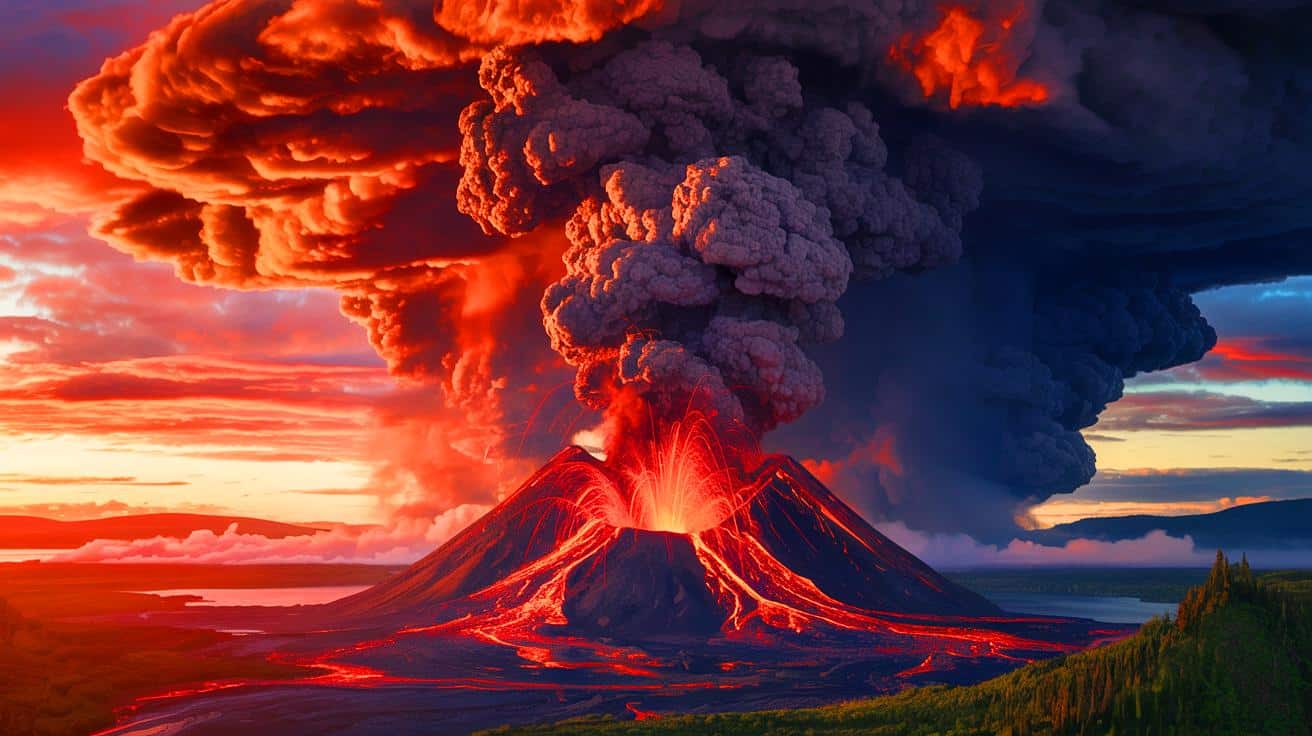
In 1815, the world experienced a catastrophic event when Indonesia’s Mount Tambora erupted, casting a shadow over the Earth. The aftermath was a year without a summer—a chilling reminder of nature’s power. This super eruption spewed vast amounts of ash and sulfur dioxide into the atmosphere, leading to a global temperature drop and widespread crop failures. As scientists now warn of a similar event in the future, humanity faces urgent questions. How can we prepare for an event that could disrupt lives on a massive scale? What lessons can we draw from history to mitigate potential impacts on our densely populated and interconnected world?
The Dangers of Sulfur Dioxide Emissions
Super eruptions are formidable natural events, with sulfur dioxide emissions being their most dangerous aspect. When Mount Tambora erupted in 1815, it emitted a colossal amount of ash and sulfur dioxide into the atmosphere. This gas, when released, ascends to the troposphere and stratosphere, forming tiny aerosol particles. These particles reflect sunlight away from Earth, leading to a cooling effect. In 1991, the eruption of Mount Pinatubo in the Philippines released 15 million tons of sulfur dioxide, causing a significant global temperature drop of 0.5°C.
Despite the scale of the Pinatubo eruption, it was not classified as a super eruption. Scientists like Alan Robock of Rutgers University emphasize that aerosols from such eruptions can remain suspended for years, continuously reflecting sunlight. As the planet is already grappling with the challenges of climate change, a super eruption could exacerbate existing environmental threats. The potential for a significant cooling effect, coupled with the unpredictability of volcanic activity, makes preparation and monitoring crucial.
Potential Consequences of a Sudden Global Cooling
The prospect of a sudden global temperature drop raises several alarming possibilities. For instance, the blockage of sunlight in the troposphere could disrupt weather patterns, notably affecting rainfall. This could severely impact regions dependent on monsoon rains, like Asia and Africa, leading to failed harvests and widespread food shortages. The resulting scarcity could heighten geopolitical tensions, increasing the risk of conflict over resources.
Moreover, the cooling effect would not resolve the overarching issue of climate change. Once the aerosols settle, temperatures could rebound, potentially leading to a more abrupt and severe warming period. This oscillation between extreme cooling and warming could destabilize global ecosystems and economies. With over 1,600 active volcanoes worldwide, identifying which could cause a super eruption is a priority for scientists. Preparing for such an eventuality is not just about understanding volcanic activity but also about addressing the broader implications for societies and economies.
The Historical Context and Modern Implications
Historical records of the 1815 Tambora eruption provide a window into the potential impact of a future super eruption. The "year without a summer" was marked by global famines, economic downturns, and social unrest. Crops failed across Europe and North America, leading to food shortages and price spikes. The event underscored the interconnectedness of climate, agriculture, and human survival.
Today, the world is far more interconnected and populous, amplifying the risks of a similar event. Urbanization and globalization mean that the effects of a super eruption would be felt across borders, affecting supply chains and international relations. The challenge lies in balancing immediate disaster response with long-term adaptation strategies. This includes investing in resilient infrastructure, diversifying food sources, and developing international cooperation frameworks to manage the potential fallout.
Preparing for the Unpredictable
While predicting the exact timing and location of the next super eruption is challenging, preparation remains essential. Scientists advocate for improved monitoring technologies to detect early warning signs of volcanic activity. This includes satellite observations, ground-based sensors, and collaborative international research initiatives. Such measures can provide valuable lead time to implement emergency plans and mitigate impact.
Governments and communities must also consider the broader implications of a super eruption on public health and socioeconomic stability. Building resilient food systems, enhancing emergency response capabilities, and fostering global cooperation are critical components of preparedness. As the world navigates the uncertainties of climate change, integrating volcanic risk into broader environmental and disaster planning is imperative.
As scientists continue to explore the complex dynamics of super eruptions, the question remains: how can humanity effectively safeguard itself against such unpredictable natural events? The need for proactive strategies, informed by historical insights and scientific advancements, is clear. Can we rise to the challenge and forge a path toward a more resilient future?

Wow, this is terrifying! 😱 How can we even start to prepare for something like this?
Wow, Mother Nature sure knows how to throw a curveball! 😮🌋
Is it just me, or does this sound like the plot of a disaster movie?
Is there any way to predict exactly when such a super eruption might occur?
I’m curious, what are the chances of this happening in our lifetime?
Feels like we’re living in a disaster movie plot. What’s next, asteroid impact? 🤔
Thank you for highlighting the importance of monitoring technologies. It’s crucial for early detection!
Thank you for raising awareness on this critical issue. Knowledge is power!
This article reminds me of the importance of sustainable agriculture. We need resilient crops!
So, are we talking about a volcanic winter? Like, a real-life Game of Thrones scenario? 🐉
Can we stop a super eruption with technology or are we just spectators?
I’m a bit skeptical. Haven’t scientists been warning about these things for years without anything happening?
Great article, but I’m skeptical. How often do these super eruptions really happen?
Can volcanic eruptions be predicted with any accuracy, or is it all just guesswork?