


| IN A NUTSHELL |
|
The intricate dance of Earth’s climate systems is under threat, as a new study reveals the potential catastrophic consequences of a slowdown in one of our planet’s major ocean currents. The Atlantic Meridional Overturning Circulation (AMOC), a crucial component of the global climate system, is showing signs of weakening. This could have significant impacts on rainforests, particularly in the Amazon. The research, published in the journal Nature, delves into ancient climate records to understand the implications of this slowdown. With the Amazon rainforest acting as a major carbon sink, the looming threat of droughts poses a severe risk to global climate stability.
The Role of the Atlantic Meridional Overturning Circulation
The AMOC, which includes the well-known Gulf Stream, functions as a vital climate stabilizer. This current plays a key role in distributing heat, nutrients, and oxygen across the Atlantic Ocean, keeping temperatures in check. The AMOC acts as a planetary conveyor belt, moving warm water northward from the tropics while colder water flows southward. This exchange helps maintain a balance that keeps the Atlantic region approximately 9 degrees Fahrenheit warmer than it would otherwise be.
However, researchers have found evidence of the AMOC slowing down. This deceleration is linked to climate change, with glacial meltwater contributing to the weakening of this current. The potential collapse of the AMOC is a scenario that scientists are increasingly concerned about. Such an event would have far-reaching and devastating impacts, including dramatic shifts in climate patterns across the globe.
The Impact on Rainforests
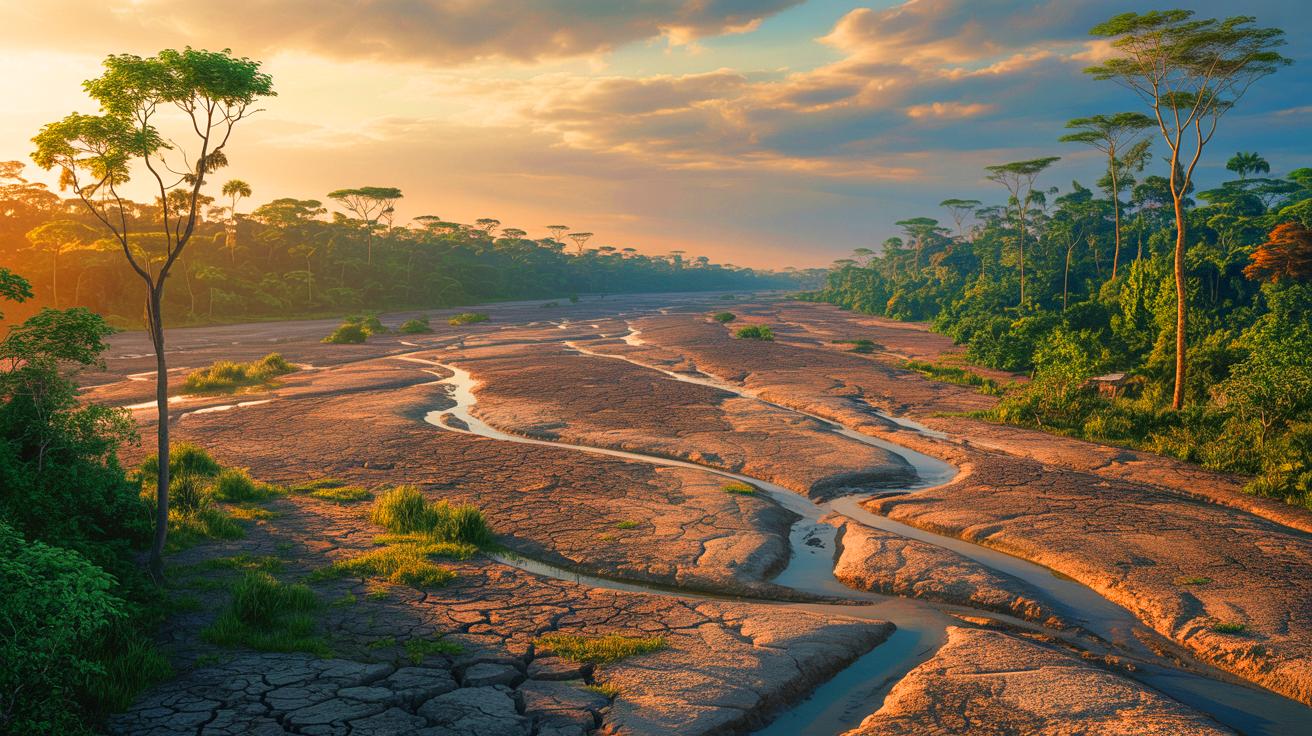
The potential slowdown of the AMOC poses a “stunning risk” to rainforests, particularly the Amazon. This vital ecosystem plays a crucial role in regulating the Earth’s carbon cycle. The Amazon rainforest stores the equivalent of nearly two years of global carbon emissions, making it an essential carbon sink. However, a weakened AMOC could lead to reduced rainfall, with predictions showing up to a 40% drop in precipitation over parts of the Amazon.
Drought conditions in the Amazon could result in vast amounts of carbon being released back into the atmosphere. This would create a feedback loop that exacerbates climate change. As rainforests dry out, they become more vulnerable to fires, further contributing to carbon emissions. The potential for such a scenario highlights the importance of understanding and mitigating the impacts of changes in ocean currents on these critical ecosystems.
Understanding the Historical Context
To better grasp the potential future impacts of the AMOC slowdown, researchers have turned to ancient climate records. By analyzing data from cave formations and sediment deposits, scientists have been able to reconstruct past climate conditions. These records provide valuable insights into how the Earth’s climate systems have responded to changes in ocean currents over thousands of years.
The study’s findings reveal that past slowdowns of the AMOC have led to significant shifts in rainfall patterns. These historical precedents underscore the potential for similar outcomes in the future. While the study’s predictions are concerning, the researchers emphasize that there is still time to act. By rapidly decarbonizing our economies and embracing green technologies, we can mitigate the impacts of climate change and preserve the stability of our planet’s climate systems.
Future Implications and Actions
Despite the alarming predictions, the situation is not without hope. Scientists believe that while the tropics may remain sensitive to fluctuations in the AMOC, a complete collapse is unlikely if decisive action is taken. The fate of the current, and its subsequent impact on global climate patterns, hinges on our ability to address climate change proactively.
Pedro DiNezio, a leading researcher of the study, stresses the importance of immediate action. “We still have time,” he asserts, emphasizing the need for global cooperation in reducing carbon emissions and making sustainable technologies accessible worldwide. The call to “stop digging” is a metaphor for halting the practices that exacerbate climate change. This sentiment reflects the urgency with which the international community must act to preserve the delicate balance of the Earth’s climate systems.
As the world grapples with the potential consequences of a weakening AMOC, the question remains: How will we respond to preserve the integrity of our planet’s most vital ecosystems? The choices made today will shape the future of rainforests and the global climate for generations to come.

This is terrifying! What can we do as individuals to help prevent this catastrophe? 🌍
Wow, this sounds like a plot from a sci-fi movie! Is it really that serious? 🌍
Thank you for the informative article. It’s scary but important to know!
Wow, sounds like a plot from a sci-fi movie. Is there any recent evidence to back this up?
Does this mean we should prepare for more extreme weather events worldwide? 🤔
How can we as individuals contribute to preventing this ecological disaster?
So, is this the end or just another “end of the world” theory? 🤔
I’m skeptical about this. Haven’t we heard similar doomsday predictions before?
I’m no scientist, but a 40% decrease in rainfall sounds like a huge deal for the Amazon!
Why isn’t this being covered more in mainstream media? Seems really important.
Great article, but I’m confused about how sure scientists are about these predictions.
The article mentions ancient climate records. How reliable are these records in predicting future climate changes?
That’s it, I’m moving to Antarctica. 🤣