


| IN A NUTSHELL |
|
The murky depths off the coast of Los Angeles hide a troubling ecological story. For decades, industrial waste has been dumped into the ocean, creating a silent, toxic crisis beneath the waves. The discovery of tens of thousands of barrels littering the ocean floor has sparked concern and investigation. The contents of these containers, shrouded in mystery until recent studies, reveal a hazardous legacy of pollution. This issue has raised alarms among environmental scientists who are now unraveling the environmental impact of these toxic barrels.
The Historical Dumping Grounds of Industrial Waste
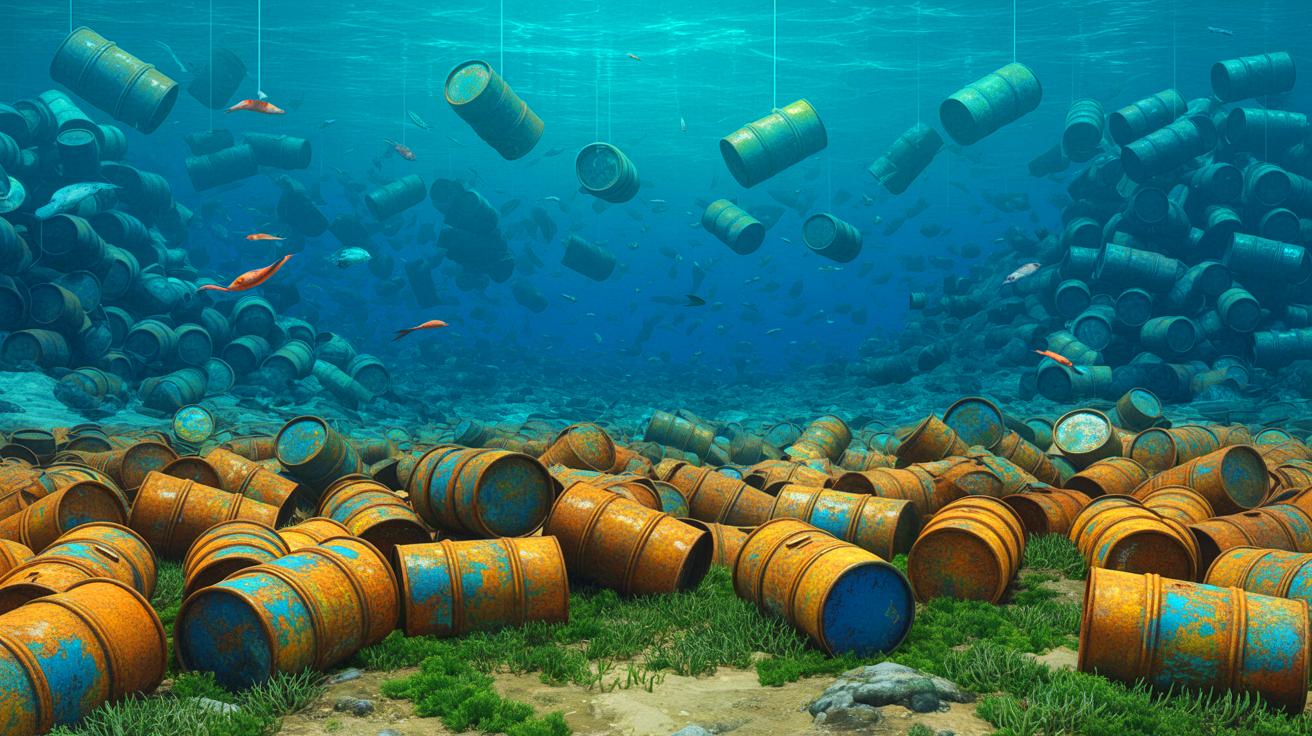
From the 1930s to the early 1970s, the coastal waters near Los Angeles became an unregulated dumping ground for industrial waste. This period saw companies disposing of waste materials in deep-sea sites, unaware or unconcerned about the future environmental consequences. Among the primary culprits was the Montrose Corporation, a chemical manufacturer that allegedly submerged over 2,000 barrels each month. These barrels contained a mix of radioactive materials, chemicals, petroleum byproducts, and explosives.
The sheer volume of waste is staggering. Recent research estimates 27,000 barrels, alongside over 100,000 other debris items, rest on the ocean floor. These figures come from extensive studies, including sonar mapping and sediment sampling. The legacy of such unchecked dumping practices is a marine environment severely compromised by toxic waste. Scientists have only recently begun to piece together the full picture of what these barrels contain and the potential risks they pose to marine ecosystems.
Unearthing the Contents: What Lies Within
Until recently, the contents of these barrels were largely speculative. Initial theories suggested they might contain DDT, a banned pesticide known for its environmental and health hazards. However, recent sampling and analysis have debunked this notion. Studies led by microbiologist Johanna Gutleben have revealed a different kind of threat. Samples collected near several barrels showed extremely high pH levels, indicating the presence of highly alkaline substances.
These alkaline compounds, often linked to industries such as cement, paper, and glass, are not benign. They have the potential to damage organic matter and release toxic metals into the environment. The presence of these substances is particularly concerning as they can drastically alter the chemical composition of the surrounding water, creating inhospitable conditions for marine life. The implications of this discovery underscore the need for ongoing monitoring and investigation to prevent further ecological damage.
The Silent Impact on Marine Ecosystems
The ecological impact of these barrels extends beyond chemical contamination. The high alkalinity in the dump sites has created extreme environments unsuitable for most marine life. Studies have shown a significant reduction in microbial and animal diversity in these areas. This lack of biodiversity is a direct result of the toxic conditions created by the industrial waste, which has persisted for over 50 years without significant natural dispersion.
The presence of white halos around approximately one-third of the observed barrels is a visible sign of the alkaline waste seeping into the ocean. These halos highlight the ongoing chemical reactions taking place, affecting everything from microbial life to larger marine organisms. The persistent nature of this pollution raises concerns about long-term environmental effects, as these pollutants continue to alter marine ecosystems.
The Challenge of Addressing Marine Pollution
As scientists work to quantify the environmental impact, the challenge remains daunting. The vast number of barrels and the difficulty in accessing deep-sea sites complicate efforts to address the pollution. Paul Jensen, a co-author of the study, emphasizes the need for further research to understand the full extent of the damage. Without precise data on the number of barrels and their contents, assessing the environmental impact remains an ongoing challenge.
Efforts to mitigate the pollution will require collaboration between scientists, governments, and environmental organizations. Innovative technologies for underwater exploration and waste retrieval may offer potential solutions. However, the scale of the problem is immense, requiring sustained commitment and resources to effectively manage and remediate the affected areas. As the situation unfolds, it serves as a stark reminder of the long-lasting consequences of industrial negligence.
The revelations of toxic waste barrels off the coast of Los Angeles highlight a significant environmental issue with far-reaching implications. As scientists continue their investigations, the question remains: How can we prevent such environmental catastrophes from occurring in the future, and what steps must be taken to protect and restore our oceans?

Wow, this is terrifying! How can we let this happen to our oceans? 😱
Wow, I had no idea about this! What are the next steps for the cleanup? 🌎
27,000 barrels?! That’s insane! How did it go unnoticed for so long?
The real question is, how many other places are like this, but we just don’t know about them yet?
I really appreciate the depth of research in this article. Keep it up!
Can’t these companies be fined heavily and use the funds for cleanup?
Another reason to avoid seafood. Thanks for the heads up! 🐟
How are these “alkaline bombs” different from the DDT we expected?
What are the potential health risks if this isn’t addressed soon?
This is terrifying. Are there any public campaigns to support cleanup efforts?
Time for some superhero scientists to save the day! 🦸♀️
Are there any legal consequences for the companies responsible for this mess?
How does this discovery affect the broader climate change debate?
Seems like a plot from a disaster movie, but it’s real life! 🎬
Can volunteers help with the cleanup, or is it too dangerous?
How much will the cleanup cost and who will foot the bill?
Are there any similar situations recorded elsewhere in the world?
Why isn’t this headline news everywhere? Seems like a big deal!
Why did it take so long for scientists to find these barrels? 🤔
The sea life must be suffering. Can anything be done to help them? 🐠
What kind of innovative technologies are being considered for remediation?
Los Angeles always has some drama, but this is next level! 🏙️
My faith in humanity is restored when I see scientists working hard to fix our mess. Thank you! 🙏
Is this affecting tourism in the area? I can’t imagine it helps.
Does this mean we should avoid beaches in Los Angeles? Asking for a friend. 😅
Why wasn’t this found sooner with all our advanced tech? 🤨
So, what is the government doing about this? It’s not like they didn’t notice before! 🤔
This is depressing. How can we ensure this won’t happen again?
Environmental negligence at its finest. When will they learn? 😡
This is truly disturbing. Thank you for bringing this to light. 🙏
The ocean is basically a dumpster. What a shame! 😢
Isn’t this just another example of humans messing up nature? When will we learn?
Is there any plan in place to clean up this mess?
Thanks for the informative article! It’s always good to stay updated on these issues.
27,000 barrels of toxic waste? That’s insane! Are the responsible companies being held accountable?
Is there a timeline for when these barrels will be removed? Seems urgent!
Why was this allowed in the first place? Who thought dumping industrial waste into the ocean was okay? 😠
I’m all for protecting the environment, but how do we know this isn’t being exaggerated? 🤷♂️
Great, now we’re going to be swimming in a chemical soup. Just what we needed. 🏊♂️
Reading this makes me question how much of our ocean is already destroyed.
How does this affect the local fishing industry? Are the fish still safe to eat?